

Commercial roof coatings promise decades of protection, yet half fail within their first five years due to preventable mistakes that transform protective investments into expensive science experiments.
The difference between coating success and costly disappointment hinges on understanding substrate compatibility, application timing, and maintenance requirements that separate professional installations from premature failures.
This guide decodes coating chemistry, reveals decision factors that maximize lifespan, and provides actionable strategies for extending commercial roof protection while avoiding the common pitfalls that plague facility budgets.
SECTION 1: THE BASICS EXPLAINED
Commercial roofs are like expensive umbrellas that can’t be closed when the weather turns nasty. They face relentless UV bombardment, temperature swings that would make a yoga instructor wince, and precipitation that ranges from gentle mist to biblical deluges.
Without proper protection, these rooftop gladiators typically surrender after 15-20 years, demanding costly replacements that can easily reach six figures. Roof coatings, however, offer a sophisticated defense strategy that can extend a roof’s fighting spirit by years while keeping facility budgets from experiencing their own meteorological disasters.
What It Is (In Plain Language)
Think of roof coating as industrial-strength sunscreen for buildings. It’s a specialized liquid material that transforms into a protective skin over existing commercial roofs, creating a seamless barrier against the elements.
Unlike traditional roofing materials that come in sheets or shingles, coatings flow like thick paint before curing into a flexible, waterproof membrane. They fill those hairline cracks that love to become major leaks during the worst possible moments.
The three main varieties—acrylic, silicone, and polyurethane—each have their own personalities and preferred climates. Acrylic coatings excel in moderate environments, silicone thrives in wet conditions, and polyurethane laughs at foot traffic and mechanical abuse.
What makes coatings particularly clever is their renewable nature. When they start showing their age, facility managers can simply apply a fresh coat rather than orchestrating a full roof replacement circus.
As restoration coatings enhance roof quality and durability while supporting eco-friendly building practices, they’ve become the Swiss Army knife of commercial roofing solutions. The emphasis on premium quality and proper application can dramatically enhance the lifespan of all roof types (source: Karnak Corporation).
Why It Matters (To Your Building)
Water damage inside commercial buildings spreads faster than office gossip and costs considerably more to fix. When roofs fail, the resulting cascade of problems can shut down operations, ruin inventory, and turn electrical systems into expensive paperweights.
Energy bills also appreciate roof coatings, though perhaps not as much as facility managers do. Reflective coatings can slash cooling costs by up to 15% by bouncing solar heat away from the building like a cosmic tennis match.
The mathematics of roof maintenance favor proactive coating applications over reactive replacement projects. While roof replacements can cost hundreds of thousands of dollars and create operational chaos, coatings typically cost a fraction of that investment.
Insurance companies have also noticed this trend, often offering premium reductions for buildings with properly maintained roof coating systems. They understand that prevention beats expensive claim settlements.
Buildings with neglected roofs tend to age like forgotten fruit, developing structural problems that extend far beyond the rooftop. Coatings help maintain property values while keeping facility managers from becoming unwilling experts in emergency leak management.
How It Works
Roof coatings function as elastic bodyguards for commercial buildings. They create a continuous, flexible layer that moves with the roof’s natural expansion and contraction cycles without cracking or peeling like a bad sunburn.
The secret lies in their molecular flexibility, which allows them to stretch and recover as temperatures fluctuate between summer saunas and winter freezers. This elasticity prevents the stress fractures that typically plague rigid roofing materials.
Many coatings incorporate reflective pigments that act like tiny mirrors, bouncing UV radiation back into space before it can heat up the roof assembly. This solar rejection keeps roofing materials from aging prematurely while reducing the building’s air conditioning workload.
The application process requires surgical precision in surface preparation and coating thickness. Too thin, and the coating won’t provide adequate protection; too thick, and it may not cure properly or could crack under thermal stress.
Professional installation ensures proper adhesion and uniform coverage, while routine inspections catch minor issues before they become major headaches. Like a well-tuned engine, properly maintained coating systems deliver years of reliable performance with minimal drama.
SECTION 2: PRACTICAL APPLICATIONS
Commercial roof coatings sound brilliant in theory, but real-world applications reveal where good intentions meet harsh reality. While properly applied coatings can extend roof life by a decade, mismatched applications turn protective measures into expensive science experiments.
The difference between coating success and coating catastrophe often hinges on understanding when, where, and how these liquid lifelines integrate with existing building systems. Smart facility managers treat coating decisions like chess moves—considering multiple variables before making their play.
Common Uses & Examples
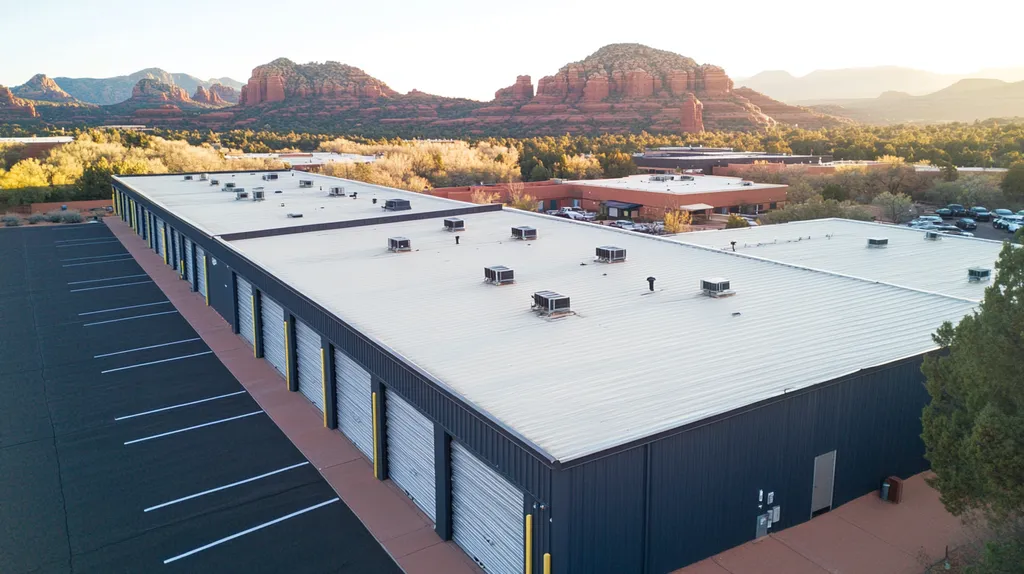
Warehouse complexes have become the proving grounds for reflective coating technology, where vast expanses of flat roofing create perfect canvases for energy-saving applications. These facilities routinely slash summer cooling costs by bouncing solar heat back into space like cosmic ping-pong balls.
Manufacturing plants favor polyurethane coatings for their ability to withstand chemical exposure and heavy equipment vibrations. Meanwhile, office buildings gravitate toward acrylic systems that offer reliable protection without breaking maintenance budgets.
Retail shopping centers represent coating versatility at its finest, often requiring different coating types across various roof sections. Food courts might need silicone systems to handle grease-laden air, while anchor stores opt for reflective acrylics to reduce HVAC loads.
Healthcare facilities demand coatings that resist microbial growth while maintaining sterile air quality standards. Educational institutions appreciate coatings that minimize maintenance disruptions during academic sessions.
The restoration market has embraced coatings as alternatives to complete roof replacement, extending asset lifecycles while preserving operational continuity. However, substrate compatibility remains the make-or-break factor that separates successful applications from expensive failures.
When You Need It Most
Timing coating applications requires the precision of a meteorologist and the patience of a chess grandmaster. Spring and fall weather windows offer ideal conditions, avoiding the temperature extremes that turn coating projects into adhesion nightmares.
The sweet spot for coating intervention arrives when roofs show weathering signs but haven’t crossed into structural failure territory. Think of it as roof middle age—experienced enough to need protection, young enough to benefit from it.
Emergency coating applications during active leak seasons often backfire spectacularly, as moisture-laden substrates reject coatings like incompatible organ transplants. Patience pays dividends when waiting for proper drying conditions.
Budget cycles also influence coating timing, with many facilities scheduling applications during slower operational periods. Manufacturing plants might coordinate coating work with planned production shutdowns to minimize business disruption.
Weather-related damage creates urgent coating opportunities, but rushing applications without proper surface preparation guarantees premature failure. Smart facilities maintain coating readiness while respecting application requirements.
Interactions With Other Systems
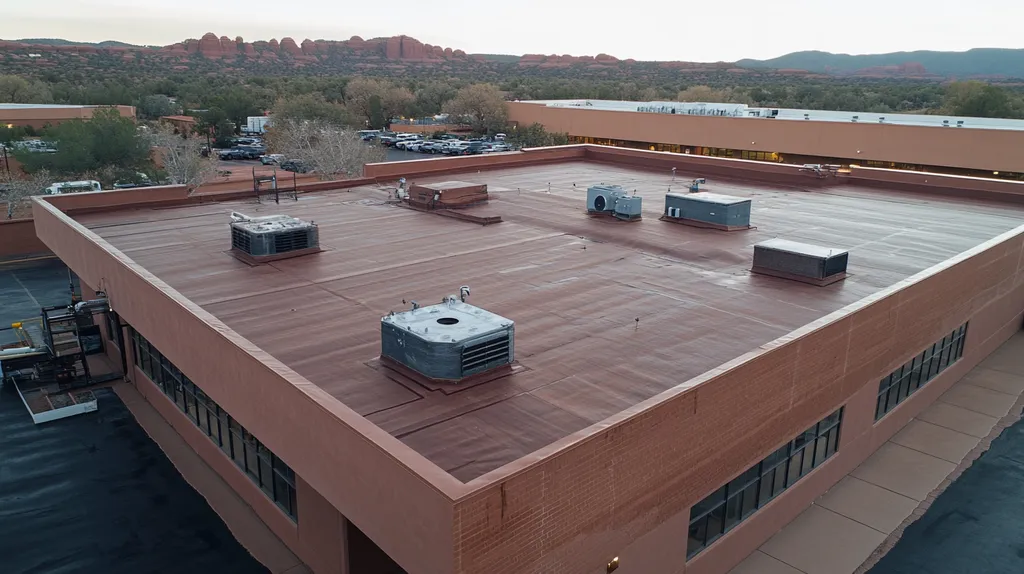
Roof coatings play well with others when properly introduced, but they can become problematic houseguests when compatibility gets overlooked. HVAC units create thermal stress points that require specialized coating attention to prevent cracking around equipment penetrations.
Drainage systems and coatings engage in delicate relationships where thickness control prevents coating buildup from creating water dams. Too much coating enthusiasm can transform minor drainage issues into major ponding problems.
Insulation systems beneath coated roofs require careful moisture management to prevent trapped humidity from undermining the entire assembly. Breathable coating systems allow moisture escape while maintaining weather protection.
Restoration coatings improve durability and extend roof life while preserving insulation systems that contribute to energy efficiency and cost savings. This integrated approach maximizes both protective benefits and operational performance.
Lightning protection systems, satellite equipment, and safety anchors all require coating modifications to maintain functionality while preserving weather sealing. Professional installers coordinate these system interactions to prevent compatibility conflicts (source: Karnak Corporation).
SECTION 3: KEY TERMINOLOGY DECODED
Commercial roofing conversations sound like cryptic code to the uninitiated, where “mils” aren’t currency and “substrates” aren’t agricultural concepts. This linguistic fog creates expensive misunderstandings that turn coating projects into costly learning experiences.
When facility managers can’t decode contractor terminology, they’re essentially flying blind through million-dollar decisions. The difference between “elongation” and “adhesion” isn’t academic—it’s the difference between a coating that protects and one that peels off like expensive paint chips.
Essential Terms Explained
Substrate compatibility determines whether coatings become protective partners or expensive science experiments gone wrong. The substrate—your existing roof material—acts like a dance partner that either moves in harmony with the coating or steps on its molecular toes.
Adhesion describes how well coatings grip their substrates, functioning like industrial-strength handshakes that either last decades or fail embarrassingly during the first weather challenge. Poor adhesion turns protective coatings into expensive confetti scattered across parking lots.
Elongation measures a coating’s ability to stretch without snapping, essentially its yoga flexibility under thermal stress. Coatings with poor elongation crack like dried mud during temperature swings, creating leak pathways instead of protective barriers.
Reflectivity determines how much solar energy bounces back into space versus how much gets absorbed and converted into unwanted heat. High-reflectivity coatings transform rooftops from solar collectors into cosmic mirrors, reducing cooling costs while extending material life.
Cure time represents the coating’s transformation from liquid application to protective membrane, during which weather exposure can ruin everything. Understanding cure requirements prevents rain-damaged applications that waste materials and delay project completion.
Industry Jargon Translated
Mils measure coating thickness in thousandths of an inch, making the difference between adequate protection and premature failure microscopic yet critical. Ten mils might sound insignificant, but it represents the boundary between success and expensive do-overs.
Dry film thickness (DFT) measures what remains after solvents evaporate, revealing whether contractors delivered promised protection or expensive disappointment. Wet film thickness means nothing if half the material vanishes during curing.
Volatile organic compounds (VOCs) represent the environmental baggage that some coatings carry, potentially creating compliance headaches alongside protective benefits. Low-VOC formulations keep environmental regulators happy while delivering roof protection.
Ponding water describes those persistent puddles that turn flat roofs into inadvertent swimming pools, testing coating durability beyond design specifications. Coatings that survive ponding conditions prove their worth during extended weather challenges.
As restoration coatings enhance the roof’s quality and durability while supporting eco-friendly building practices, understanding these technical terms becomes essential for maximizing their protective potential and lifespan benefits (source: Karnak Corporation).
Measurement & Units Simplified
Coverage rates determine how far coating budgets stretch across rooftop real estate, typically measured in square feet per gallon. Optimistic coverage calculations create material shortages that leave projects incomplete and roofs partially protected.
Tensile strength measures how much pulling force coatings can withstand before tearing, essentially their resistance to mechanical stress from wind uplift and thermal movement. Weak tensile strength leads to coating failure during severe weather events.
Permeance ratings indicate how much water vapor can pass through cured coatings, balancing moisture protection with breathability requirements. Impermeable coatings can trap moisture underneath, creating hidden damage while appearing protective on the surface.
Temperature application windows specify the climate conditions necessary for proper coating installation and curing. Ignoring these parameters turns protective applications into expensive mistakes that require removal and replacement.
Service life expectations translate coating investments into years of protection, helping facility managers calculate return on investment and plan maintenance cycles. Realistic service life projections prevent disappointment and enable proper budgeting for future coating renewals.
SECTION 4: DECISION FACTORS
Coating decisions separate savvy facility managers from those who learn expensive lessons through trial and error. The wrong choice transforms protective investments into premature failures that cost more than the original roof replacement they were meant to avoid.
While coating marketing materials promise decades of protection, real-world performance depends on matching the right chemistry to specific building conditions. Smart decision-makers treat coating selection like prescription medicine—one size definitely doesn’t fit all, and generic solutions often create costly complications.
Cost Considerations
Coating mathematics reveal uncomfortable truths about penny-wise, pound-foolish purchasing decisions. That budget-friendly acrylic might cost half the price of premium silicone, but it could also require replacement twice as often, turning apparent savings into expensive illusions.
Labor costs multiply the pain of poor coating choices, as each reapplication requires surface preparation, weather delays, and operational disruptions. A $50,000 coating that lasts fifteen years beats a $30,000 coating that fails after seven years, even without factoring in the chaos of unplanned roof emergencies.
Energy savings add another layer to coating economics, where reflective coatings can slash cooling bills by thousands of dollars annually. These operational savings often justify premium coating investments within just a few summer seasons.
Insurance companies have also joined the coating conversation, offering premium reductions for buildings with quality coating systems. They understand that prevention costs less than claim settlements, creating additional financial incentives for smart coating investments.
Commercial roof restoration coatings significantly extend the roof lifespan by improving durability and quality, offering a cost-effective alternative to replacement while avoiding material waste and protecting valuable insulation systems (source: Karnak Corporation).
Performance Trade-offs
Every coating type brings its own personality quirks and performance baggage to the rooftop party. Acrylics excel at reflecting solar heat and allowing moisture vapor to escape, but they throw tantrums when subjected to ponding water or aggressive weather conditions.
Silicone coatings laugh at water exposure and shrug off UV bombardment like rooftop superheroes, but they demand premium pricing and require specialized repair materials when problems arise. Their slick surfaces also make them less friendly to foot traffic and equipment installations.
Polyurethane coatings handle mechanical abuse and chemical exposure with impressive resilience, making them favorites for industrial applications. However, their flexibility can suffer in extreme temperature swings, and they may require more frequent maintenance in high-UV environments.
Climate compatibility becomes the ultimate performance arbitrator, where coastal facilities need different coating personalities than desert installations. Humid environments favor breathable systems, while arid regions appreciate maximum UV protection above all else.
The key lies in matching coating strengths to building vulnerabilities rather than chasing universal solutions. Smart facility managers prioritize their roof’s biggest threats and select coatings that address those specific challenges.
Lifespan & Durability Factors
Coating longevity promises range from optimistic marketing claims to sobering real-world performance, typically spanning five to twenty years depending on material quality and environmental stress. The difference between coating success and failure often hinges on factors beyond the coating itself.
Substrate preparation determines whether coatings achieve their advertised lifespans or fail prematurely like poorly planted seeds. Clean, properly prepared surfaces create strong adhesion bonds, while contaminated or damaged substrates doom even premium coatings to early failure.
Environmental exposure accelerates coating aging through UV radiation, thermal cycling, and moisture infiltration. Roofs facing southern exposures or extreme weather conditions need more robust coating formulations to achieve reasonable service lives.
Maintenance scheduling transforms coating lifespans from manufacturer estimates into facility realities. Regular inspections catch minor issues before they become major failures, while neglected coatings deteriorate rapidly once problems begin.
Warranty terms reveal manufacturer confidence in their coating longevity claims, but the fine print often excludes the conditions that cause most coating failures. Smart facility managers focus on proven performance data rather than warranty marketing language when making durability assessments.
SECTION 5: COMMON CHALLENGES
Commercial roof coatings transform from protective heroes to expensive villains faster than facility managers can update their maintenance budgets. The gap between manufacturer promises and rooftop reality often spans years of premature failures, emergency repairs, and coating systems that peel away like sunburned skin.
While coating technology has advanced dramatically, the most common failures stem from predictable human errors and environmental ambushes that turn million-dollar protection investments into costly science experiments. Smart facility management requires recognizing these coating catastrophes before they cascade into structural emergencies.
Frequent Problems & Solutions
Application weather gambling represents the most expensive coating mistake facilities make, where contractors rush installations during marginal conditions and create adhesion disasters. Coatings applied in high humidity, temperature extremes, or impending weather fronts bond about as well as wet Post-it notes to glass surfaces.
The solution lies in patient weather monitoring and strict adherence to manufacturer specifications, even when project schedules scream for immediate action. Smart contractors maintain backup dates and communicate weather requirements clearly to facility managers who think coatings work like paint.
Surface contamination creates another adhesion nightmare, where invisible oils, salts, and chemical residues prevent coatings from forming proper molecular bonds. Power washing alone rarely removes these coating killers, requiring specialized cleaning protocols that add time and cost but prevent expensive failures.
Thickness inconsistencies plague coating applications where contractors stretch materials to maximize profits, creating thin spots that fail prematurely and thick areas that cure improperly. Mil gauges become essential quality control tools that separate professional installations from expensive experiments.
Substrate incompatibility turns coating applications into chemical warfare, where different materials reject each other like incompatible blood types. Proper substrate identification and primer selection prevent these molecular conflicts that doom coatings before weather exposure begins.
Warning Signs To Watch For
Blistering and bubbling announce coating adhesion failures with all the subtlety of smoke alarms, indicating trapped moisture or poor substrate bonding that will only worsen with time. These surface eruptions typically precede widespread coating detachment that exposes vulnerable roof materials to weather assault.
Chalking and color changes reveal UV degradation that compromises coating integrity while reducing reflective properties that control building temperatures. What starts as cosmetic fading evolves into performance deterioration that accelerates aging throughout the roof assembly.
Cracking patterns tell stories about coating flexibility failures, thermal stress, or substrate movement that exceeds material capabilities. Hairline cracks become superhighways for water infiltration that can destroy roof systems faster than facility budgets can respond.
Ponding water creates coating stress tests that reveal drainage problems while accelerating material degradation through constant moisture exposure. Facilities Management Advisor emphasizes the importance of draining ponding water from roofs within 48 hours of rain to prevent accelerated deterioration.
Granule loss and surface erosion indicate coating wear that reduces protective thickness while creating rough textures that trap debris and moisture. These changes signal approaching coating failure that requires intervention before complete system breakdown occurs.
Preventative Approaches
Biannual inspection programs catch coating problems during their awkward teenage years, before they mature into expensive adults that demand complete attention. Spring and fall inspections reveal weather damage while allowing repair scheduling during favorable conditions.
Documentation photography creates coating aging profiles that track deterioration patterns and predict maintenance needs with scientific precision. Digital records help facility managers distinguish between normal aging and accelerated failure that indicates underlying problems.
Cleaning protocols maintain coating performance by removing debris buildup that traps moisture and reduces reflectivity, extending service life while preserving energy-saving benefits. Regular maintenance costs pennies compared to premature coating replacement expenses.
Professional maintenance training transforms facility staff from coating observers into early warning systems that spot problems before they cascade into emergencies. Educated eyes catch minor issues during routine activities, preventing expensive surprises during budget planning seasons.
Recoating schedules based on actual performance data rather than arbitrary timelines maximize coating investments while preventing premature failures that destroy maintenance budgets (source: Facilities Management Advisor).
SECTION 6: NEXT STEPS & RESOURCES
Armed with coating knowledge but paralyzed by contractor conversations, facility managers often find themselves speaking different languages during the most critical project discussions. The gap between understanding coating theory and navigating real-world implementation can transform informed decisions into expensive miscommunications.
Smart facility managers treat contractor selection like job interviews—they prepare strategic questions that reveal competency while establishing clear performance expectations. The difference between coating success and costly disappointment often hinges on asking the right questions before signatures hit contracts rather than discovering problems after weather hits rooftops.
Questions To Ask Providers
Substrate compatibility questions separate coating professionals from paint contractors masquerading as roofing experts. Ask potential contractors to identify your specific roof substrate and explain why their recommended coating chemistry creates the best molecular marriage for long-term performance.
Weather window requirements reveal contractor understanding of application science versus schedule pressure. Professional contractors explain temperature, humidity, and precipitation parameters while outlining backup plans for weather delays that protect coating quality over project timelines.
Warranty coverage details expose the confidence gap between marketing promises and performance reality. Demand specifics about what triggers warranty voidance, how repairs get handled, and whether warranties cover labor costs or just material replacement expenses.
Application thickness specifications demonstrate technical competency while establishing quality control standards. Contractors should specify wet and dry film thickness requirements along with the measurement tools they’ll use to verify proper coverage throughout the project.
Maintenance scheduling recommendations reveal long-term partnership potential beyond initial installation. Quality contractors provide inspection checklists, cleaning protocols, and recoating timelines that maximize coating investments while preventing premature system failures.
Industry Standards & Guidelines
ASTM International standards function like coating constitutional law, establishing technical requirements that separate professional applications from expensive experiments. These specifications cover everything from surface preparation protocols to curing requirements that determine coating longevity.
The National Roofing Contractors Association (NRCA) guidelines translate technical standards into practical application procedures that contractors can follow like recipes for coating success. These best practices address common failure points while establishing quality benchmarks.
Local building codes add another layer of compliance requirements that can derail coating projects when overlooked during planning phases. Smart facility managers verify code compliance before contractor selection rather than discovering violations during application.
Insurance company requirements often reference industry standards while adding their own performance criteria for premium reductions or claim coverage. Understanding these connections helps facility managers select coating systems that satisfy multiple stakeholders simultaneously.
Opting for commercial roof restoration instead of full replacement rejuvenates current roofs while refining strength and durability, creating eco-friendly solutions that improve energy efficiency by protecting insulation systems (source: Karnak Corporation).
Further Learning Simplified
Manufacturer technical bulletins provide coating education without sales pressure, offering detailed application guides and troubleshooting resources that help facility managers speak contractor language fluently. These documents translate complex chemistry into practical decision-making tools.
Industry association webinars deliver continuing education in digestible formats that fit busy facility management schedules. Topics range from coating selection criteria to maintenance best practices that extend system lifecycles while controlling costs.
Digital inspection apps transform smartphone cameras into coating assessment tools, enabling facility managers to document conditions systematically while building historical records that support maintenance timing decisions. Technology bridges the gap between professional inspections and routine monitoring.
Professional certification programs offer facility managers credential paths that enhance coating knowledge while building contractor evaluation skills. These programs focus on practical applications rather than theoretical chemistry that doesn’t translate to rooftop reality.
Peer networking through facility management organizations creates informal consultation networks where experienced managers share coating successes and failures. Real-world experience often provides more valuable insights than manufacturer marketing materials or contractor sales presentations.
The Bottom Line
Commercial roof coatings represent a $50,000 decision that either delivers decades of protection or becomes an expensive lesson in the importance of proper planning.
The industry data speaks clearly: facilities that prioritize substrate compatibility, weather-appropriate application timing, and professional installation achieve coating lifespans that justify their investments.
Meanwhile, those who chase bargain solutions or ignore technical requirements join the unfortunate majority whose coatings fail within five years.
Smart facility managers now understand that coating success hinges on matching chemistry to climate, contractor competency to project complexity, and maintenance commitment to manufacturer specifications.
The choice between coating triumph and expensive disappointment rests entirely on whether facilities treat these systems as sophisticated building science or glorified paint jobs.
Those rooftops won’t protect themselves, and coating failures don’t wait for convenient budget cycles.
FREQUENTLY ASKED QUESTIONS
Q. What exactly is a commercial roof coating and why does it matter?
A. Think of it as industrial-grade sunscreen for your building, forming a flexible, waterproof shield over your rooftop. This protective layer guards against harsh weather, UV rays, and temperature tantrums, saving you from costly replacements and surprise indoor water features.
Q. Where are commercial roof coatings most effectively applied?
A. From warehouse ceilings enjoying energy savings to manufacturing plants bouncing back from chemical exposure, coatings shine on varied rooftops. Success hinges on timing, surface checks, and matching the coating’s personality to each building’s unique needs like a bespoke roof tuxedo.
Q. What key terms should facility managers understand about industrial roofs?
A. Words like “substrate,” “adhesion,” and “elongation” aren’t jargon—they’re the lifeblood of coating success. Understanding these ensures your roof’s new skin stretches and sticks properly, reflecting heat like a charm instead of peeling or cracking under pressure.
Q. How do I choose the right commercial roof coating for my building?
A. Picking a coating is less about the flashiest option and more about matching chemistry to climate and roof activity. Think of it as matchmaking—wrong pairs lead to costly breakups, while the right choice boosts lifespan and trims energy bills effortlessly.
Q. What common challenges threaten commercial roof coating performance?
A. Weather gambles, dirty surfaces, and thin coatings are roofing’s party crashers. Catch these early with regular inspections and quality prep—otherwise, your roof’s protective skin can bubble, crack, or fade like a bad tattoo.
Q. What questions should I ask contractors about industrial roof coating projects?
A. Probe their substrate knowledge, weather timing, and warranty coverage like a detective at a rooftop soirée. Strong answers reveal pros who offer more than paint jobs—they deliver peace of mind with quality checks and maintenance advice.
Q. How does roof coating affect my building’s energy efficiency?
A. Reflective coatings act like solar mirrors, bouncing away heat and easing air conditioning stress. This stylish rooftop accessory can shave up to 15% off cooling bills, turning your building into a cooler, happier place without the drama of full roof replacement.






