

Commercial building owners face mounting pressure as aging roofs drive up energy costs and maintenance expenses. Industry studies show that inadequate roofing solutions lead to an average 23% increase in cooling costs and contribute significantly to urban heat islands.
Eco-friendly coating technologies offer a proven path to enhanced building performance and sustainability. These innovative solutions can extend roof life by 15-20 years while reducing cooling expenses by up to 30%.
This comprehensive guide examines critical factors in selecting and implementing eco-friendly roof coatings, from performance metrics and financial considerations to compliance requirements and long-term sustainability planning.
SECTION 1: PERFORMANCE FACTORS
Commercial roofs face a range of challenges that can affect their longevity and efficiency. If roofing maintenance is inadequate, this can lead to leaks, structural damage, and soaring energy costs. By opting for eco-friendly coatings, property owners can tackle these concerns effectively, extending the lifespan of their roofs while enhancing building performance. Grasping the key performance factors of these coatings is crucial for property owners and facilities managers aiming to maximize their roofing investments.
Extended Roof Lifespan
Eco-friendly coatings serve as a protective barrier for roofs, safeguarding them against environmental stressors such as UV rays, harsh weather, and moisture. These coatings can significantly slow down degradation, often doubling the expected lifespan of a roof.
Many traditional roofing materials need replacement every 15-20 years. However, those treated with premium eco-friendly coatings can last much longer, translating to less material waste and reduced replacement costs. This longevity not only benefits property managers but also promotes sustainable practices in the construction industry.
A well-maintained commercial roof equipped with an effective coating can save thousands of dollars in replacement costs over time. By combining regular maintenance with the right coatings, property owners can achieve a more durable roof, ultimately conserving time and resources.
Key Action Items
Enhanced Energy Efficiency
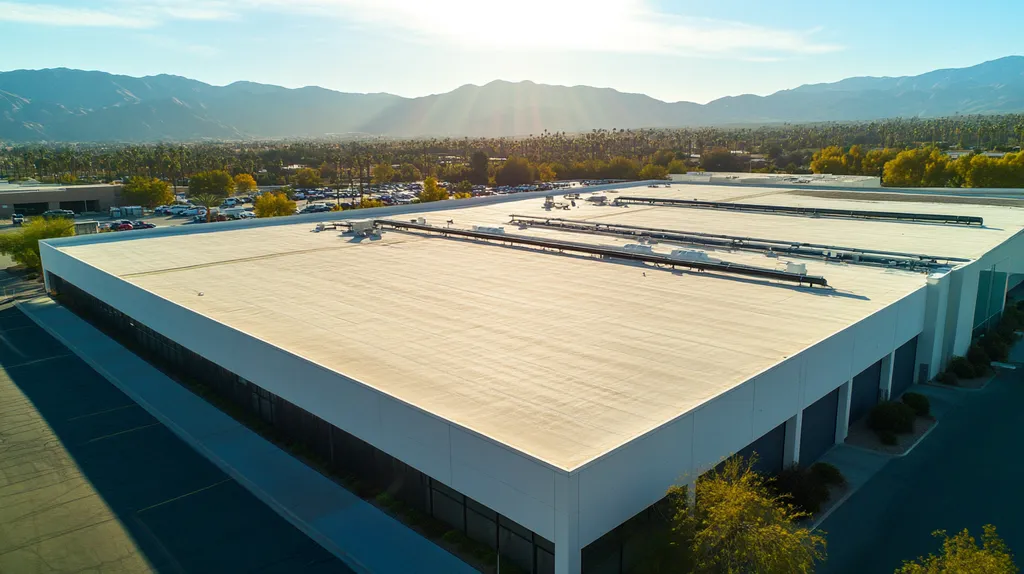
One standout advantage of eco-friendly coatings is their capacity to significantly boost energy efficiency in commercial buildings. Many of these coatings boast reflective properties that minimize heat absorption. For example, light-colored coatings can reduce rooftop temperatures, leading to decreased dependence on air conditioning.
Studies have shown that buildings with reflective roofing can achieve energy savings of 20% or more when compared to those with darker surfaces. This improvement not only lowers operating costs but also contributes to reducing overall emissions and carbon footprints. In an age where energy prices continue to climb, this enhancement becomes crucial for budget-minded property managers.
Implementing energy-efficient roof coatings also supports compliance with energy regulations while boosting sustainability ratings. Furthermore, a commitment to energy efficiency enhances tenant satisfaction and attracts environmentally-conscious clients.
In essence, choosing eco-friendly coatings is a pragmatic step toward a greener future, showcasing a commitment to sustainable practices while positively impacting the bottom line through reduced utility expenses.
Key Action Items
Improved Weather Resistance
Weather-related damage poses a significant threat to commercial roofs, as rain, snow, and wind can undermine structural integrity. Eco-friendly coatings enhance weather resilience by acting as a strong shield against these environmental factors. This protection is especially essential in regions vulnerable to severe weather conditions, where the likelihood of leaks and structural vulnerabilities is heightened.
Research indicates that roofs treated with well-applied coatings can better withstand ponding water, ice, and extreme winds compared to untreated surfaces. This enhanced resistance not only extends the lifespan of the roofing system but also reduces the risk of unexpected expenses from water intrusion and related damage.
Moreover, many of these coatings include additives that enhance mold and mildew resistance, which can thrive in damp conditions. By choosing coatings with these protective properties, property owners can minimize the chances of costly mold remediation efforts.
In summary, selecting eco-friendly coatings that prioritize weather resistance is vital. These measures result in durable roofs capable of withstanding the elements while protecting the interior of the building and extending its operational life.
Key Action Items
SECTION 2: FINANCIAL CONSIDERATIONS
Investing in eco-friendly coatings for commercial roofs is not just a sustainability choice; it’s a financially savvy move for property owners. As energy prices soar, businesses are under increasing pressure to cut costs. Selecting the right roofing solution can significantly reduce energy consumption and lower maintenance expenses over time. Understanding these financial implications is vital for making decisions that enhance both fiscal health and environmental responsibility.
Initial Cost Savings
While it’s true that eco-friendly coatings may necessitate a higher upfront investment than traditional materials, various government incentives are available to help alleviate these costs. Tax credits or rebates for energy-efficient materials can make eco-coatings more financially feasible than many business owners expect.
Additionally, the installation process for eco-friendly coatings can often be more economical. Many coatings can be directly applied over existing roofs, eliminating the need for costly tear-offs and minimizing added material expenses. This results in immediate savings and expedited project timelines.
Investing in eco-friendly roofing may also lead to lower insurance premiums, as many insurers recognize the reduced risks associated with sustainable materials, particularly for properties in storm-prone regions.
Key Action Items
Long-Term Maintenance Costs
One of the most attractive benefits of choosing eco-friendly coatings is their ability to drastically reduce long-term maintenance costs. Traditional roofing systems often demand regular repairs and replacements, leading to ongoing financial strain. In contrast, eco-coatings are typically more durable, extending the life of the roof significantly.
These innovative coatings resist UV damage, corrosion, and severe weather conditions, minimizing repair frequency. This durability allows facility managers to allocate their resources to other vital areas, enhancing overall efficiency.
Many eco-coatings also come with extensive warranties, sometimes lasting between 10 to 20 years. This warranty coverage reduces the financial uncertainties related to anticipated roof repairs over time.
Key Action Items
Energy Cost Reduction
The energy efficiency gained from eco-friendly roof coatings stands out as a major financial advantage. Designed to reflect sunlight, these coatings significantly lessen heat absorption within buildings, leading to marked reductions in cooling costs during hot months.
Research has shown that reflective coatings can lower roof temperatures by up to 30 percent. This cooling effect results in substantial energy savings, leading to decreased utility bills for commercial buildings.
Moreover, these coatings also contribute to mitigating the urban heat island effect, helping create cooler city environments. When multiple buildings adopt eco-coatings, they collectively reduce energy demand, which can translate to lower energy costs across communities.
Key Action Items
SECTION 3: COMPLIANCE REQUIREMENTS
Navigating compliance requirements is essential for commercial building owners, particularly when considering eco-friendly roofing coatings. With growing regulatory pressures and sustainability expectations, understanding environmental regulations, building codes, and certification standards is imperative. Non-compliance can result in substantial fines, project delays, and damage to reputation.
Environmental Regulations
Environmental regulations are pivotal in determining which roofing coatings are permissible. Many local and state governments have enacted laws aimed at reducing emissions and improving energy efficiency. For instance, the U.S. Environmental Protection Agency (EPA) enforces strict limits on volatile organic compounds (VOCs) in roofing materials.
Staying compliant not only helps property owners avoid fines but also promotes a healthier environment. It’s crucial to be aware of local regulations, as they can vary widely across different jurisdictions.
Non-compliance may lead to costly material removal and significant interruptions to business operations. A proactive review of applicable regulations can help streamline roofing projects and facilitate smooth operations.
Key Action Items
Building Codes and Standards
Building codes established by local authorities dictate the required structural and safety performance for roofing systems. Understanding these codes is vital for any commercial roofing project, ensuring that safety and durability standards are met. Many municipalities require specific fire ratings or weather resistance for roofing materials.
Eco-friendly coatings often undergo additional certifications to ensure they comply with building codes while delivering environmental advantages. Coatings designed to reflect heat can positively impact energy codes, further enhancing a building’s efficiency.
Failure to comply with building codes may result in costly retrofits and potential legal liabilities. Collaborating with knowledgeable roofing contractors helps ensure compliance from the beginning of the project.
Key Action Items
Sustainability Certifications
In the commercial roofing sector, sustainability certifications are gaining traction. Organizations like the U.S. Green Building Council’s Leadership in Energy and Environmental Design (LEED) provide guidelines to support eco-friendly practices and lead to certification.
Selecting coatings that qualify for sustainability certifications can enhance a building’s market value and provide incentives such as tax rebates or energy credits. For example, a reflective roof coating can earn points toward LEED compliance, improving overall sustainability.
To effectively leverage these certifications, building owners need to evaluate roofing options and choose products with recognized third-party standards. This ensures the materials truly contribute to sustainability objectives.
Key Action Items
SECTION 4: RISK MANAGEMENT
Neglecting risk management in roofing can lead to costly leaks and extensive damage. Research indicates that water intrusion can result in property damage averaging between $20,000 and $50,000. Eco-friendly coatings serve as a vital solution to mitigate these risks while promoting sustainability. This section will explore leak prevention strategies, UV and weather damage mitigation, and compliance with health and safety regulations.
Leak and Damage Prevention
Applying eco-friendly coatings can significantly mitigate the risk of leaks and structural damage. These coatings create a seamless barrier that protects roofs from water penetration and debris accumulation.
For instance, reflective coatings minimize water pooling while also repelling dirt and grime, which can harm the roof over time. Maintaining a clean and well-protected surface lowers the chance of leaks and extends the roof’s lifespan.
To complement the protective features of eco-friendly coatings, property owners should prioritize regular inspections and maintenance. A proactive approach helps identify potential issues before they escalate into costly repairs.
Key Action Items
UV and Weather Damage Mitigation
UV radiation and extreme weather can quickly degrade traditional roofing materials, leading to premature failures. Eco-friendly coatings are engineered to withstand these environmental pressures effectively.
For example, cool roofs featuring reflective coatings can lower surface temperatures, which helps prevent thermal expansion and contraction. This protection reduces the likelihood of cracks and structural damage.
Enhanced UV protection also means less frequent replacements, thereby saving costs over the roof’s lifecycle. By utilizing these reflective coatings, property managers not only protect their roofs but also improve energy efficiency.
Key Action Items
Health and Safety Compliance
Compliance with health and safety regulations is critical for all commercial buildings. Eco-friendly coatings generally contain fewer volatile organic compounds (VOCs), helping to ensure a safer environment for occupants.
Selecting low-VOC options contributes to improved indoor air quality, which can enhance employee productivity and overall well-being. This choice not only meets current regulations but future-proofs properties against stricter laws.
Moreover, choosing sustainable materials reduces environmental impact while promoting a positive public image. Facility managers can showcase their commitment to sustainability, appealing to eco-conscious tenants and customers.
Key Action Items
SECTION 5: OPERATIONAL PROCEDURES
Implementing effective operational procedures for eco-friendly roofing coatings is essential for success. Inadequate installation and maintenance can lead to costly repairs, early roof failures, and environmental harm. Research indicates that mismanaged roofs contribute to higher energy consumption and greenhouse gas emissions. This section highlights crucial application techniques, maintenance practices, and effective repair and replacement strategies to promote sustainable and long-lasting roofing solutions.
Application and Installation
Successful application of eco-friendly roof coatings starts with thorough surface preparation. Without cleaning, contaminants can compromise adhesion, resulting in premature failure of the coating. Surfaces must be free of dust, debris, and moisture to ensure optimal performance.
Choosing the right product is equally important. High-quality coatings, such as acrylic or silicone, enhance energy efficiency while providing superior UV protection. Strict adherence to manufacturer guidelines during application is critical.
Weather conditions also impact the application process; coatings should be applied during moderate and dry temperatures to ensure proper curing and avoid issues like bubbling or peeling later. Engaging experienced professionals can significantly improve the results, as they understand how to maximize the longevity and performance of different roof types.
Key Action Items
Maintenance and Inspection
Regular maintenance is crucial in prolonging the life of eco-friendly roofing systems. Establishing a semi-annual inspection schedule can help identify potential problems before they escalate into costly repairs. During inspections, property owners should assess for signs of coating degradation, such as discoloration or cracking.
Addressing these issues promptly maintains roof integrity and energy efficiency. Minor repairs can prevent significant financial burdens compared to extensive restorations later on. Maintaining detailed documentation of inspection findings guides future maintenance efforts and budgeting.
Incorporating professional maintenance services into facility management can ensure compliance with eco-friendly standards, further extending the roofing system’s life and supporting overall sustainability goals.
Key Action Items
Repair and Replacement Strategies
Timely responses to roofing issues are essential to maintain the effectiveness of eco-friendly coatings. When damage occurs, addressing it swiftly prevents further deterioration. Property owners should design a clear strategy for handling leaks, blisters, or peeling.
For repairs, utilizing the same type of eco-friendly coating ensures compatibility and performance consistency. For example, if the existing roof features a silicone coating, repairs should also use silicone to maintain integrity.
A comprehensive evaluation of the roof’s condition will guide replacement decisions. If over 25% of the coating is damaged, a full replacement could be warranted. Establishing a long-term replacement strategy, including budgets and timelines, will prevent emergencies and enhance operational efficiency.
Key Action Items
SECTION 5: OPERATIONAL PROCEDURES
Implementing effective operational procedures for eco-friendly roofing coatings is essential for maximizing performance and sustainability. Neglecting proper installation and maintenance can lead to early failures, expensive replacements, and adverse environmental effects. Studies indicate that poorly managed roofs significantly raise energy consumption and greenhouse gas emissions. This section will detail crucial application techniques, maintenance practices, and efficient repair and replacement strategies to ensure that sustainable roofing solutions remain effective and enduring.
Application and Installation
Successful application of eco-friendly roof coatings begins with thorough surface preparation. Effective cleaning is vital; if surfaces are not free from dust, debris, and moisture, adhesion suffers, resulting in premature coating failure. Proper preparation ensures optimal performance and longevity of the coating.
Selecting the right product is crucial for achieving desired results. For example, high-quality acrylic or silicone coatings can significantly enhance energy efficiency and provide robust UV protection. Strictly adhering to manufacturer application guidelines is essential to achieve these benefits.
Weather conditions also play a vital role in application success. Ideally, coatings should be applied during moderate and dry weather to allow for proper curing, preventing issues like bubbling or peeling in the future. Engaging experienced professionals ensures that coatings are installed effectively, tailored to the specific needs of various roof types.
Key Action Items
Maintenance and Inspection
Routine maintenance is critical for extending the life of eco-friendly roofing systems. Establishing a semi-annual inspection schedule allows property owners to identify wear and tear before they escalate into costly problems. During inspections, check for signs of coating degradation, such as discoloration or cracking.
Promptly addressing issues helps maintain the roof’s integrity and energy efficiency. Minor repairs are typically far less expensive than major restorations, making timely actions financially wise. Documenting inspection findings provides valuable insights that guide future maintenance efforts.
Incorporating professional maintenance services into facility management plans ensures adherence to eco-friendly standards and further extends the roofing system’s lifespan. Engaged professionals are essential for achieving desired sustainability outcomes.
Key Action Items
Repair and Replacement Strategies
Addressing roofing issues promptly is essential for maintaining the effectiveness of eco-friendly coatings. When damage occurs, swift action prevents further deterioration. Property owners should establish a clear strategy for responding to leaks, blisters, or peeling.
Utilizing the same type of eco-friendly coating during repairs is crucial for ensuring compatibility and performance consistency. For example, if a silicone coating was originally applied, subsequent repairs should also incorporate that same product to preserve the integrity of the roof.
A comprehensive evaluation of the roof’s condition will determine whether repair or replacement is necessary. If more than 25% of the coating is damaged, a full replacement may be warranted. Planning a long-term replacement strategy that includes timelines and budgets can help property owners avoid emergency situations and enhance sustainability goals.
Key Action Items
Looking Ahead
With commercial buildings accounting for 35% of U.S. energy consumption and roofing contributing significantly to this figure, the adoption of eco-friendly coatings represents a critical opportunity for meaningful change.
Modern coating technologies have demonstrated their ability to reduce cooling costs by up to 30% while extending roof life by 15-20 years, making them both environmentally and financially advantageous.
As regulations tighten and energy costs continue to rise, property owners who delay implementing sustainable roofing solutions risk falling behind competitors and facing increased operational expenses.
The evidence clearly shows that eco-friendly coatings deliver measurable benefits across multiple metrics – from enhanced durability and reduced maintenance costs to improved energy efficiency and environmental compliance.
The time for sustainable roofing transformation is now, with eco-friendly coatings leading the way toward a more resilient and efficient future for commercial buildings.
FREQUENTLY ASKED QUESTIONS
Q. How do eco-friendly coatings enhance the lifespan of a commercial roof?
A. These coatings create a protective barrier against environmental stressors like UV rays and moisture. By slowing down degradation, they can effectively double a roof’s expected lifespan, thus promoting sustainability and reducing waste.
Q. What financial benefits can I expect from eco-friendly coatings on my industrial roof?
A. Although these coatings may have a higher initial cost, they lead to significant long-term savings through reduced energy consumption and maintenance expenses. Additionally, many government incentives can offset the initial investment, making them financially attractive.
Q. How can I ensure my commercial roof complies with environmental regulations?
A. Staying compliant involves reviewing local regulations related to roofing materials, especially those governing volatile organic compounds (VOCs). Consulting with experts ensures that your roofing solutions meet all applicable environmental standards.
Q. What strategies can I use for leak prevention on my commercial roof?
A. Applying eco-friendly coatings provides a seamless barrier against water penetration, and incorporating regular maintenance and inspections can help catch potential leak issues early. This proactive approach extends the roof’s lifespan and minimizes unexpected repair costs.
Q. How do I select the right eco-friendly coating for my roof?
A. Start by assessing your building’s specific needs, including climate factors and roofing materials. Choose high-quality coatings that provide energy efficiency and UV protection. Consulting with professionals can also guide you to the best options for your unique situation.
Q. What maintenance practices should I follow for my eco-friendly-coated roof?
A. Establish a semi-annual inspection schedule to check for signs of coating degradation, address minor issues promptly, and document all findings. Regular cleaning and incorporating professional maintenance services will also help extend the lifespan of your roof.
Q. What are the long-term environmental benefits of eco-friendly roofing materials?
A. These materials contribute to a decrease in greenhouse gas emissions, enhance energy efficiency, and reduce landfill waste due to their extended lifespan. By adopting eco-friendly practices, commercial buildings can significantly lower their environmental footprint.






