

Rising energy costs and intensifying climate challenges have made roof reflectivity a critical concern for commercial property owners. Studies show that inefficient roofing systems waste up to 40% of cooling energy, contributing to both higher operational expenses and environmental impact.
A well-designed reflective roof can reduce peak cooling demand by 11-27% while improving indoor comfort and reducing urban heat island effects. Understanding the science, components, and maintenance requirements of reflective roofing systems has become essential for making informed facility management decisions.
This comprehensive guide examines the fundamental concepts, implementation strategies, and optimization techniques that drive modern commercial roof performance, helping property owners maximize both energy savings and environmental benefits.
SECTION 1: FUNDAMENTAL CONCEPTS
As climate change intensifies and energy costs skyrocket, understanding roof reflectivity has become crucial for commercial property owners. Today’s roofing decisions directly impact both operational costs and environmental sustainability. A high-reflectivity roof can reduce peak cooling demand by 11-27% in air-conditioned buildings, translating to substantial energy savings and improved indoor comfort. This section explores the key concepts that drive roofing energy performance.
Understanding Solar Reflectance and Thermal Emittance
Solar reflectance represents a roof’s ability to bounce sunlight away from the building surface rather than absorbing it as heat. This property, also known as albedo, serves as the primary factor in determining a roof’s cooling effectiveness.
Thermal emittance measures how readily a roof releases any heat it does absorb back into the atmosphere. This characteristic is particularly important in warm, sunny climates where heat buildup can significantly impact cooling costs.
Together, these two properties determine how effectively a roof can maintain lower temperatures. A high solar reflectance coupled with high thermal emittance creates the ideal combination for reducing cooling loads and urban heat island effects. (source: U.S. Environmental Protection Agency)
The Solar Reflectance Index (SRI) Explained
The Solar Reflectance Index provides a standardized way to compare different roofing materials’ overall thermal performance. This single value incorporates both solar reflectance and thermal emittance measurements.
SRI values typically range from 0 to 100, with higher numbers indicating better heat-reflecting properties. Standard black surfaces score near 0, while standard white surfaces approach 100.
Many building codes and green building certification programs now specify minimum SRI requirements. Understanding these values helps property owners select materials that meet compliance requirements while maximizing energy efficiency.
Energy Transfer Mechanisms in Roofing Materials
Heat moves through roofing systems via three primary mechanisms: conduction, convection, and radiation. Conduction occurs when heat transfers directly through materials, while convection involves heat movement through air or liquid.
Radiation, particularly important in roofing, involves heat transfer through electromagnetic waves from the sun. Different roofing materials interact with these transfer mechanisms in unique ways, affecting overall thermal performance.
Modern roofing systems often incorporate multiple layers designed to manage these transfer mechanisms. Reflective surfaces minimize radiation absorption, while insulation layers control conduction and air gaps manage convection.
Understanding these mechanisms enables property owners to select roofing systems that effectively manage heat transfer through all three pathways, optimizing building energy performance year-round.
SECTION 2: SYSTEM COMPONENTS
Every component in a commercial roofing system plays a critical role in managing energy consumption and environmental impact. With cooling costs representing up to 15% of total building energy use, the right combination of reflective materials, insulation, and structural components can dramatically reduce both operating expenses and carbon footprint. Understanding how these elements work together enables property owners to make choices that benefit both their bottom line and their community.
Reflective Roofing Membranes and Coatings
Cool roofs absorb and transfer significantly less solar heat into buildings through their combination of high solar reflectance and thermal emittance. These systems can reduce peak cooling demand by 11-27% in air-conditioned buildings while helping combat urban heat island effects. (source: U.S. Environmental Protection Agency)
Modern reflective membranes include options like thermoplastic polyolefin (TPO), polyvinyl chloride (PVC), and modified bitumen with reflective granules. Each offers unique benefits for different building types and climate zones.
Field-applied reflective coatings provide an alternative for existing roofs, offering improved solar reflection without full membrane replacement. These coatings can restore aging roofs while simultaneously upgrading their thermal performance.
Regular maintenance and cleaning of reflective surfaces ensures optimal performance throughout their service life. Even minor surface contamination can reduce reflectivity by 15-25%.
Insulation and Radiant Barriers in Roof Assemblies
Proper insulation serves as the thermal foundation of any energy-efficient roofing system. Modern materials like polyisocyanurate and expanded polystyrene offer superior R-values while maintaining reasonable installation costs.
Strategic insulation placement within the roof assembly maximizes thermal resistance. Multiple layers with staggered joints prevent thermal bridging and enhance overall system performance.
Radiant barriers complement traditional insulation by reflecting up to 97% of radiant heat. These materials prove particularly effective in hot climates where solar heat gain presents the greatest challenge.
Moisture management within insulation layers remains crucial for long-term performance. Proper ventilation and vapor control prevent condensation that could compromise thermal efficiency.
Substrate and Roof Deck Influence on Energy Performance
The structural deck fundamentally shapes a roof’s thermal behavior. Metal decks respond quickly to temperature changes, while concrete decks provide thermal mass that moderates temperature swings.
Proper deck ventilation contributes significantly to energy performance. Well-designed air spaces help regulate temperatures and prevent moisture accumulation that could degrade insulation effectiveness.
Surface texture and color of exposed deck areas impact local heat absorption and transfer. Smooth, light-colored surfaces complement reflective roofing strategies by minimizing heat buildup.
Load-bearing capacity of the deck determines insulation thickness options. Stronger decks allow for thicker insulation packages that deliver superior thermal performance.
SECTION 3: IMPLEMENTATION METHODS
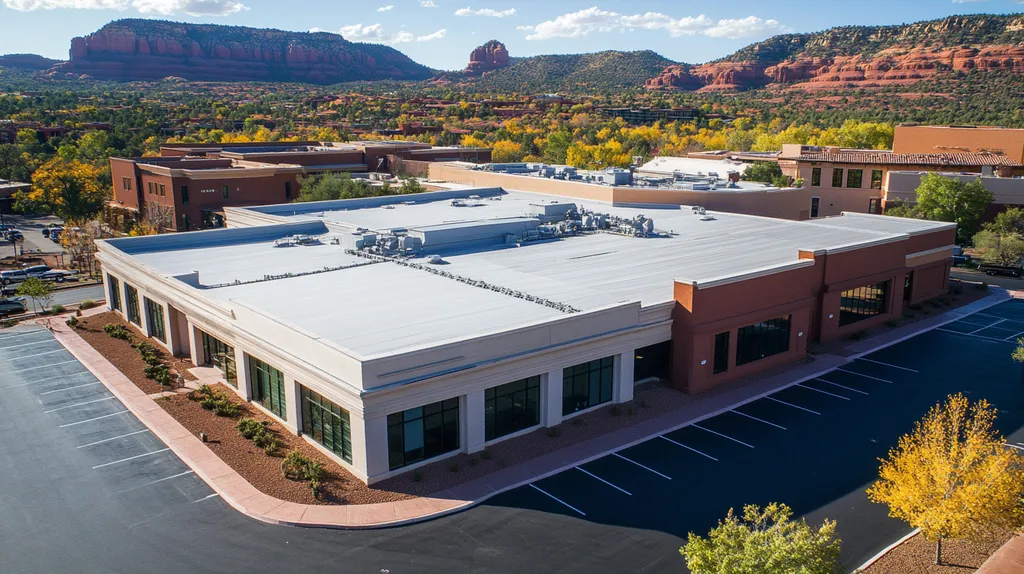
The successful implementation of reflective roofing systems demands careful attention to material selection, installation precision, and regulatory compliance. With commercial buildings accounting for nearly 35% of U.S. cooling energy consumption, proper implementation of reflective roofing can dramatically reduce operational costs while promoting environmental sustainability. This section examines the critical factors that determine reflective roof performance, from initial material choices through final installation and compliance requirements.
Selecting Roof Materials to Maximize Reflectivity
Material selection begins with understanding the building’s specific needs and local climate conditions. Different regions require varying balances between reflectivity and other performance characteristics like durability and weather resistance.
Single-ply membranes like TPO and PVC offer excellent initial reflectivity values, often exceeding 80% solar reflectance. These materials maintain their reflective properties longer than many alternatives, making them cost-effective over their lifecycle.
Modified bitumen and built-up roofing systems can achieve high reflectivity through specialized cap sheets or surface coatings. These options provide durability while delivering energy-saving benefits.
Cool roof coatings present a viable option for upgrading existing roofs, offering improved reflectivity without the need for complete system replacement. However, substrate compatibility and proper surface preparation are crucial for coating performance.
Installation Techniques Affecting Reflective Performance
Proper installation begins with thorough surface preparation, including cleaning, repairs, and primer application where needed. Even minor installation defects can significantly impact a roof’s reflective performance.
Seam quality particularly affects system performance in single-ply installations. Properly welded seams prevent heat infiltration and maintain the roof’s overall reflective integrity.
Application thickness must be carefully controlled when installing reflective coatings. Variations in coating thickness can create hot spots that reduce energy-saving benefits.
Post-installation cleaning and inspection ensure that construction debris or damage doesn’t compromise the roof’s reflective properties. Regular maintenance schedules should be established during installation planning.
Compliance with ENERGY STAR and Building Codes
Solar reflectance from a cool roof can reduce peak cooling demand by 11–27% in air-conditioned buildings, while high solar reflectance and thermal emittance reduce temperatures both on the roof and inside the building. (source: U.S. Environmental Protection Agency)
Local building codes increasingly mandate minimum reflectivity values for commercial roofs. Understanding these requirements early in the planning process ensures compliance and prevents costly modifications.
ENERGY STAR certification requires initial solar reflectance of at least 0.65 and maintained reflectance of 0.50 after three years. Meeting these standards often qualifies buildings for energy incentives and tax benefits.
Documentation of material specifications and installation procedures helps verify compliance and can support warranty claims. Maintaining these records also simplifies future maintenance and replacement planning.
SECTION 4: MAINTENANCE REQUIREMENTS
The long-term performance of reflective commercial roofs depends critically on proper maintenance. Studies show that poorly maintained reflective roofs can lose up to 35% of their energy-saving capabilities within the first three years, dramatically increasing cooling costs and environmental impact. Understanding and implementing proper maintenance protocols not only preserves energy efficiency but also extends roof lifespan and protects your investment.
Inspecting and Cleaning Reflective Roof Surfaces
A high solar reflectance is the most important characteristic of a cool roof’s ability to reflect heat away from buildings. Regular inspection and cleaning are essential to maintaining this critical property over time. (source: U.S. Environmental Protection Agency)
Professional inspections should occur at least twice annually, with additional checks following severe weather events. These inspections must evaluate surface cleanliness, membrane condition, and drainage system functionality.
Cleaning protocols should match the specific roofing material and local environmental conditions. Low-pressure washing with appropriate cleaning solutions preserves membrane integrity while removing performance-degrading contaminants.
Maintenance teams must pay special attention to areas where debris accumulates, such as around HVAC units and in corners. These zones often experience accelerated degradation and require more frequent attention.
Impact of Weathering and Aging on Reflectance
Environmental exposure gradually reduces roof reflectivity through multiple mechanisms. UV radiation breaks down surface compounds, while airborne pollutants and biological growth create a dulling layer that absorbs rather than reflects solar energy.
Temperature cycling causes microscopic surface changes that can reduce reflective properties. These effects compound over time, making early intervention crucial for maintaining performance.
Different roofing materials show varying resistance to weathering effects. Single-ply membranes typically maintain reflectivity longer than field-applied coatings, though all surfaces eventually require restoration.
Regular reflectivity testing helps track performance degradation and optimize maintenance timing. Simple field tests can identify when cleaning or recoating becomes necessary to maintain energy efficiency.
Repair and Recoating Best Practices
Small repairs must be addressed promptly to prevent larger issues. Even minor damage can create entry points for moisture, leading to insulation degradation and reduced thermal performance.
Surface preparation determines recoating success. Thorough cleaning, proper drying, and careful attention to manufacturer specifications ensure optimal adhesion and longevity of new coatings.
Application conditions significantly impact coating performance. Temperature, humidity, and surface moisture must fall within specified ranges for proper curing and durability.
Post-application quality control should include thickness measurements and visual inspections for complete coverage. Follow-up inspections after 30 days can identify any early adhesion or performance issues requiring correction.
SECTION 5: PERFORMANCE METRICS
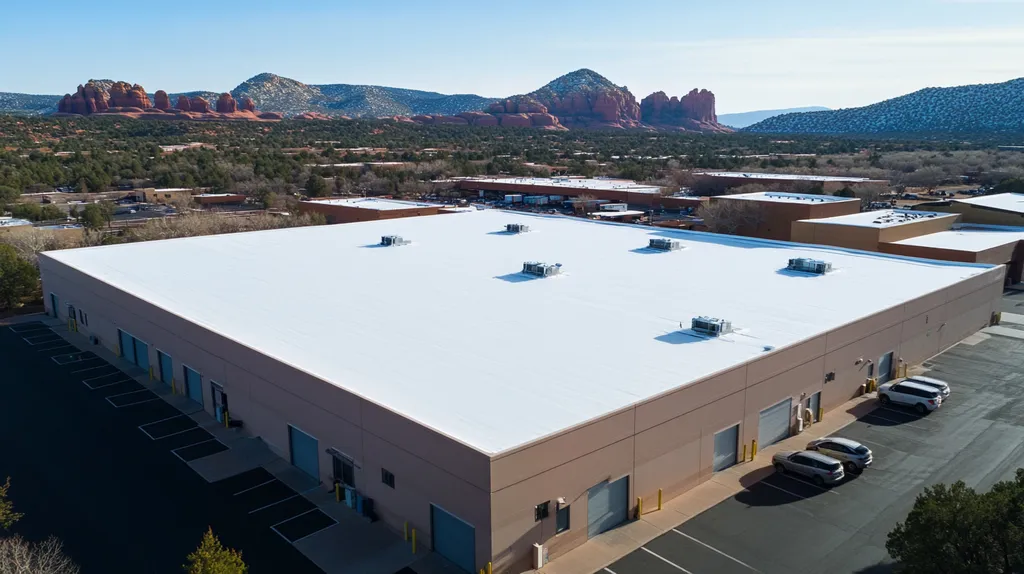
Performance metrics guide critical decisions about commercial roofing systems that impact both immediate costs and long-term sustainability. With energy prices continuing to rise, understanding and optimizing these metrics has become essential for property owners and facility managers. Proper measurement and tracking of roof performance can reduce cooling costs by up to 27% while extending system lifespan. This section examines the key metrics that determine roofing efficiency and their practical application in commercial settings.
Measuring Initial and Aged Solar Reflectance Values
Solar reflectance indicates a roof’s ability to deflect incoming sunlight, making it the primary factor in determining cooling efficiency. Initial measurements provide baseline performance data, typically ranging from 0.20 for dark surfaces to over 0.80 for highly reflective materials.
Environmental exposure gradually reduces reflectance through contamination, weathering, and material degradation. Regular testing helps track these changes and determines when maintenance or restoration becomes necessary.
Field measurements using solar reflectometers provide accurate performance data under actual conditions. These readings help facility managers optimize cleaning schedules and evaluate the cost-effectiveness of restoration options.
Documentation of both initial and aged values creates a performance history that guides future roofing decisions. This data proves particularly valuable when evaluating warranty claims or planning system upgrades.
Assessing Thermal Emittance and Its Role in Cooling
A high solar reflectance coupled with high thermal emittance creates optimal cooling conditions by reflecting incoming heat and releasing absorbed energy. These combined properties reduce roof and indoor temperatures, lowering peak cooling demand by 11–27% in air-conditioned buildings. (source: U.S. Environmental Protection Agency)
Thermal emittance values typically range from 0.05 for bare metals to 0.95 for most white coatings. Higher values indicate better heat-releasing capability, which becomes especially important during extended hot periods.
Material selection should balance both reflectance and emittance properties. Some highly reflective surfaces, like bare metal, have poor emittance that reduces their overall cooling effectiveness.
Regular monitoring of thermal emittance helps identify performance degradation before it significantly impacts energy costs. Simple field tests can determine when surfaces require cleaning or recoating to maintain optimal performance.
Utilizing SRI for Roof Performance Evaluation
The Solar Reflectance Index (SRI) combines reflectance and emittance measurements into a single value for easier comparison. This standardized scale ranges from 0 for standard black surfaces to 100 for standard white surfaces, though some materials can score outside this range.
Most green building programs and energy codes specify minimum SRI values for commercial roofs. Understanding these requirements helps property owners select compliant materials while maximizing energy efficiency.
Climate zone considerations affect optimal SRI targets. Buildings in hot climates generally benefit from higher SRI values, while those in mixed climates might need to balance summer cooling against winter heat retention.
Regular SRI testing helps track system performance and guide maintenance decisions. Declining values often indicate when cleaning or restoration could improve energy efficiency and extend roof lifespan.
SECTION 6: OPTIMIZATION STRATEGIES
As energy costs continue rising and climate challenges intensify, optimizing roof reflectivity has become essential for commercial building performance. Industry data shows that inefficient roofing systems waste up to 40% of cooling energy, driving up operational costs while contributing to urban heat islands. Through strategic implementation of advanced reflective technologies, integrated ventilation systems, and climate-specific design approaches, facility managers can dramatically reduce energy consumption while improving occupant comfort and environmental impact.
Enhancing Roof Reflectivity with Cool Roof Technologies
A high solar reflectance coupled with high thermal emittance can reduce peak cooling demand by 11-27% in air-conditioned buildings, while simultaneously lowering roof and indoor temperatures. This combination proves especially valuable in warm, sunny climates where cooling loads dominate energy costs. (source: U.S. Environmental Protection Agency)
Advanced coating systems now offer unprecedented reflectivity levels, with some products achieving initial solar reflectance values above 85%. These materials utilize specialized pigments and surface treatments to maximize sunlight reflection while maintaining durability.
Emerging technologies like phase change materials and switchable optical properties allow roofs to adapt their reflective properties based on environmental conditions. This dynamic response optimizes energy performance across seasonal changes.
Integration of photovoltaic systems with reflective roofing can create synergistic benefits. The cooler operating temperatures from reflective surfaces improve solar panel efficiency while the panels provide additional shading.
Integrating Roof Ventilation and Reflective Systems
Strategic ventilation design amplifies the benefits of reflective roofing by managing heat that does penetrate the system. Proper air movement through the roof assembly can reduce peak deck temperatures by up to 30°F.
Advanced ventilation technologies like solar-powered exhaust fans provide active cooling without increasing energy consumption. These systems are particularly effective when coordinated with reflective surfaces to minimize heat absorption.
Moisture management becomes crucial when implementing ventilation strategies. Careful placement of vapor barriers and air gaps prevents condensation while maintaining thermal performance.
Smart monitoring systems can now optimize ventilation operation based on real-time conditions. This automated approach ensures maximum efficiency while reducing maintenance requirements.
Designing for Climate Zone and Building Type Specifics
Climate-specific optimization requires balancing reflectivity with other performance factors. Hot climates benefit from maximum reflectance, while mixed climates may need adjustable or seasonal solutions.
Building use patterns significantly impact optimal reflectivity levels. Facilities with high internal heat loads require different solutions than those with minimal equipment heat generation.
Roof geometry and orientation influence reflective system design. South-facing slopes often benefit from higher reflectivity, while north-facing sections may prioritize other performance characteristics.
Local microclimate factors, including surrounding buildings and vegetation, must inform design decisions. Urban heat island effects often necessitate higher reflectivity levels than similar buildings in suburban locations.
Looking Ahead
With commercial buildings wasting up to 40% of cooling energy through inefficient roofing, the imperative for implementing reflective roofing systems has never been clearer.
Studies consistently demonstrate that well-designed reflective roofs can reduce peak cooling demand by 11-27%, translating to substantial operational savings while combating urban heat island effects.
As energy costs continue rising and climate challenges intensify, property owners who fail to optimize roof reflectivity risk both financial and environmental consequences.
Through strategic material selection, proper installation, regular maintenance, and performance monitoring, commercial facilities can maximize the benefits of reflective roofing technology while contributing to a more sustainable built environment.
The future of commercial roofing clearly points toward integrated solutions that balance energy efficiency, environmental responsibility, and long-term cost effectiveness.
FREQUENTLY ASKED QUESTIONS
Q. What is roof reflectivity in a commercial roof?
A. Roof reflectivity is a measure of how well a roof can bounce sunlight away. This helps lower building temperatures and reduces cooling costs, creating a more comfortable indoor environment. Understanding this concept is essential for optimizing energy efficiency in your commercial building.
Q. How do components of an industrial roof impact energy use?
A. Each component of an industrial roof, including reflective materials and insulation, plays a vital role in its energy performance. Together, they help control heat transfer, optimize cooling efficiency, and reduce overall energy consumption. This combination not only cuts operating costs but also minimizes environmental impact.
Q. What are the best practices for installing a commercial roof?
A. Selecting the right materials and ensuring proper installation are paramount for effective performance. Thorough surface prep, attention to detail in seams, and careful application of coatings significantly affect a roof’s energy efficiency. Compliance with codes also ensures durability and peak performance over time.
Q. How can I maintain my commercial roof effectively?
A. Regular inspections and cleaning are crucial for maintaining a commercial roof’s performance. Focus on removing debris and addressing minor repairs promptly to prevent larger issues. Establishing a routine maintenance schedule helps ensure that the roof retains its energy efficiency over time.
Q. What performance metrics should I track for an industrial roof?
A. Key performance metrics include solar reflectance, thermal emittance, and the Solar Reflectance Index. Regular tracking of these values enables you to identify energy-saving opportunities and maintain optimal roof performance. This data is essential for making informed decisions about repairs and upgrades.
Q. How can I optimize a commercial roof for energy efficiency?
A. To optimize energy efficiency, combine high-reflectivity materials with effective ventilation strategies. Implementing advanced technologies, like solar panels integrated with reflective roofing, can maximize energy savings and enhance overall building performance. Tailoring design approaches to your specific climate will further improve efficiency.
Q. What is the Solar Reflectance Index for commercial roofs?
A. The Solar Reflectance Index (SRI) measures a roof’s ability to reflect solar energy and release absorbed heat. It is a crucial factor for determining compliance with building codes and energy efficiency standards. Higher SRI values indicate better performance, making it vital for sustainable roofing solutions.






