

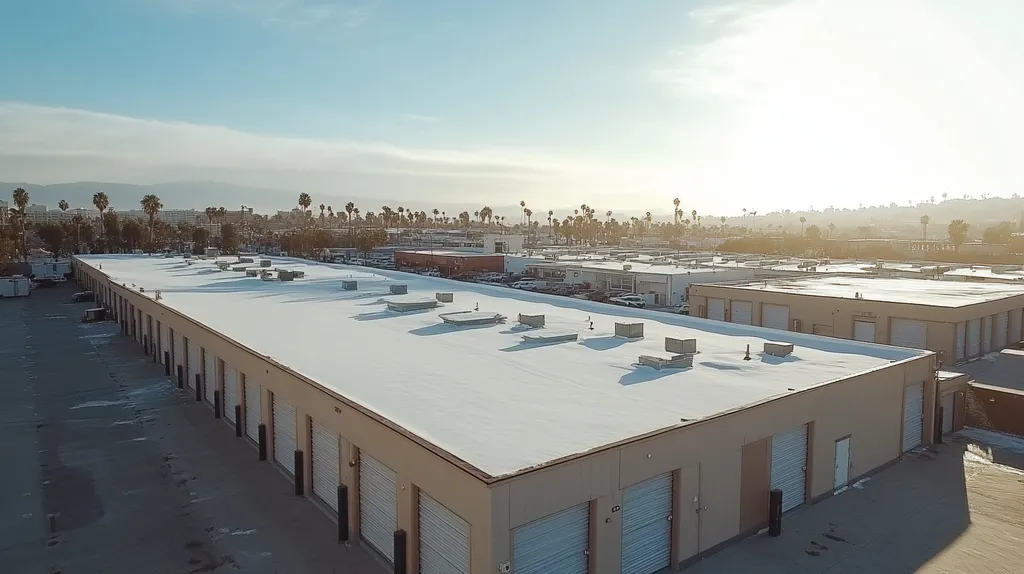
As energy costs soar and climate change intensifies, commercial buildings face mounting pressure to reduce their environmental impact and operating expenses. Studies show that traditional dark roofs can reach temperatures up to 150°F during summer months, dramatically increasing cooling costs and accelerating roof deterioration.
Reflective roof coatings emerge as a critical solution, capable of reducing roof surface temperatures by 50-60°F while cutting cooling energy usage by up to 30%.
This comprehensive guide equips facility managers with actionable strategies for selecting, implementing, and maintaining reflective roof systems – from performance metrics and financial considerations to compliance requirements and risk management protocols.
SECTION 1: PERFORMANCE FACTORS
As energy costs rise and climate awareness grows, the importance of optimizing building efficiency is more urgent than ever. Reflective roof coatings stand out as an effective solution, significantly decreasing heat absorption. Given that commercial buildings contribute nearly 40% of the nation’s energy consumption, facility managers must grasp the critical performance factors of these coatings. This knowledge empowers them to make choices that not only promote financial savings but also enhance environmental sustainability.
Reflective Properties and Solar Reflectance
The reflective properties of a roof dictate how much sunlight it absorbs. Roofs designed with high solar reflectance are capable of deflecting a substantial portion of sunlight, thereby preventing excessive heat buildup. Studies have shown that installing reflective roofs can lower surface temperatures by as much as 30 degrees Fahrenheit compared to conventional materials.
When selecting a reflective coating, it’s crucial to look for a high Solar Reflectance Index (SRI), which ranges from 0 to 100—where higher values indicate better reflectivity. For optimal thermal performance, choose coatings with an SRI above 78.
Additionally, color and finish come into play in determining reflectivity. Lighter colors generally reflect more sunlight than darker shades. By considering these elements, facility managers can further optimize energy efficiency and lower cooling expenses.
Regular maintenance is vital as well. Factors such as dirt, debris, and weathering can diminish reflectivity over time, negating initial benefits. Routine inspections and cleaning are essential to uphold high performance.
Key Action Items
Thermal Emittance and Heat Dissipation
Thermal emittance plays a key role in how well a roof can release any absorbed heat back into the atmosphere. Coatings with high thermal emittance can quickly cool the roof surface, working in tandem with reflectivity to optimize temperature regulation.
For best results, select coatings with thermal emittance ratings close to 1.0. When combined with high solar reflectance, these materials can keep roof surfaces much cooler, significantly boosting energy efficiency.
Ineffective heat dissipation could lead to increased demand on HVAC systems, resulting in higher utility costs. Selecting materials that excel in both reflectivity and thermal emittance can mitigate overheating risks and extend the lifespan of roof structures.
A comprehensive understanding of thermal dynamics enhances decision-making, leading to more sustainable building practices. Reflective coatings that excel in both areas work together to dramatically improve overall roof performance.
Key Action Items
Insulating Properties and Thermal Resistance
The insulating properties of a roof have a significant effect on how much heat enters a building. Thermal resistance, indicated by the R-value, is vital for maintaining comfortable indoor temperatures. While reflective coatings are known for minimizing heat absorption, they can also enhance the insulation potential of the roof.
Facility managers should assess the R-value of both the existing roof system and the chosen reflective coating. Coatings that bolster thermal resistance can help further reduce energy loss, aiding in maintaining stable indoor climates.
In colder climates, some reflective coatings can be specially formulated to enhance thermal performance during winter months, making heating costs more manageable. Thus, combining the right reflective and insulating materials becomes essential.
Conducting regular assessments of insulation effectiveness allows facility managers to pinpoint areas for improvement. By upgrading insulation along with reflective coatings, they can achieve compounded benefits in energy efficiency.
Key Action Items
SECTION 2: FINANCIAL CONSIDERATIONS
With rising energy costs, commercial property owners face significant financial challenges. Reflective roof coatings offer a promising solution by reducing energy consumption, which leads to lower cooling bills. Research indicates that these coatings can cut energy usage by as much as 30% during peak summer months. This section highlights three key financial aspects: energy savings, extended roof lifespan, and overall return on investment.
Energy Savings and Reduced Cooling Costs
Utilizing reflective roof coatings directly lowers cooling costs, providing immediate financial relief. By reflecting sunlight, these coatings limit heat absorption, reducing the reliance on air conditioning. In warmer regions, this can lead to annual savings that range from hundreds to thousands of dollars.
For instance, a facility with a large flat roof might experience a cooling cost reduction of 20% or more following the application of a reflective coating. This not only decreases operating expenses but also enhances energy efficiency overall.
Additionally, many utility companies offer incentives for energy-efficient upgrades, which can help offset initial installation costs. These rebates make investing in reflective coatings an even smarter financial choice.
Key Action Items
Extended Roof Lifespan and Maintenance Costs
Applying reflective coatings can distinctly prolong a roof’s lifespan. By shielding roofing materials from heat damage and UV degradation, these coatings help in preventing premature wear and tear.
A typical commercial roof lasts about 20 years; however, with a reflective coating, that lifespan could be extended by 5 to 10 years. This increase in longevity results in less frequent costly replacements, generating substantial savings over time.
Moreover, reflective coatings can significantly reduce maintenance needs. Cooler roofs are less affected by issues such as thermal expansion, which can lead to leaks, thereby lowering maintenance expenses and improving overall ROI.
Key Action Items
Return on Investment and Payback Period
The return on investment (ROI) for installing reflective roof coatings is impressive. Facility managers must weigh the initial costs against long-term savings, and often find that these coatings can pay for themselves within just a few years.
Typically, payback periods vary from 3 to 5 years based on energy rates and local climate conditions. This fast return makes reflective coatings a highly appealing option for facility budgets.
Additionally, energy-efficient upgrades like reflective coatings can increase property value. Buildings with lower operating costs attract prospective tenants, thereby boosting rental income potential.
Key Action Items
SECTION 3: COMPLIANCE REQUIREMENTS
Understanding compliance requirements is essential for facility managers considering reflective roof coatings. Ignoring these regulations can result in costly penalties and project delays. Familiarity with the relevant standards not only ensures regulatory compliance but also optimizes energy efficiency and enhances environmental impact.
Building Codes and Regulatory Standards
Building codes differ depending on the region but typically set minimum safety and performance standards for roof installations. Reflective roof coatings must comply with local codes and the International Building Code (IBC). Facility managers need to verify that their chosen products adhere to these standards to avoid any legal complications.
For example, the IBC outlines specific wind load requirements that coatings must meet. Engaging local code officials early in the planning phase is crucial for understanding particular local regulations. Meeting compliance not only safeguards the investment but also improves the property’s lifespan.
Additionally, some municipalities impose specific standards for reflective materials, particularly in urban settings focused on mitigating the heat island effect. Proactivity in addressing these requirements can facilitate a smoother installation process and eliminate potential compliance hurdles.
Key Action Items
Environmental and Energy Efficiency Regulations
Environmental regulations are increasingly influencing roofing decisions. With rising climate concerns, governments are enacting strict energy efficiency standards. Facility managers should familiarize themselves with initiatives like ENERGY STAR, which evaluates roofing products based on reflectivity and thermal performance.
Utilizing compliant reflective roof coatings can lower energy costs and potentially qualify properties for financial incentives or rebates. For instance, obtaining ENERGY STAR certification may provide tax advantages or reduced utility rates.
Moreover, numerous states have sustainable initiatives that promote reflective materials to decrease energy consumption. Overlooking these regulations can lead to significant fines and damage a company’s public image.
Key Action Items
Certification and Labeling Requirements
Certification and labeling are vital for confirming that reflective roof coatings meet industry standards. Proper certifications provide facility managers with confidence in their products’ performance capabilities. The Cool Roof Rating Council (CRRC) offers a platform for rating products based on their reflectivity and emissivity.
Facility managers must verify that selected roofing materials possess appropriate CRRC ratings to demonstrate compliance with industry benchmarks. Choosing compliant products supports the property’s commitment to sustainability.
Furthermore, various local programs might require specific labeling for reflective systems. Understanding these criteria can avoid delays in project approvals and minimize compliance risks.
Key Action Items
SECTION 4: RISK MANAGEMENT
As temperatures continue to rise due to climate change, maintaining effective roofing solutions becomes critical for facility managers. The risks associated with heat-related damage can threaten a building’s structural integrity and lead to costly repairs. Reflective coatings help combat these challenges by keeping roofs cooler, preventing material degradation, and reducing moisture intrusion. Ignoring these risks can have severe implications for both property longevity and occupant safety.
Heat-Related Damage and Material Degradation
Without reflective coatings, commercial roofs are susceptible to excessive heat absorption, which accelerates material degradation. Common roof types, such as asphalt and membrane systems, can experience issues like blistering and cracking, sharply decreasing their lifespan. As these materials break down, the risk of damage to the underlying structure increases, leading to even higher repair costs.
Implementing reflective coatings helps protect roofs from thermal stress, extending their lifespan significantly. Studies show that roofs with reflective surfaces maintain lower temperatures and experience less thermal cycling, which not only reduces repair frequency but optimizes the building’s overall performance.
Moreover, when rooftops remain cooler, rooftop equipment, such as HVAC units, operate more efficiently, resulting in reduced energy costs and improved comfort for occupants. Keeping roofs intact ultimately saves facility managers money on maintenance and energy expenses, making the adoption of reflective coatings a financially prudent strategy.
Key Action Items
Moisture and Water Damage Prevention
High surface temperatures can lead to condensation and the pooling of water on roofs, posing serious risks for commercial buildings. Reflective coatings help maintain lower roof surface temperatures, thereby reducing the chances of condensation and moisture buildup.
Moisture intrusion not only risks water damage but also promotes mold growth, which can create health hazards for occupants. Remediation of mold can be an expensive process, impacting long-term operational budgets. By preventing moisture issues, reflective coatings play a vital role in maintaining a safe indoor environment.
Additionally, water damage can compromise a building’s structural integrity, leading to expensive repairs down the line. Regular inspections show that reflective coatings contribute significantly to cooler roof conditions, minimizing these risks before they become costly problems. Managing moisture effectively with reflective coatings protects materials while enhancing overall health and safety.
Key Action Items
Health and Safety Implications of Heat Island Effect
The urban heat island effect presents considerable health risks not only to communities but directly to building occupants as well. Increased temperatures lead to higher reliance on air conditioning, resulting in wider energy consumption and worsening heat. This cycle can proceed to discomfort and even heat-related illnesses in workers.
Reflective coatings counteract the heat island effect by lowering roof surface temperatures, which helps cool the surrounding ambient environment. This leads to better air quality and less heat stress for building occupants, fostering a more pleasant work atmosphere.
Facility managers should consider the broader impacts of heat management on employee health and productivity. Cooler environments contribute to greater comfort and can enhance work performance. Thus, adopting reflective coatings not only benefits health but also presents a strong economic case for investment.
Key Action Items
SECTION 5: OPERATIONAL PROCEDURES
Effective operational procedures are critical for facility managers overseeing the installation and maintenance of reflective coatings on commercial roofs. Improper application or neglect can lead to inefficient energy use and higher cooling costs. Research indicates that poorly maintained reflective roofs can raise indoor temperatures by up to 10°F, negatively impacting tenant comfort and overall building efficiency. Familiarity with proper techniques is essential for maximizing the benefits and ensuring the longevity of roofing systems.
Proper Application and Installation Techniques
Applying reflective coatings correctly is fundamental to achieving their full potential. Initially cleaning the roof is essential to eliminate debris and dirt that could weaken the bond of the coating. For optimal results, coatings should be applied during favorable weather conditions, ideally when temperatures are above 50°F.
Selecting high-quality coatings that are specifically designed for the existing roof material is crucial. Additionally, applying multiple thin coats rather than one thick layer promotes better adhesion and durability. This approach ensures that the reflective coating performs effectively over time.
Regular calibration of spray equipment guarantees an even distribution, minimizing drips and ensuring consistent coverage. It’s also wise to engage trained professionals who specialize in applying reflective roof systems, as their expertise can greatly enhance overall performance. Finally, documenting the installation process serves as a resource for future maintenance and inspections.
Key Action Items
Regular Maintenance and Inspection Protocols
Ongoing maintenance of reflective coatings is vital for maintaining their energy efficiency. Facility managers should establish a regular inspection schedule, ideally conducting assessments at least twice a year. Key focus areas during inspections include signs of wear, water pooling, and coating degradation.
Evaluating the performance of the coat is crucial; significant dirt buildup may require cleaning to restore reflective efficiency. A clean surface will maximize the coating’s ability to reflect sunlight, leading to reduced heat absorption and lower cooling expenses.
Monitoring for damage, such as cracks or peeling, is essential to maintain the coating’s integrity. Timely repairs can prevent extensive damage down the line. Ensuring drainage systems are clear is also important, as this minimizes water pooling, which can lead to coating deterioration.
Key Action Items
Repair and Touch-Up Procedures
Even with regular maintenance, reflective coatings will experience some wear and tear over time. Quick action to repair any identified damage is crucial for extending the lifespan of the roof and maintaining energy efficiency. Facility managers should be knowledgeable about recognizing when repairs are necessary.
For minor damages like scratches, touch-up applications can often be applied without needing to recoat the entire roof. It’s essential to match the new reflective product to the existing one to ensure compatibility and maintain performance.
For more extensive repairs, seeking the advice of a roofing professional may be the best course of action, ensuring underlying issues are addressed. Keeping detailed records of all repairs performed helps track maintenance history, guiding future decisions regarding renovation and upkeep.
Key Action Items
SECTION 5: OPERATIONAL PROCEDURES
For facility managers, establishing effective operational procedures is crucial when installing and maintaining reflective coatings on commercial roofs. If applied incorrectly or neglected, these coatings can lead to significant energy losses and rising cooling costs. Research shows that poorly managed reflective roofs can increase indoor temperatures by as much as 10°F, impacting tenant comfort and building efficiency. Understanding the best practices for installation and ongoing maintenance is essential to fully leverage the advantages of reflective coatings.
Proper Application and Installation Techniques
Correctly applying reflective coatings is essential to achieving their maximum effectiveness. The first step involves thoroughly cleaning the roof surface to eliminate dust, grease, and debris that can weaken the coating’s adhesion. For best results, coatings should be applied when temperatures exceed 50°F and under favorable weather conditions.
Choosing the right materials is also crucial. Facility managers should select high-quality coatings designed specifically for their roof type. Applying multiple thin coats instead of one thick layer enhances bond strength and durability, ensuring long-lasting performance.
Calibration of spray equipment is key to achieving an even application, which helps avoid drips and inconsistencies. Hiring trained professionals with experience in reflective roof systems is a wise investment, as their expertise can significantly enhance overall efficiency. Documenting the entire installation process helps maintain clarity regarding the methods and materials used.
Key Action Items
Regular Maintenance and Inspection Protocols
Routine maintenance is critical to preserving the energy efficiency benefits of reflective coatings. Facility managers should implement a regular inspection schedule, ideally at least biannually, to evaluate the roof’s condition. Key areas to check include signs of wear, water pooling, and overall coating integrity.
During these inspections, assessing the coating’s reflective performance is crucial. If there’s significant dirt build-up, a cleaning may be necessary to restore its reflective properties. A clean roof surface enhances the coating’s ability to reflect sunlight, reducing heat absorption and cooling costs.
Another important maintenance focus is identifying damages such as cracks or peeling. Addressing these issues promptly can prevent more extensive problems down the line. Furthermore, ensuring that drainage systems remain clear is vital in preventing water pooling that can lead to premature coating deterioration.
Key Action Items
Repair and Touch-Up Procedures
Despite regular maintenance, some wear and tear on reflective coatings will occur over time. Timely repairs are essential to extend the roof’s lifespan and preserve energy efficiency. Facility managers need to be aware of signs indicating when repairs are necessary.
Minor damages, such as scratches, can often be treated with touch-up applications, allowing repairs without the need to recoat the entire roof. It’s important to ensure that the touch-up product is compatible with the existing coating.
For larger repair areas, it’s advisable to consult with roofing professionals who can provide solutions that address underlying issues. Keeping a detailed record of all repairs and touch-ups helps track maintenance history and informs future maintenance strategies.
Key Action Items
Looking Ahead
With commercial building energy costs projected to rise 30% by 2030, reflective roof coatings represent a critical opportunity for facility managers to reduce expenses while advancing sustainability goals.
Studies consistently demonstrate that properly selected and maintained reflective coatings can decrease roof surface temperatures by 50-60°F and cut cooling costs by up to 30%.
Success requires careful attention to performance metrics, financial considerations, compliance requirements, risk management protocols, and operational procedures outlined in this guide.
As climate challenges intensify and energy efficiency regulations tighten, investing in reflective roof systems is no longer optional – it’s a strategic imperative for future-focused facility management.
The time to act is now, before rising temperatures and operating costs impact your bottom line.
FREQUENTLY ASKED QUESTIONS
Q. What are the key performance factors for a commercial roof?
A. The main performance factors include solar reflectance, thermal emittance, and color. High solar reflectance minimizes heat absorption, while good thermal emittance helps the roof release heat effectively. Additionally, lighter colors generally reflect more sunlight, contributing to better overall energy efficiency.
Q. How can a reflective coating benefit an industrial roof financially?
A. Reflective coatings can significantly lower cooling costs and extend roof lifespan. This translates into financial savings, as less frequent replacements are needed. Additionally, energy-efficient upgrades might qualify for rebates, enhancing the overall return on investment for facility managers.
Q. What are the compliance requirements for reflective coatings on commercial roofs?
A. Compliance requirements often include local building codes and energy efficiency standards, such as those from ENERGY STAR. It’s essential to verify that chosen coatings meet specific regional regulations. Fulfilling these requirements not only avoids penalties but also ensures project success and sustainability.
Q. How does heat-related damage affect a commercial roof’s lifespan?
A. Excessive heat absorption can lead to material degradation, such as cracking and blistering. This accelerates the decline of the roof, resulting in costly repairs and potentially compromising the building’s structure. Implementing reflective coatings can mitigate these risks by maintaining lower roof temperatures.
Q. What proper installation techniques are vital for reflective coatings on commercial roofs?
A. Proper installation starts with cleaning the roof to ensure good adhesion. Coatings should be applied in suitable weather, ideally above 50°F, using high-quality materials. Applying multiple thin layers enhances durability, and ensuring even distribution with calibrated equipment optimizes performance.
Q. How should facility managers conduct regular inspections of reflective roofs?
A. Regular inspections should occur at least biannually, focusing on signs of wear, water pooling, and coating integrity. Cleaning dirt buildup is essential for maintaining reflectivity, and addressing any damage promptly helps preserve the roof’s performance and extend its lifespan.
Q. What unique advantages do reflective coatings offer in urban settings?
A. In urban environments, reflective coatings combat the heat island effect by lowering surface temperatures. This can reduce energy consumption and improve local air quality, benefiting both the building occupants and the surrounding community. Such coatings also align with sustainability initiatives often seen in urban planning.






