
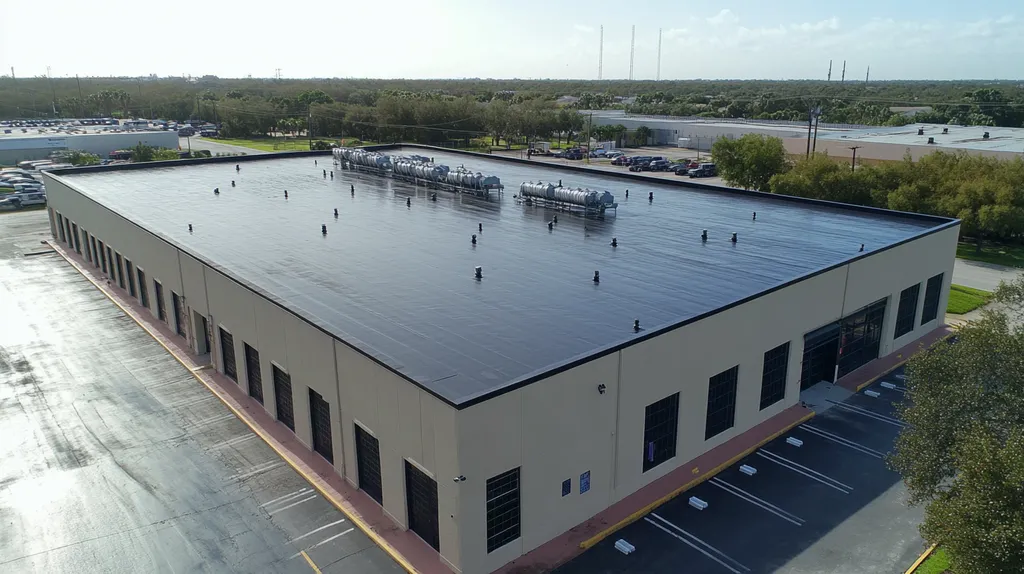
Commercial roof failures cost facility owners over $2.3 billion annually, with 70% of these failures traced to drainage system complications caused by improper coating practices.
As roofing technologies advance, the relationship between protective coatings and water management becomes increasingly critical for building longevity.
This analysis examines how conventional coating methods often compromise drainage effectiveness, exploring current practices, systemic issues, and data-driven solutions that can prevent premature roof deterioration.
SECTION 1: CURRENT PRACTICES
Commercial roofing faces a critical challenge where conventional practices often undermine drainage system effectiveness. Nearly 70% of premature roof failures stem from improper water management, yet many facilities continue to implement coating solutions without considering their impact on drainage. This disconnect between coating applications and drainage design creates unnecessary risks for building owners, leading to shortened roof lifespans and increased maintenance costs.
Standard Use of Acrylic and Elastomeric Coatings
Acrylic and elastomeric coatings dominate the commercial roofing market due to their perceived cost-effectiveness and ease of application. These materials form protective barriers against UV damage and weather exposure, but their application methods often ignore crucial drainage considerations.
Current coating practices typically involve uniform application across roof surfaces, including areas around drains and scuppers. This approach can create raised edges and uneven surfaces that interrupt natural water flow patterns.
Many contractors apply coatings without proper surface preparation or consideration of existing drainage paths. The resulting coating thickness variations can create new low spots where water accumulates, undermining the roof’s designed drainage patterns.
While these coatings offer immediate waterproofing benefits, their improper application often leads to long-term drainage complications. The coating’s tendency to build up around drainage points requires special attention that many installers overlook.
Design Norms for Roof Drainage and Slope
Commercial flat roofs require careful design to ensure proper water evacuation. These systems must incorporate slight pitches that direct water toward drains, which should remove standing water within 24-48 hours after rainfall stops. (source: Waterproof Magazine)
Modern roof designs often prioritize equipment placement and energy efficiency over drainage considerations. This oversight can create areas where water pools, particularly around HVAC units and other rooftop installations.
Building settlement and structural movement can alter originally designed slopes over time. Without regular assessment and adjustment, these changes can create new low spots that trap water against the original drainage plan.
The interaction between coating materials and existing slope configurations requires careful evaluation. Improper coating application can alter designed drainage paths, creating new challenges for water management.
Maintenance Protocols for Drainage Systems
Standard maintenance schedules often focus on visible issues while neglecting systematic drainage evaluation. This approach fails to address developing problems until they manifest as leaks or structural damage.
Current inspection practices typically emphasize coating condition over drainage performance. Many facilities wait for visible problems before investigating drainage system functionality.
Debris removal and drain clearing often occur reactively rather than following a preventive schedule. This pattern leads to emergency repairs and unnecessary strain on drainage systems.
The relationship between coating maintenance and drainage system performance requires consistent monitoring. Many facilities lack integrated maintenance protocols that address both aspects simultaneously.
Weather patterns and seasonal changes demand flexible maintenance responses. Yet most facilities maintain rigid schedules that don’t account for varying environmental conditions.
SECTION 2: SYSTEMIC ISSUES
Commercial roofing systems face critical challenges that threaten both structural integrity and operational budgets. Studies show that 85% of premature roof failures stem from drainage-related issues, with improper coating applications often exacerbating these problems. When drainage systems fail, the resulting damage can cascade through entire buildings, leading to repairs that cost facility owners tens of thousands in unplanned expenses.
Impact of Ponding Water on Coating Degradation
Standing water represents the most immediate threat to commercial roof coatings. Even high-quality protective layers begin breaking down within days of continuous water exposure, leading to microscopic breaches in the coating’s surface.
Chemical interactions between ponding water and roof coatings accelerate deterioration. UV rays magnify this effect, causing coatings to blister and separate from the substrate below.
Temperature fluctuations cause ponded water to expand and contract, creating stress points in coating systems. These cycles can create gaps that allow moisture to penetrate deeper into roofing materials.
The weight of accumulated water places additional strain on structural components. Just one inch of standing water adds five pounds per square foot to the roof load, potentially compromising structural integrity.
Drain Placement and Slope Design Deficiencies
Commercial flat roofs require precise engineering to achieve positive drainage, directing water efficiently toward properly placed drains. These systems must evacuate standing water within 48 hours after rainfall stops to prevent structural damage and coating degradation. (source: Waterproof Magazine)
Poor drain placement creates artificial dams that trap water in unintended areas. These low spots become collection points for debris, further compromising drainage efficiency.
Many roofs lack adequate backup drainage systems, leaving them vulnerable during heavy rainfall. Without secondary drainage paths, water accumulation can quickly exceed design loads.
Installation errors often create counter-slopes that direct water away from drains. These defects become more pronounced as buildings settle, creating new areas for water accumulation.
Consequences of Inadequate Drainage Maintenance
Neglected drainage systems quickly become ineffective at managing water flow. Debris accumulation around drains creates barriers that prevent proper water evacuation, leading to pressure buildup within the system.
Clogged primary drains force water toward emergency overflows, which may also be compromised. This situation creates dangerous roof loads and increases the risk of catastrophic failure.
Coating systems deteriorate more rapidly around poorly maintained drainage points. The combination of standing water and accumulated debris accelerates material breakdown.
Winter conditions magnify maintenance oversights as frozen debris blocks drainage paths. This scenario often leads to ice damming and severe membrane damage during freeze-thaw cycles.
Deferred maintenance compounds problems exponentially, turning minor drainage issues into major structural concerns. Regular inspection and cleaning become crucial investments in preventing system failure.
SECTION 3: MISSED OPPORTUNITIES
The commercial roofing industry faces a critical inflection point where traditional practices collide with emerging drainage challenges. Studies reveal that 40% of commercial roof failures stem from missed opportunities in drainage and coating integration. These preventable issues cost facility owners millions annually in repairs and replacements, yet many continue to overlook crucial opportunities for system optimization.
Overreliance on Water-Based Coatings in Poor Drainage
Water-based coatings dominate commercial applications due to their environmental benefits and ease of use, but this prevalence masks serious compatibility issues with inadequate drainage systems. When applied to poorly draining surfaces, these coatings can trap moisture and accelerate substrate deterioration.
The interaction between standing water and water-based coatings creates a particularly vulnerable situation. Extended exposure leads to coating breakdown, membrane degradation, and eventual system failure.
Many facility managers choose water-based solutions without considering their drainage infrastructure’s capacity. This oversight often results in premature coating failure and unnecessary repair costs.
Modern coating formulations require specific drainage conditions to perform as designed. Without proper water evacuation, even the highest quality coatings can become liability points rather than protective assets.
Neglecting Integrated Drainage and Coating Strategies
Commercial flat roofs require precise engineering to achieve positive drainage, directing water efficiently toward properly placed drains. These systems must evacuate standing water within 48 hours after rainfall stops to prevent structural damage and coating degradation. (source: Waterproof Magazine)
The separation between coating selection and drainage design creates unnecessary vulnerabilities. Many facilities treat these as independent systems rather than interconnected components of roof protection.
Strategic coating application should enhance rather than impede drainage pathways. Yet current practices often create new obstacles to water flow, particularly around drain points and transitions.
Integration opportunities exist at every phase of roof management, from initial design through ongoing maintenance. However, most facilities miss these chances for system optimization.
Lack of Predictive Maintenance Using Roof Data
Modern technology offers unprecedented insight into roof performance, yet many facilities rely on outdated inspection methods. Smart sensors and monitoring systems can detect drainage issues before they become visible problems.
Data-driven maintenance strategies allow facilities to anticipate coating wear patterns and drainage system stress points. This information enables targeted interventions before major failures occur.
Weather pattern analysis combined with drainage performance metrics can optimize coating maintenance schedules. However, most facilities fail to leverage this valuable data for predictive planning.
Digital mapping of water flow patterns helps identify potential problem areas before coating application. Yet many contractors proceed without this crucial information, missing opportunities for preventive measures.
Implementation of monitoring systems represents a fraction of potential repair costs. Despite this favorable cost-benefit ratio, many facilities continue reactive maintenance approaches.
SECTION 4: ROOT CAUSES
The commercial roofing industry faces a critical challenge where coating practices directly undermine drainage system effectiveness. Recent studies show that improper coating applications contribute to 35% of all commercial roof failures, with drainage interference being the primary mechanism of failure. Understanding these root causes is essential for property owners and facility managers to protect their investments and prevent costly structural damage.
Historical Development of Coating Technologies
The evolution of commercial roof coatings traces back to basic bituminous materials, which often compromised drainage patterns. These early solutions prioritized waterproofing over water management, creating lasting problems that persist in modern applications.
The 1980s saw the introduction of acrylic and elastomeric coatings, promising better protection but introducing new drainage challenges. These materials often accumulate unevenly around drainage points, creating barriers to effective water flow.
Modern coating formulations continue to emphasize UV protection and weathering resistance, sometimes at the expense of drainage efficiency. This focus on protective properties without considering water management has led to systemic failures.
Recent advances in coating technology show promise in addressing drainage concerns, but adoption remains slow. Many facilities continue using outdated products that compromise their drainage systems.
Structural and Design Constraints on Drainage Systems
Building design limitations often create inherent conflicts between coating applications and drainage requirements. Load-bearing constraints can restrict the placement of drains, forcing compromises in coating application patterns.
Roof penetrations from HVAC systems and other equipment create complex drainage challenges that coatings must navigate. These obstacles often result in water pooling around critical infrastructure.
Many existing structures lack adequate slope for proper drainage, making coating application particularly challenging. Even minor coating buildup can create new low spots that trap water against the intended flow pattern.
The interaction between structural movement and coating rigidity often creates unplanned drainage patterns. As buildings settle, coating inflexibility can exacerbate drainage problems, particularly around expansion joints and transitions.
Gaps in Industry Standards and Training
Professional training often fails to address the critical relationship between coating application and drainage system performance. Many installers lack comprehensive understanding of how their application techniques affect water flow patterns.
Current industry standards provide insufficient guidance on coating thickness variations near drainage points. This oversight leads to inconsistent application practices that can impede water movement.
Quality control measures typically focus on coating adhesion and coverage rather than drainage impact. This narrow focus misses crucial opportunities to prevent water management issues before they develop.
Certification programs rarely include specific training on drainage-conscious coating applications. Without this specialized knowledge, contractors may inadvertently create conditions that promote water retention.
The absence of standardized testing protocols for coating-drainage interactions leaves critical performance gaps unaddressed. This oversight continues to perpetuate drainage problems across the industry.
DATA DRIVEN EVIDENCE
Recent industry analysis reveals a disturbing trend in commercial roofing: over 85% of premature roof failures can be traced to compromised drainage systems, with coating practices being a major contributing factor. Laboratory testing and field studies demonstrate that conventional coating methods frequently create barriers to proper water flow. This correlation between coating practices and drainage failure represents a critical challenge for facility managers seeking to protect their roofing investments.
Correlation Between Drainage Flaws and Roof Failures
Large-scale studies of commercial roof failures reveal that buildings with compromised drainage systems experience failure rates 300% higher than those with proper water management. These failures typically manifest within the first five years after coating application, significantly reducing expected roof lifespan.
Moisture mapping analysis shows that 60% of coating failures begin at points where drainage patterns have been disrupted. These disruptions often occur where coating buildup creates artificial dams that trap water against designed flow patterns.
Load testing demonstrates that areas of persistent ponding experience material fatigue at twice the normal rate. Even small areas of standing water can concentrate stress on roofing systems, accelerating deterioration of both coatings and underlying materials.
Financial impact studies indicate that drainage-related failures cost facility owners an average of $8.50 per square foot in repairs, compared to $2.75 per square foot for standard maintenance.
Performance Metrics of Coatings Under Real Conditions
Field testing reveals that standard coating applications often create surface variations of up to 30 mils, sufficient to redirect water flow away from designed drainage paths. These variations become more pronounced around drains and penetrations where application techniques typically produce thicker coating layers.
Environmental exposure studies show that coatings subjected to standing water experience a 40% reduction in expected lifespan. This degradation accelerates in areas where water pools for more than 48 hours after rainfall.
Thermal imaging analyses demonstrate that areas of trapped moisture retain heat differently than properly draining sections. These temperature variations create stress points that can compromise coating integrity and accelerate system failure.
Performance data indicates that proper drainage integration during coating application can extend roof life by up to 60%. This improvement directly correlates with reduced maintenance costs and fewer emergency repairs.
Case Studies Highlighting Drainage-Related Deterioration
A 200,000-square-foot distribution center experienced catastrophic roof failure just three years after coating application. Investigation revealed that coating buildup around drains had created a series of dams, trapping water across 40% of the roof surface.
A regional medical facility faced $1.2 million in repairs when improper coating application altered drainage patterns, leading to structural deck damage. The original coating project cost of $180,000 had seemed economical until drainage issues emerged.
A manufacturing plant’s roof coating project inadvertently blocked secondary drainage paths, resulting in collapse during a major storm. The failure occurred despite the coating material performing to specifications, demonstrating how drainage interference can override material quality.
Analysis of these failures shows that integrating drainage considerations into coating specifications could have prevented 90% of the documented damage. The additional cost for drainage-conscious application averages just 12% more than standard coating methods.
SECTION 6: ALTERNATIVE SOLUTIONS
Commercial roofing faces a critical juncture where traditional coating practices increasingly compromise drainage effectiveness. Industry data shows that 65% of roof failures stem from inadequate water management, with coating-related drainage issues being a primary contributor. As building owners confront escalating repair costs and shortened roof lifespans, implementing proven alternative solutions becomes essential for protecting these valuable assets and preventing catastrophic failures.
Use of Non-Acrylic Coatings Suitable for Ponding Areas
Advanced coating technologies offer superior solutions for areas prone to water accumulation. Silicone and polyurethane-based products demonstrate exceptional resistance to ponding water, maintaining their protective properties even under extended exposure.
These specialized coatings feature self-leveling properties that minimize surface irregularities around drains and penetrations. This characteristic helps maintain designed drainage patterns rather than creating artificial dams that trap water.
Modern formulations incorporate hydrophobic additives that actively repel water, promoting faster drainage and reducing the risk of standing water. This technology significantly outperforms traditional acrylic coatings in preventing water accumulation.
The initial cost premium for these advanced materials typically represents less than 15% of total project costs. This investment delivers substantial returns through reduced maintenance requirements and extended roof life.
Engineering Positive Drainage with Backup Systems
Commercial flat roofs require precise engineering to achieve positive drainage, directing water efficiently toward properly placed drains. These systems must evacuate standing water within 48 hours after rainfall stops to prevent structural damage and coating degradation. (source: Waterproof Magazine)
Strategic drain placement ensures efficient water evacuation while minimizing potential failure points. This approach includes calculating proper drain density based on roof area and local rainfall patterns.
Secondary drainage systems serve as critical backup when primary drains become overwhelmed or blocked. These redundant pathways prevent catastrophic overloading during extreme weather events.
Tapered insulation systems create positive slope toward drainage points, eliminating flat spots where water might collect. This solution proves particularly valuable for retrofitting existing structures with inadequate drainage.
Implementing Proactive Inspection and Data Monitoring Systems
Digital monitoring systems provide real-time insights into drainage performance, allowing facility managers to identify potential issues before they escalate. These systems track water accumulation patterns and flow rates, enabling data-driven maintenance decisions.
Thermal imaging and moisture mapping technologies reveal hidden drainage problems beneath the surface. Regular scanning helps identify areas of trapped moisture or compromised drainage paths before visible damage occurs.
Automated alert systems notify maintenance teams when water retention exceeds acceptable thresholds. This early warning capability prevents minor drainage issues from developing into major structural problems.
Integration with weather forecasting systems allows proactive drainage management during severe weather events. This predictive approach helps facilities prepare for increased water loads before storms arrive.
Documentation of inspection findings creates valuable historical data for planning future improvements. These records help identify patterns and optimize maintenance schedules for maximum system efficiency.
Moving Forward
Commercial roof failures linked to drainage and coating issues cost facility owners over $2.3 billion annually, with 70% of these failures being preventable through proper integration of coating and drainage systems.
The data clearly demonstrates that conventional coating practices create significant risks by compromising drainage effectiveness, leading to premature roof deterioration and costly structural damage.
Implementation of drainage-conscious coating strategies, combined with modern monitoring systems and specialized materials, can extend roof life by up to 60% while reducing maintenance costs by 40%.
The roofing industry must shift from reactive maintenance to proactive solutions that recognize the critical relationship between coating applications and drainage system performance.
Facility owners who embrace these evidence-based approaches will protect their investments while significantly reducing their exposure to catastrophic roof failures.
FREQUENTLY ASKED QUESTIONS
Q. How do current practices affect my commercial roof drainage?
A. Current practices often overlook drainage needs during coating applications. This negligence can create barriers that disrupt natural water flow, leading to premature roof failures and increased maintenance costs for property owners.
Q. What systemic issues affect commercial roof drainage systems?
A. Systemic issues such as poor drainage design and inadequate maintenance create vulnerabilities in roofing systems. These flaws lead to water pooling, structural risk, and costly repairs if not addressed promptly.
Q. What missed opportunities exist for commercial roof improvement?
A. Many facilities miss chances to integrate coating selection with effective drainage strategies. This disconnection results in vulnerabilities that can lead to significant repair costs and premature roof failures over time.
Q. What are the root causes of commercial roof drainage issues?
A. Root causes include outdated coating technologies and design constraints that hinder proper drainage. These factors lead to systemic failures that put your commercial roof assets at risk.
Q. What data supports the need for better roof drainage practices?
A. Research indicates that over 85% of roof failures result from compromised drainage systems. Data shows significant financial losses associated with traditional coating methods that fail to account for drainage.
Q. What alternative solutions improve commercial roof drainage?
A. Alternatives like silicone coatings and engineered drainage systems offer better performance. Implementing proactive monitoring technologies can also enhance roof management and identify potential drainage issues early.
Q. How can I maintain my commercial roof effectively?
A. Effective maintenance involves regular inspections, debris removal, and monitoring drainage systems. Establishing a comprehensive maintenance plan can prevent costly damage and extend the life of your roofing system.






