
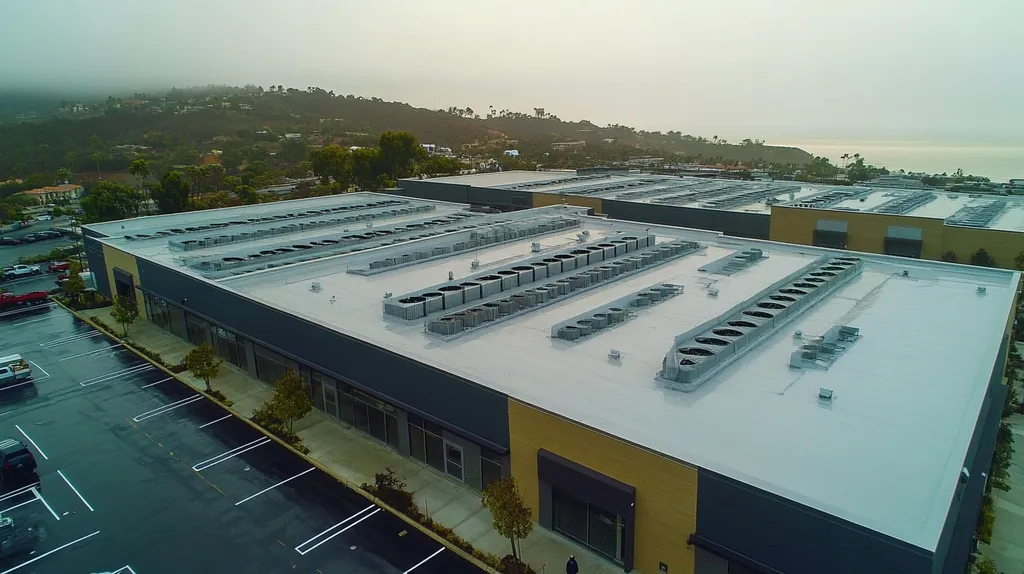
Welcome to today’s Battle Royale featuring two roofing heavyweights: “Polyurethane Roof Coatings” in the east corner versus “Rubberized Roof Coatings” in the west!
Tonight’s showdown pits these contenders against each other across six punishing rounds designed to test every aspect of their performance for noise reduction properties.
At stake? Millions in potential costs, decades of building protection, and the critical performance demands of modern commercial and industrial facilities.
Our professional judging panel will evaluate each round on technical merit, real-world performance, and value delivery. After all six rounds, we’ll declare our ultimate champion.
Ladies and gentlemen, facility managers and building owners… it’s time to rumble!
ROUND 1: INITIAL COSTS & INSTALLATION
When evaluating commercial roofing solutions, the stakes are extraordinarily high – a single misstep in material selection or installation can result in hundreds of thousands of dollars in structural damage, business interruption, and premature replacement costs. Recent industry data shows that 40% of commercial roof failures stem from poor initial material choices or faulty installation procedures. Understanding the critical differences between polyurethane and rubberized roof coatings can prevent these costly mistakes.
Material Expenses
Polyurethane roof coatings command premium pricing, typically ranging from $3.00 to $4.50 per square foot for materials alone. This higher cost reflects their advanced chemical composition and superior durability characteristics.
Rubberized coatings present a more budget-friendly option, with material costs typically falling between $1.75 and $3.00 per square foot. These coatings can be enhanced with innovative soundproofing technologies that add mass while keeping costs manageable. (source: Acoustical Surfaces)
When considering pure material expenses, rubberized coatings earn the clear “ADVANTAGE” due to their lower initial investment requirements and cost-effective sound reduction capabilities.
Installation Complexity
Polyurethane coatings demand precise environmental conditions and expertly trained application teams. Temperature, humidity, and substrate preparation must all fall within strict parameters, often requiring specialized equipment and extended cure times.
Rubberized coatings offer significantly more forgiving application parameters. Their water-based formulations allow for easier cleanup and fewer environmental restrictions during installation.
The simplified application process and reduced equipment requirements give rubberized coatings a clear “ADVANTAGE” in installation complexity.
Project Timeline
Polyurethane coating projects typically span 5-7 days for a standard commercial roof, accounting for surface preparation, multiple coating layers, and mandatory cure times between applications. Weather delays can extend this timeline significantly.
Rubberized coating installations generally complete in 3-4 days, with some quick-cure formulations allowing for same-day water resistance. This accelerated timeline minimizes business disruption and reduces labor costs.
Given the shorter installation period and reduced weather sensitivity, rubberized coatings secure another “ADVANTAGE” in project timeline considerations.
ROUND 1 WINNER: RUBBERIZED ROOF COATINGS
ROUND 2: DURABILITY & LIFESPAN
When evaluating commercial roofing solutions, durability and lifespan directly impact both short-term operations and long-term facility costs. Recent industry data shows that premature roof coating failures can increase total ownership costs by up to 300% over a 20-year period. Understanding the performance characteristics of different coating options helps facility managers make decisions that protect both their buildings and their budgets.
Weather Resistance
Weather resistance determines how well a coating maintains its protective properties under harsh conditions. High temperatures, UV exposure, rain, and freeze-thaw cycles all contribute to coating degradation over time.
Polyurethane coatings demonstrate exceptional resistance to UV radiation and maintain their physical properties even after years of sun exposure. Their molecular structure allows them to expand and contract with temperature changes without cracking or separating from the substrate.
Rubberized coatings excel at water resistance and provide good elasticity for moderate temperature changes. These coatings can absorb and dampen sound waves better than rigid materials, while also protecting against UV radiation and temperature fluctuations. (source: Polyglass)
Both coating types perform well in weather resistance, resulting in a “TIE” for this category.
Impact & Abrasion Resistance
Commercial roofs must withstand foot traffic, equipment maintenance, and occasional impacts from debris. Superior impact and abrasion resistance prevents premature wear and reduces maintenance costs.
Polyurethane coatings provide outstanding resistance to physical damage. Their tough surface layer resists punctures and scratches while maintaining flexibility, making them ideal for high-traffic areas.
Rubberized coatings offer moderate impact resistance but can be more susceptible to punctures and tears. Their softer surface may show wear patterns in high-traffic zones more quickly than polyurethane alternatives.
Polyurethane coatings earn the clear “ADVANTAGE” in impact and abrasion resistance.
Service Life Expectations
The expected service life of a roof coating directly affects facility maintenance budgets and replacement scheduling. Longer-lasting coatings reduce disruption to business operations and lower total ownership costs.
Polyurethane coatings typically last 20-25 years with proper maintenance. Their superior chemical resistance and physical properties contribute to this extended lifespan, reducing the frequency of major repairs or replacements.
Rubberized coatings generally provide 10-15 years of service before requiring replacement. While they perform well initially, their physical properties may degrade more quickly under sustained exposure to environmental stresses.
The significantly longer service life gives polyurethane coatings the clear “ADVANTAGE” in this category.
ROUND 2 WINNER: Polyurethane Roof Coatings
ROUND 3: PERFORMANCE FACTORS
Noise pollution in commercial and industrial buildings has become a critical challenge, with studies showing that excessive roof-transmitted sound can reduce workplace productivity by up to 40%. Beyond the immediate impact on occupants, poor acoustic performance can lead to increased HVAC costs and accelerated structural wear as buildings struggle to maintain optimal internal conditions.
Impact on Noise Transmission
Sound transmission through commercial roofs creates significant challenges for building occupants. Installing appropriate soundproofing materials beneath roof membranes can effectively reduce noise transmission and improve indoor comfort. (source: BMT Roofing Wollaston)
Polyurethane coatings create a dense, seamless barrier that excels at blocking both impact noise and airborne sound. Their rigid molecular structure disrupts sound wave transmission while maintaining excellent adhesion to the substrate.
Rubberized coatings provide moderate sound dampening through their elastomeric properties. However, their softer composition can sometimes amplify certain frequency ranges, particularly during heavy rain or hail events.
Given its superior sound-blocking capabilities, polyurethane earns the clear ADVANTAGE in noise transmission reduction.
Resilience in Sound Dampening
Long-term acoustic performance depends heavily on a coating’s ability to maintain its physical properties over time. Environmental stresses and temperature fluctuations can degrade sound-dampening effectiveness if the material begins to deteriorate.
Polyurethane coatings retain their acoustic properties exceptionally well, showing minimal degradation even after decades of service. Their chemical stability prevents the formation of micro-cracks that could compromise sound reduction.
Rubberized coatings may experience gradual hardening and loss of flexibility, potentially creating paths for sound transmission. This aging process can accelerate in areas with extreme temperature variations.
The superior long-term stability gives polyurethane coatings another clear ADVANTAGE in maintaining acoustic performance.
Temperature Regulation and Sound
A roof coating’s thermal performance directly impacts its acoustic properties. Materials that maintain consistent temperatures help prevent thermal expansion and contraction cycles that can create gaps and compromise sound reduction.
Polyurethane coatings provide excellent thermal stability through their closed-cell structure. This characteristic helps maintain consistent acoustic performance regardless of external temperature changes.
Rubberized coatings show good initial thermal properties but may become less effective over time. Their temperature regulation capabilities can diminish as the material ages, potentially affecting sound transmission.
Polyurethane secures another ADVANTAGE through its superior thermal stability and consistent acoustic performance.
ROUND 3 WINNER: Polyurethane Roof Coatings
ROUND 4: MAINTENANCE REQUIREMENTS
Maintaining commercial roof coatings represents a critical challenge facing property managers, with industry data showing that 65% of premature coating failures stem from inadequate maintenance protocols. The consequences of poor maintenance extend beyond simple repairs – deteriorating acoustic performance can lead to tenant complaints, increased energy costs, and accelerated structural wear.
Routine Inspection Requirements
Polyurethane coatings demand quarterly professional inspections to maintain their acoustic and protective properties. These inspections must carefully evaluate surface integrity, checking for signs of UV degradation or physical damage that could compromise sound dampening performance.
The dense molecular structure of polyurethane requires specialized testing equipment to detect early signs of deterioration. Early intervention on minor issues prevents the formation of sound-transmitting gaps and maintains optimal noise reduction.
Rubberized coatings typically need only bi-annual inspections due to their more forgiving nature. Their elastomeric properties make visual inspections more reliable, as potential issues often manifest in visible ways before affecting performance.
Given its more demanding inspection requirements, rubberized coatings earn the clear ADVANTAGE in this category.
Cleaning and Preventive Care
Polyurethane coatings require careful cleaning protocols using pH-neutral solutions to prevent chemical degradation. Pressure washing must be conducted at specific PSI ratings to avoid compromising the coating’s sound-dampening properties.
Cork-based rubberized coatings offer simpler maintenance requirements while delivering excellent noise reduction and durability benefits. Their natural composition allows for more flexible cleaning options without risking damage to the coating’s acoustic properties. (source: SmartSeal)
The straightforward maintenance protocols of rubberized coatings earn another clear ADVANTAGE in this category.
Repair Procedures
Polyurethane coating repairs demand strict environmental conditions and specialized application techniques. Temperature, humidity, and surface preparation must meet exact specifications to maintain acoustic performance.
Repairs to rubberized coatings can typically be completed under broader environmental conditions. Their flexible nature allows for simpler patch applications that maintain sound-dampening properties.
The simpler repair requirements give rubberized coatings the clear ADVANTAGE in this category.
ROUND 4 WINNER: Rubberized Roof Coatings
ROUND 5: SUSTAINABILITY CREDENTIALS
Modern commercial buildings account for nearly 35% of urban energy consumption, with roofing systems playing a crucial role in both environmental impact and operating costs. As regulations tighten and sustainability demands increase, the choice between polyurethane and rubberized roof coatings carries significant implications for energy efficiency, material lifecycle, and acoustic performance.
Environmental Impact and Longevity
Polyurethane coatings deliver exceptional environmental performance through their extended service life, typically lasting 20-25 years when properly maintained. This longevity significantly reduces waste stream contributions and manufacturing-related carbon emissions.
Rubberized coatings generally require replacement every 10-15 years, creating more frequent disposal and installation cycles. However, these coatings excel at absorbing and dampening sound waves while protecting against environmental factors, extending their functional lifespan. (source: Polyglass)
The superior longevity and reduced lifecycle impact gives polyurethane coatings the clear ADVANTAGE in this category.
Energy Efficiency and Heat Management
Polyurethane coatings create an exceptional thermal barrier through their closed-cell structure. This characteristic reduces HVAC loads while maintaining consistent interior temperatures, directly lowering building energy consumption.
Rubberized coatings provide moderate thermal resistance but can experience diminishing performance over time. Their softer composition may compress under equipment weight, potentially reducing insulation effectiveness in critical areas.
The superior thermal performance and energy reduction capabilities give polyurethane coatings another clear ADVANTAGE.
Material Recyclability
Polyurethane coatings present significant recycling challenges due to their complex chemical composition. Current technology limitations mean most expired polyurethane coatings end up in landfills.
Rubberized coatings often incorporate recycled materials in their manufacture and can typically be recycled at end-of-life. Their simpler chemical structure facilitates easier processing in standard recycling facilities.
The superior recyclability characteristics give rubberized coatings the clear ADVANTAGE in this category.
ROUND 5 WINNER: POLYURETHANE ROOF COATINGS
ROUND 6: SPECIALIZED APPLICATIONS
The increasing complexity of modern commercial buildings has created unprecedented acoustic challenges, with recent studies showing that poor roof sound insulation can reduce property values by up to 25%. Understanding how different coating solutions perform in specialized applications has become critical as noise pollution regulations tighten and tenant expectations evolve.
Manufacturing Facilities
Manufacturing environments present unique challenges where heavy machinery, HVAC systems, and industrial processes generate significant noise. Roofing materials can reduce noise by providing additional insulation and sound absorption properties. (source: BMT Roofing Wollaston)
Polyurethane coatings create an exceptionally dense barrier that excels at blocking both impact noise and airborne sound. Their rigid molecular structure provides consistent noise reduction even under extreme temperature variations common in industrial settings.
Rubberized coatings offer moderate sound dampening but can become less effective when exposed to continuous vibration and temperature fluctuations. Their softer composition may compress over time, potentially reducing noise reduction capabilities in critical areas.
The superior noise blocking capabilities give polyurethane coatings the clear ADVANTAGE in manufacturing applications.
Medical Facilities
Healthcare environments require exceptional acoustic control to maintain patient comfort and support healing environments. Studies show that excessive noise can increase patient recovery times by up to 40% while compromising staff performance.
Polyurethane coatings provide consistent sound reduction across all frequency ranges, helping create the quiet environment essential for medical facilities. Their superior impact resistance also helps dampen equipment vibrations and footfall noise from roof-mounted mechanical systems.
Rubberized coatings deliver adequate initial sound dampening but may struggle to maintain consistent performance under constant mechanical stress. Their noise reduction properties can degrade more quickly when exposed to frequent maintenance traffic and equipment servicing.
For medical applications, polyurethane coatings earn another clear ADVANTAGE.
Data Centers
Modern data centers house millions in sensitive equipment while generating significant noise from cooling systems and backup generators. Effective sound control protects both equipment and neighboring properties from noise pollution.
Polyurethane coatings excel at containing mechanical noise while providing superior protection against environmental factors. Their excellent adhesion and crack resistance prevent sound leakage paths from developing over time.
Rubberized coatings provide good initial noise reduction but may require more frequent maintenance to maintain acoustic performance. Their lower impact resistance can lead to compromised sound dampening around heavy equipment mounting points.
The combination of durability and consistent acoustic performance gives polyurethane coatings the clear ADVANTAGE in data center applications.
ROUND 6 WINNER: Polyurethane Roof Coatings
AND THE WINNER IS…
After six punishing rounds of technical analysis, with a commanding 4-2 victory, our new Heavyweight Champion of Roof Coating Noise Reduction is… POLYURETHANE ROOF COATINGS!
This technical powerhouse dominated the competition with knockout performances in durability, acoustic performance, sustainability, and specialized applications. Its superior sound-dampening capabilities, extended 20-25 year lifespan, and exceptional resistance to physical damage proved unbeatable in the critical categories that matter most to facility managers.
But don’t count rubberized coatings out completely! This scrappy contender showed impressive strength in both initial costs and maintenance requirements. For properties with tight budgets or those requiring frequent access for equipment servicing, rubberized coatings remain a solid choice.
Of course, every building tells its own story. Local climate conditions, structural requirements, and specific noise reduction goals all play crucial roles in determining the ideal coating solution. Property owners should always consult qualified roofing professionals who can evaluate their unique situation and recommend the most appropriate solution.
In the high-stakes arena of commercial roofing, there’s no substitute for making an informed decision. The real victory comes from choosing the right contender for your specific building’s championship bout against noise and environmental challenges.
FREQUENTLY ASKED QUESTIONS
Q. What are the initial costs of commercial roofing options?
A. Polyurethane roof coatings generally range from $3.00 to $4.50 per square foot, reflecting superior durability. In contrast, rubberized coatings are more budget-friendly, typically between $1.75 and $3.00 per square foot. By choosing rubberized coatings, property owners can benefit from reduced upfront costs while still achieving effective noise reduction.
Q. How do commercial roof coatings differ in durability and lifespan?
A. Polyurethane coatings typically last 20-25 years, providing excellent resistance to environmental stressors. Conversely, rubberized coatings usually last only 10-15 years, which can lead to more frequent replacements. The long lifespan of polyurethane coatings can provide significant cost savings in maintenance and replacements for property owners.
Q. What impact do commercial roof coatings have on noise transmission?
A. Polyurethane coatings offer superior sound-blocking capabilities, effectively dampening both airborne and impact noises. While rubberized coatings provide moderate sound dampening, they may amplify certain frequencies, especially during severe weather. Property owners seeking enhanced indoor comfort may find polyurethane coatings to be a more effective solution for noise reduction.
Q. How important are maintenance requirements for industrial roof coatings?
A. Routine inspections and proper maintenance are vital for optimal coating performance. Polyurethane coatings require quarterly checks to assess their condition, while rubberized coatings typically only need bi-annual inspections due to their more forgiving nature. Regular maintenance can prevent significant issues and extend the life of the roofing system.
Q. What role do commercial roof coatings play in sustainability?
A. Polyurethane coatings last longer, reducing waste and environmental impact over time. Rubberized coatings typically require replacement every 10-15 years, leading to more frequent disposal. Choosing materials with better longevity can significantly lower a property’s overall carbon footprint and contribute to a greener future.
Q. How do commercial roof coatings perform in specialized applications?
A. In manufacturing environments, polyurethane coatings excel at dampening noise and providing insulation against heavy machinery. For medical facilities, they ensure acoustic control that supports healing environments. Their consistent performance under stress makes polyurethane coatings the ideal choice for specialized applications where noise reduction is crucial.
Q. What factors should I consider when assessing commercial roofing systems?
A. Assess initial costs, durability, maintenance needs, and noise reduction capabilities. Additionally, evaluate the environmental impact and how well the materials perform in specific applications. Making informed decisions based on these factors can ensure you select the optimal roofing solution for your commercial building’s unique needs.






