
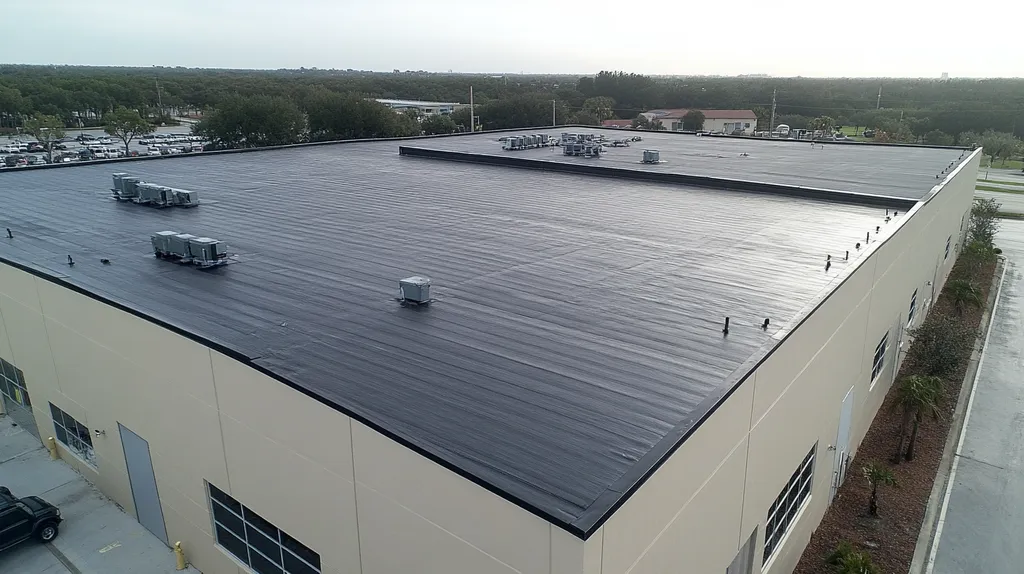
Picture this: a single clogged drain during a thunderstorm just cost a manufacturing facility $200,000 in water damage and lost production time. Meanwhile, across town, an identical building with properly designed drainage weathered the same storm without a single drop of interior water.
The difference? One facility manager understood that commercial roof drainage isn’t just about moving water—it’s about protecting million-dollar investments from nature’s relentless assault.
When drainage systems fail, the domino effect is swift and merciless: standing water accelerates membrane deterioration, overwhelmed structural capacity triggers costly repairs, and emergency bucket brigades replace productive operations.
But here’s the game-changer: mastering drainage design fundamentals transforms unpredictable roof disasters into manageable, budget-friendly maintenance routines that extend building lifespans by decades.
SECTION 1: THE BASICS EXPLAINED
Your commercial roof is like a massive funnel that never gets to tip over and pour out its contents. Every raindrop, snowflake, and ice crystal that lands up there needs an escape route—and fast!
When that escape route fails, your building becomes an unwilling participant in a very expensive science experiment. Water finds every weak spot, exploits every flaw, and turns a protective roof into a leaky liability.
The good news? Understanding drainage design is like learning the secret language your roof has been trying to speak all along.
What It Is (In Plain Language)
Think of drainage design as your roof’s personal traffic control system. Just like city planners design streets to move cars efficiently, drainage engineers design pathways to move water off your roof before it overstays its welcome.
This system includes slopes that act like gentle hills, drains that work like bathtub plug holes, and scuppers that serve as emergency exits when things get really wet. Unlike your house’s steep roof that practically flings water into the gutters, commercial roofs are flat or nearly flat—which means they need some serious engineering help to get water moving.
The whole setup is designed around one simple principle: water should visit your roof, not move in permanently. Every component works together to create a clear, unobstructed highway from “uh oh, it’s raining” to “phew, the water’s gone!”
When drainage design works correctly, your roof stays dry, your building stays sound, and your maintenance budget stays manageable.
Why It Matters (To Your Building)
Here’s where things get serious: water on a commercial roof isn’t just a minor inconvenience—it’s a building-sized problem waiting to happen. Pooled water adds tremendous weight that your roof structure was never designed to carry long-term.
That standing water also becomes a breeding ground for every roofing material’s worst nightmare: membrane deterioration, insulation breakdown, and structural decay. What starts as a puddle on Tuesday becomes a leak on Thursday and a major repair bill by Friday.
Modern climate patterns are making this challenge even tougher. Many roof designs struggle to cope with increased rainfall intensity, turning yesterday’s adequate drainage into today’s flooding risk. (source: Allianz Risk Consulting PDF – Roof Drainage Systems Tech Talk)
The facilities that get drainage right enjoy decades of reliable roof performance. Those that don’t? They’re constantly playing catch-up with emergency repairs, unexpected downtime, and budget-busting replacements.
How It Works
The magic starts with creating just enough slope to get water moving—typically about a quarter-inch drop for every foot of roof. It’s subtle enough that you might not notice it walking around, but dramatic enough to turn lazy water into motivated water.
Primary drains collect this motivated water and funnel it into your building’s plumbing system or external gutters. But here’s the clever part: overflow drains and scuppers act as backup systems, ready to handle blockages or extreme weather events that overwhelm the main drainage.
The system gets sized based on your building’s footprint, your local weather patterns, and how much water Mother Nature typically throws your way. Filters and screens keep leaves, debris, and the occasional confused bird from turning your drains into expensive traffic jams.
Regular maintenance keeps this whole system humming along smoothly. Clear drains, functioning slopes, and unobstructed overflow paths work together like a well-rehearsed orchestra, each playing their part to keep your roof dry and your building safe.
SECTION 2: PRACTICAL APPLICATIONS
Here’s where drainage design jumps off the blueprint and into the real world—where it either saves the day or leaves facility managers scrambling with buckets and emergency repair crews. Every commercial building becomes a laboratory for testing whether its drainage system can handle what nature throws at it.
The difference between buildings that thrive for decades and those that drain budgets lies in understanding exactly when, where, and how drainage solutions work best. Smart facility managers don’t wait for problems—they recognize the patterns and deploy solutions before water becomes the enemy.
Common Uses & Examples
Warehouses with their sprawling flat surfaces are drainage design’s biggest test case. These massive roofs collect water like oversized rain catchers, making strategic drain placement absolutely critical.
A typical 50,000-square-foot distribution center might need a dozen interior drains working in perfect harmony, each handling its own territory while backing up the others during heavy storms. Get the spacing wrong, and you’ll have standing lakes where you should have dry roof.
Retail centers face different challenges with their complex roof lines and equipment clusters. Perimeter scuppers become the heroes here, channeling water around HVAC units and over roof edges without creating waterfalls onto customer walkways.
Manufacturing facilities often deal with both roof water and process-related moisture, requiring drainage systems that can handle multiple water sources simultaneously. The key is sizing each component for peak demand, not average conditions.
For larger commercial roofs, gravity drainage hits its limits around 150 square meters per drainage point, where siphonic systems take over. These high-performance systems can drain water up to 100 times faster than traditional gravity setups, making them perfect for massive retail complexes and industrial facilities.
Green roofs add another layer of complexity, requiring specialized drainage layers that manage moisture without compromising the waterproof barrier below. (source: Waterproof Magazine)
When You Need It Most
Storm season separates well-designed drainage from wishful thinking. When the skies open up and dump months of rainfall in hours, your drainage system either rises to the occasion or waves the white flag.
New construction projects get one shot to nail drainage design from day one. Skip this step or cut corners on sizing, and you’re setting up the building for a lifetime of water-related headaches that could have been prevented.
Aging roofs showing signs of ponding are sending out distress signals that smart facility managers don’t ignore. Those innocent-looking puddles that linger after rainstorms are actually warning signs of drainage systems losing their battle against time and debris.
Building renovations often create drainage orphans—areas that worked fine before but now collect water because of new equipment, modified roof lines, or changed building heights. These trouble spots need immediate attention before they become expensive problems.
The hours immediately following severe weather events are prime time for drainage system inspection. This is when blockages reveal themselves, overflow systems get their real-world testing, and minor issues announce themselves before becoming major failures.
Interactions With Other Systems
Your roof drainage system doesn’t work in isolation—it’s part of an intricate dance with insulation, waterproofing, and structural elements that all depend on staying dry to do their jobs properly.
When drainage fails, insulation becomes waterlogged and loses its thermal performance, turning energy-efficient buildings into heating and cooling money pits. Wet insulation also creates perfect conditions for mold growth that can impact indoor air quality throughout the building.
Standing water adds serious weight that structural engineers never intended the roof to carry long-term. What starts as a drainage hiccup can evolve into structural deflection that affects the entire building’s integrity.
HVAC units, skylights, and roof penetrations become drainage obstacles that need careful choreography to avoid creating water traps. Smart drainage design works around these elements, not against them.
The building’s internal plumbing system must be sized to handle roof drainage loads, especially during peak weather events when both systems are working at maximum capacity. Overwhelmed internal drains can back up and create flooding problems inside the building.
When all systems work together harmoniously, drainage becomes the invisible hero that protects everything else, extending roof life and keeping maintenance budgets predictable.
SECTION 3: KEY TERMINOLOGY DECODED
Ever notice how drainage conversations suddenly sound like a foreign language when contractors start throwing around terms like “crickets,” “scuppers,” and “positive drainage”? This terminology confusion isn’t just awkward—it’s expensive.
When facility managers misunderstand key drainage terms, they can’t properly evaluate proposals, spot design flaws, or communicate problems effectively. The result? Oversized systems that waste money, undersized components that fail during storms, and maintenance issues that spiral out of control.
Mastering these essential terms transforms confusing technical discussions into clear, actionable conversations that protect your investment.
Essential Terms Explained
“Positive drainage” is the golden rule of commercial roofing—water must keep moving toward drains without collecting in low spots. Think of it as your roof’s version of “no loitering allowed.”
When contractors talk about “slope,” they’re describing the roof’s gentle tilt that makes positive drainage possible. Commercial roofs typically slope just 1/4 inch per foot—subtle enough that you won’t feel like you’re walking uphill, but steep enough to keep water flowing steadily toward exits.
“Drainage area” refers to the roof territory that feeds water into each individual drain. Picture your roof divided into invisible kingdoms, with each drain ruling over its own square footage and handling all the water that lands there.
“Ponding” is the enemy—any standing water that lingers more than 48 hours after rainfall stops. These innocent-looking puddles are actually roof killers in disguise, accelerating membrane deterioration and adding dangerous structural loads.
“Flow rate,” measured in gallons per minute, tells you how fast water can escape through each drain. It’s like measuring how quickly your bathtub empties, except the stakes are much higher when the system gets overwhelmed.
Industry Jargon Translated
“Scuppers” are simply openings cut through parapet walls that let water escape when primary drains can’t keep up. Think of them as emergency exits for overwhelmed rooftops—they’re not the preferred route, but they prevent disasters when things get crazy.
“Crickets” have nothing to do with insects and everything to do with water redirection. These small, peaked structures get built around roof obstacles like HVAC units to guide water around potential trouble spots instead of letting it pool up.
“Dead load” sounds ominous but just means the permanent weight your roof carries every day—the roofing materials, insulation, and equipment that never goes anywhere. Understanding dead load matters because standing water adds unexpected “live load” that can overwhelm structural capacity.
Gravity and siphonic systems represent the two main approaches to moving water off commercial roofs. Gravity systems leverage the natural force of gravity to move water and are designed to handle large volumes effectively, while siphonic systems use the siphon principle to drain water more efficiently and quickly than traditional systems. (source: Alpine Sheet Metal Systems)
“Overflow drains” serve as your drainage system’s insurance policy—secondary drains positioned slightly higher than primary drains that activate when the main system gets overwhelmed or blocked. They’re the difference between controlled water management and emergency bucket brigades.
Measurement & Units Simplified
Drainage sizing revolves around three key measurements: roof area (in square feet), rainfall intensity (inches per hour), and required flow capacity (gallons per minute). Get any one of these wrong, and your entire system becomes either wastefully oversized or dangerously inadequate.
Here’s how the math works in the real world: a 10,000-square-foot warehouse roof experiencing a 4-inch-per-hour storm needs to shed roughly 2,500 gallons per minute. That’s a lot of water moving very fast, which explains why proper drain sizing matters so much.
“Design storm” refers to the worst-case rainfall scenario your drainage system must handle without failing. Most commercial systems design for 10-year or 25-year storm events, meaning rainfall intensities that statistically occur once every 10 or 25 years.
Slope measurements use the ratio format—like 1:48, meaning one inch of drop for every 48 inches of horizontal distance. This seemingly tiny slope creates enough momentum to keep thousands of gallons moving efficiently toward drains.
When contractors mention “hydraulic capacity,” they’re talking about the maximum water volume your drainage components can handle before backing up. Understanding these limits helps facility managers spot undersized systems before they cause expensive flooding problems.
SECTION 4: DECISION FACTORS
Here’s where the rubber meets the roof—or more accurately, where smart money meets smart drainage decisions. Every drainage choice you make today echoes through decades of building performance, maintenance bills, and emergency repair calls.
The facilities that thrive understand that drainage decisions aren’t just about moving water—they’re about protecting massive investments while keeping budgets predictable. The ones that struggle? They’re usually paying for yesterday’s shortcuts with today’s crisis management funds.
Three critical factors separate drainage systems that deliver long-term value from those that become expensive regrets: upfront costs versus lifetime expenses, performance capabilities versus maintenance realities, and durability investments versus replacement nightmares.
Cost Considerations
Here’s the million-dollar question that keeps CFOs awake at night: should you spend more upfront on premium drainage components, or roll the dice with budget options and hope maintenance stays manageable? The wrong answer can turn a reasonable roofing investment into a budget-devouring monster.
Smart facility managers think in terms of total cost of ownership, not just installation sticker shock. That basic gravity drain system might save $5,000 today, but if it leads to ponding problems that require membrane replacement in year eight instead of year twenty, you’ve just traded short-term savings for long-term financial pain.
Energy costs add another layer to the financial puzzle. When drainage systems fail and allow water infiltration, insulation performance plummets faster than a lead balloon.
Buildings with compromised insulation can see heating and cooling costs spike by 15-25%, turning drainage corner-cutting into an annual energy budget penalty. Those seemingly expensive drain upgrades start looking like bargains when you calculate how much they save in utility bills over their lifetime.
The most successful facilities budget for drainage like they budget for insurance—recognizing that the right investment prevents much larger expenses down the road. This means sizing systems for your local climate’s worst-case scenarios, not just average conditions.
Performance Trade-offs
Every drainage solution comes with its own personality—some excel in heavy downpours but struggle with debris, others handle maintenance easily but compromise on flow capacity. Understanding these trade-offs helps you match system characteristics to your building’s specific challenges.
Internal drains offer clean aesthetics and protect building edges from water damage, but they’re basically invisible until something goes wrong. When they clog during a storm, you might not know until water starts backing up and creating indoor swimming pools where your inventory used to be.
Scuppers and external drainage systems let you see problems developing before they become disasters. You can spot debris buildup, ice formation, or structural issues during routine building walks.
But these visible systems also face more weather exposure, requiring materials that can handle UV bombardment, freeze-thaw cycles, and thermal expansion without failing. The design and detailing must account for rainfall intensity, roof catchment area, gutter capacity, and proper overflow measures to prevent system overwhelm during extreme weather events. (source: Allianz Risk Consulting, ART Tech Talk Volume 9)
Your building’s roof slope, membrane type, and local weather patterns all influence which performance characteristics matter most. Low-slope roofs demand ultra-reliable drainage with generous overflow capacity, while steeper pitches can work with simpler, more cost-effective solutions.
Lifespan & Durability Factors
Drainage components live hard lives—baking in summer sun, freezing in winter storms, and dealing with whatever chemical cocktails urban air throws at them. The materials and installation methods you choose determine whether your drainage system becomes a reliable workhorse or a maintenance headache.
Stainless steel and properly coated aluminum drainage components laugh at corrosion while cheaper alternatives start showing rust stains within the first few seasons. That price difference seems insignificant until you’re replacing corroded drains and dealing with the water damage they caused on their way out.
Proper sizing prevents the hydraulic stress that destroys drainage systems from the inside out. Undersized pipes and drains face repeated pressure surges during storms, gradually degrading joints, connections, and sealing components until small leaks become major failures.
UV-resistant materials and secure attachment methods ensure your drainage system ages gracefully alongside your roof instead of becoming the weak link that forces premature replacement. Quality drainage components should outlast your roofing membrane, not fail halfway through its expected lifespan.
The most durable systems integrate seamlessly with roofing membranes and structural elements, protecting these expensive components while maintaining their own integrity. This integration approach extends the entire roof system’s service life, maximizing your return on investment.
SECTION 5: COMMON CHALLENGES
Here’s a sobering reality check: drainage problems destroy more commercial roofs than hurricanes, hail storms, and neglectful maintenance combined. These aren’t dramatic, obvious failures that make headlines—they’re silent assassins that work methodically, turning million-dollar roof investments into expensive liability headaches.
The most frustrating part? Nearly every drainage disaster follows the same predictable pattern, broadcasting warning signs for months before finally calling in the emergency repair crews.
Smart facility managers have learned to read these signals like a detective novel, spotting the plot twists before they become budget-busting climaxes. The difference between buildings that cruise through decades versus those that hemorrhage money lies in recognizing these challenges early and acting decisively.
Frequent Problems & Solutions
Ponding water tops every drainage villain list, turning innocent roof surfaces into miniature lakes that refuse to leave after the storm ends. These stubborn puddles aren’t just unsightly—they’re roof killers that accelerate membrane breakdown, add dangerous structural loads, and create perfect breeding grounds for leaks.
The usual suspects behind ponding include debris-clogged drains that turn functional water highways into parking lots. Leaves, trash, and seasonal debris transform efficient drainage systems into expensive water collection devices. Regular drain cleaning and debris removal keep water moving where it belongs—off your roof.
Inadequate slope creates another ponding nightmare where water has nowhere to go because the roof lacks enough pitch to encourage movement. Minimum roof slope of 1/4 inch per foot provides the gentle momentum water needs to find its way to drains instead of settling in for extended visits.
When slopes fail, solutions range from strategic drain additions that give trapped water new escape routes, to tapered insulation systems that restore proper pitch without major reconstruction. (source: CCoatingsystems.com)
Undersized drainage systems create bottlenecks during storms, overwhelming drain capacity and forcing water to find alternative routes—usually through your building envelope. Proper hydraulic calculations ensure drainage components can handle peak rainfall events, not just average conditions.
Warning Signs To Watch For
Your roof broadcasts distress signals long before major failures announce themselves with emergency bucket brigades and frantic contractor calls. Learning this early warning language transforms reactive crisis management into proactive problem prevention.
Standing water that lingers more than 48 hours after rainfall screams drainage dysfunction louder than a smoke alarm. These persistent puddles indicate slope problems, drain blockages, or capacity issues that need immediate attention before they escalate into structural problems.
Interior ceiling stains, bubbling paint, and mysterious water spots reveal that your drainage system has already lost the battle upstairs. These indoor symptoms mean exterior water has found ways through your building envelope—usually because drainage failures created conditions that overwhelmed waterproofing systems.
Membrane blistering, cracking, or pulling away from drain connections signals that standing water is accelerating material deterioration. UV exposure combined with pooled water creates a chemical cocktail that destroys roofing materials faster than normal aging processes.
Rust stains around drains, corroded metal components, and vegetation growing in roof crevices indicate chronic moisture problems that have moved beyond temporary inconvenience into permanent damage territory. These biological and chemical warning signs demand immediate investigation and remediation.
Preventative Approaches
The most successful drainage strategies start during design phases, when engineers can properly size systems for local weather patterns and building characteristics. Getting drainage right from day one prevents decades of expensive band-aid solutions and emergency repairs.
Scheduled maintenance transforms drainage systems from ticking time bombs into reliable workhorses that protect building investments year after year. Quarterly drain cleaning, annual inspections, and seasonal debris removal catch small problems before they become major failures.
Installing strainers and drain screens creates the first line of defense against clogs, keeping leaves, debris, and seasonal buildup from turning drainage highways into dead-end streets. These simple devices prevent most blockage problems for the cost of routine cleaning.
Smart facilities invest in redundant drainage capacity—overflow systems that activate when primary drains get overwhelmed or blocked. Scuppers, secondary drains, and emergency outlets ensure water has multiple escape routes during extreme weather events.
Modern monitoring technology adds another layer of protection, with moisture sensors and automated alerts that notify facility managers about developing problems before they become visible to routine inspections. These early warning systems turn drainage management from reactive maintenance into predictive building protection.
SECTION 6: NEXT STEPS & RESOURCES
Here’s where good intentions either transform into bulletproof roof protection or dissolve into expensive wishful thinking. Every facility manager who’s ever watched a contractor nod enthusiastically while secretly planning shortcuts knows this truth: the right questions separate drainage heroes from drainage disasters.
The difference between decades of worry-free roof performance and annual emergency repair budgets often comes down to three critical factors. Smart resource selection, industry-standard compliance, and continuous learning create the foundation for drainage decisions that protect buildings instead of draining bank accounts.
The facilities that master these next steps enjoy predictable maintenance costs and roofs that actually reach their expected lifespans. Those that skip this homework? They’re the ones frantically googling “emergency roof repair” during the next big storm.
Questions To Ask Providers
The first question that separates drainage professionals from roof salespeople wearing hard hats: “How do you calculate drain capacity for our specific building and local climate conditions?” Real experts pull out calculators, weather data, and hydraulic charts—posers start talking about “standard industry practices.”
Demand specific details about overflow protection and backup drainage strategies. Ask providers to walk you through what happens when primary drains get blocked during a storm, and listen carefully to whether their answers involve actual engineered solutions or hopeful thinking about maintenance crews.
Smart facility managers also ask about material specifications and longevity expectations. Quality contractors explain why they recommend specific drain materials, attachment methods, and component grades based on your building’s exposure conditions and expected service life.
Push for real project examples where their drainage designs successfully handled severe weather events. Stories about systems that prevented flooding during actual storms carry more weight than theoretical performance promises.
Finally, nail down maintenance requirements and access needs upfront. Understanding how often drains need cleaning, what tools are required, and whether specialized contractors are needed prevents surprise expenses down the road.
Industry Standards & Guidelines
Professional drainage design isn’t guesswork—it’s engineering backed by decades of research and catastrophic failure analysis. The most successful projects reference established standards that have been tested by everything from gentle spring rains to hurricane-force deluges.
These standards cover the mathematical fundamentals that determine whether your drainage system handles peak rainfall or waves the white flag when you need it most. Proper drain sizing, strategic overflow placement, and minimum slope requirements aren’t suggestions—they’re survival strategies for commercial roofs.
Design and detailing requirements address the technical specifics that separate functional drainage from expensive decoration. Rainfall intensity calculations, roof catchment analysis, and overflow measures ensure systems work under real-world conditions, not just laboratory scenarios.
Overflow drains emerge as critical components that prevent catastrophic flooding when primary systems get overwhelmed or blocked during extreme weather events. (source: Allianz Risk Consulting, ARC Tech Talk Volume 9)
Materials specifications and installation protocols provide the roadmap for drainage components that survive decades of weather exposure without corroding, cracking, or failing when buildings need them most. These guidelines transform drainage from hopeful hardware into reliable building protection.
Further Learning Simplified
The drainage game keeps evolving as climate patterns shift, materials improve, and building codes adapt to new realities. Facility managers who stay current with these changes protect their investments while those who rely on outdated knowledge watch repair bills multiply.
Industry associations offer accessible training that transforms complex drainage engineering into practical decision-making skills. These resources help facility managers spot red flags in contractor proposals, understand maintenance requirements, and communicate effectively with roofing professionals.
Real-world case studies reveal the patterns behind drainage successes and failures, showing how similar buildings handled identical challenges with dramatically different results. Learning from other facilities’ experiences prevents repeating expensive mistakes while identifying proven strategies.
Technical webinars and trade publication articles provide bite-sized updates on new drainage technologies, material innovations, and regulatory changes that impact commercial roofing decisions. Staying informed keeps facility managers ahead of problems instead of constantly reacting to crises.
The most valuable learning happens through building relationships with experienced roofing professionals who share knowledge generously and help facility managers develop the expertise needed to protect their buildings long-term.
The Bottom Line
Every year, preventable drainage failures cost commercial property owners millions in emergency repairs, lost productivity, and premature roof replacements that could have been avoided with proper water management strategies.
The harsh reality? Buildings with well-engineered drainage systems routinely achieve 25-30 year roof lifespans while those with inadequate water management struggle to reach half that duration before requiring major interventions.
Smart facility managers recognize that drainage design isn’t just about moving water—it’s about protecting massive capital investments through systematic, engineered approaches that prevent problems rather than react to disasters.
The facilities thriving decades from now will be those whose managers invested in proper drainage fundamentals today, transforming unpredictable roof emergencies into manageable maintenance routines that preserve building integrity and budget predictability.
Your building’s next storm is coming—make sure your drainage system is ready to win that battle.
FREQUENTLY ASKED QUESTIONS
Q. What is commercial roof drainage design and why is it essential?
A. Drainage design acts like a traffic controller for water, guiding it off flat rooftops quickly and efficiently. Without this, water sticks around too long, causing leaks, material damage, and costly repairs. Think of it as your roof’s secret weapon against unwanted swimming pools on top!
Q. How does proper drainage benefit different commercial and industrial roof types?
A. Each building faces unique water challenges—from sprawling warehouses needing well-placed drains to green roofs requiring special moisture layers. The right drainage system handles peak storms, adapts to roof complexity, and avoids water damage, keeping operations running smoothly and budgets intact.
Q. What key terms in commercial roof drainage should facility managers know?
A. Understanding terms like “positive drainage,” “scuppers,” and “crickets” demystifies drainage talk and empowers smarter decisions. These words describe water flow, emergency exits, and clever roof design tricks that keep water moving and your roof safe.
Q. What are the most important factors when choosing a drainage system for commercial roofs?
A. Balancing upfront costs with long-term durability, performance during heavy storms, and maintenance ease is key. Investing wisely in premium materials and proper sizing ensures your system outlasts the roof itself, saving you headaches and money over decades.
Q. What common drainage challenges damage commercial and industrial roofs?
A. Ponding water caused by clogged drains or poor slopes is the top culprit, accelerating roof decay and leaks. Spotting signs like standing puddles after rain or rust stains early can stop small problems from turning into costly emergencies.
Q. What questions should I ask drainage providers to ensure quality commercial roof solutions?
A. Ask how they calculate drain capacity based on your building and climate, and what backup plans handle blockages during storms. Inquire about materials, maintenance needs, and examples of systems that survived severe weather—real answers mean real expertise.
Q. How does commercial roof drainage impact energy costs and insulation performance?
A. Poor drainage can soak insulation, causing it to lose effectiveness and forcing HVAC systems to work overtime. This drives heating and cooling bills up by 15-25%, turning small drainage shortcuts into big energy expenses. Keeping water off your roof means keeping your building cozy and efficient.






