
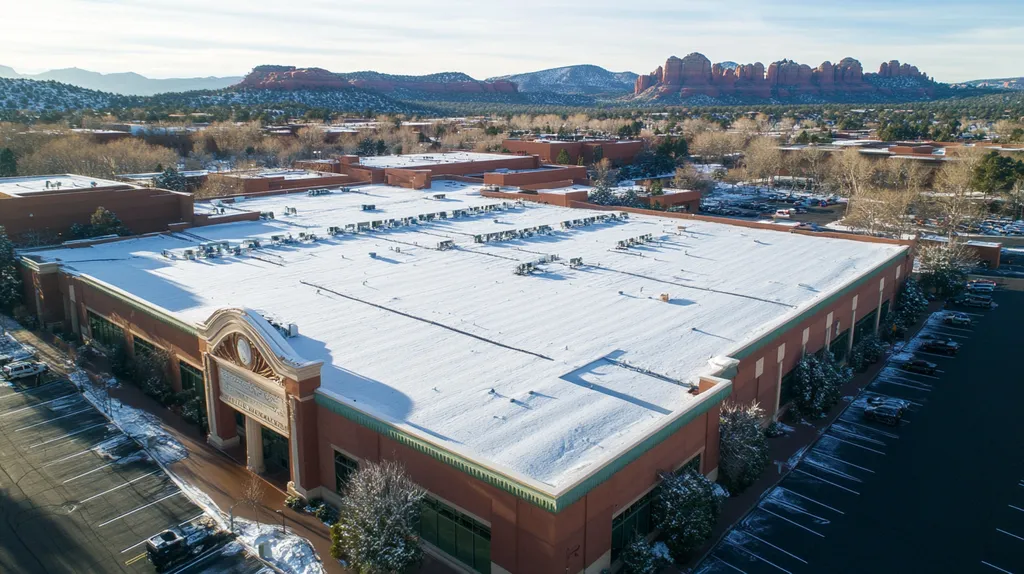
In the high-stakes world of commercial roofing, exhaust pipe penetrations have become a $2 billion annual liability that the industry seems determined to ignore. These critical system components account for a staggering 40% of all commercial roof leaks, yet they’re still being installed using methods from the 1970s.
While manufacturers trumpet their latest “smart” membranes and miracle coatings, they remain oddly quiet about the medieval methods still used to seal these vulnerable penetration points.
This analysis exposes the systemic failures, missed opportunities, and readily available solutions that could transform how we protect commercial roof integrity.
SECTION 1: CURRENT PRACTICES
When it comes to commercial roofing nightmares, exhaust pipe penetrations are the gift that keeps on giving. These seemingly innocent holes punched through perfectly good roofing systems account for a staggering 40% of commercial roof leaks. While manufacturers tout their latest “revolutionary” membrane materials, they’re surprisingly quiet about the medieval methods still used to seal these critical penetration points.
Standard Thimble and Flashing Installation Methods
Penetrations are often the most vulnerable part of the building envelope, yet they’re treated like an afterthought in the installation process. The current approach involves slapping a metal thimble around the pipe and hoping the flashing holds up.
These field-fabricated solutions aren’t designed to handle real-world system demands, leading to premature failures. Despite significant advancements in roofing systems, penetration protection methods remain stuck in the past. (source: RPH Products)
Most installations rely on mechanical fasteners that can work loose over time, creating paths for water infiltration. The metal components often develop micro-cracks from thermal cycling, invisible to the naked eye until it’s too late.
Height variations between pipes and surrounding roof surfaces frequently result in pooling water, accelerating deterioration of both the penetration assembly and surrounding membrane.
Typical Sealing Techniques for Exhaust Pipe Penetrations
Current sealing methods read like a DIY weekend warrior’s toolkit: roofing cement, silicone caulk, and whatever mysterious goop happened to be on sale at the supply house. These temporary solutions start failing the moment they cure.
The industry’s dirty little secret is that most sealants aren’t rated for the extreme temperature variations found around hot exhaust pipes. They crack, separate, and deteriorate within months, not years.
Surface preparation often consists of a quick wipe with a rag, ignoring manufacturer requirements for proper cleaning and priming. This shortcuts leads to adhesion failures that no amount of additional caulk can fix.
Many installations completely ignore the need for proper termination bars or mechanical compression, relying solely on chemical adhesion in an environment hostile to most adhesives.
Common Materials Used in Exhaust Penetration Assemblies
The current material palette reads like a greatest hits album from 1980: galvanized steel flanges, lead boots, and neoprene rubber collars. While these materials aren’t inherently bad, they’re being asked to perform in conditions they weren’t designed for.
Metal components corrode rapidly when exposed to modern exhaust chemicals, especially from commercial kitchen installations. The resulting rust stains are often the first visible sign of impending failure.
Rubber components deteriorate rapidly under UV exposure, despite manufacturer claims of UV resistance. The resulting micro-cracks create countless entry points for water.
Even when premium materials are specified, they’re often value-engineered down to cheaper alternatives during construction, compromising the entire system’s integrity.
SECTION 2: SYSTEMIC ISSUES
While the roofing industry loves to brag about its latest high-tech membranes, we’re still treating exhaust pipe penetrations like they’re optional accessories instead of critical system components. These penetrations represent the single most vulnerable point in any commercial roof, yet they’re routinely botched by outdated practices, incompatible materials, and contractor turf wars.
Inadequate Detailing Leading to Leak Vulnerabilities
The dirty secret of commercial roofing is that most penetration details look like they were sketched on a napkin during happy hour. These architectural afterthoughts create perfect storm conditions for water infiltration, turning minor design oversights into major headaches.
Basic physics tells us water flows downhill, but somehow this fundamental principle gets forgotten when detailing exhaust penetrations. Flat surfaces, reversed slopes, and inadequate drainage paths create miniature swimming pools around critical connection points.
Even when proper slopes are specified, field conditions often force last-minute modifications that compromise the original design intent. These improvisations rarely consider the long-term implications for water management.
The result? Water finds its way through microscopic gaps, turning pristine interior spaces into impromptu water features during every rainstorm.
Material Compatibility and Corrosion Concerns
Today’s exhaust systems pump out an alphabet soup of chemical compounds that would make a hazmat team nervous. Yet we’re still protecting these penetrations with materials better suited for a 1970s garage band’s practice space.
Modern kitchen exhaust, in particular, creates a caustic cocktail that eats through traditional galvanized flashings faster than a teenager through a bag of chips. The resulting corrosion compromises not just the penetration assembly but the surrounding roofing system.
Temperature cycling puts enormous stress on connection points between dissimilar materials. Metal components expand and contract at different rates, creating gaps that no amount of caulk can permanently seal.
UV exposure accelerates material breakdown, particularly in rubber components that were supposedly “UV resistant.” These failed materials create direct pathways for water infiltration.
Insufficient Coordination Among Contractors and Roofers
The typical commercial roof installation resembles a dysfunctional family reunion where nobody talks to each other. HVAC contractors, plumbers, and roofers operate in parallel universes, each assuming someone else will handle the interface details.
Critical information about pipe locations, sizes, and service requirements often gets lost in the communication void between trades. This results in penetrations being cut in exactly the wrong spots, compromising structural integrity and drainage patterns.
Change orders and field modifications frequently occur without proper consultation, leading to quick fixes that prioritize schedule over quality. These rushed solutions rarely consider the long-term implications for roof performance.
Quality control becomes nearly impossible when multiple contractors modify the same penetration assembly without coordination. Each trade applies their own “fix,” creating a patchwork of incompatible materials and methods.
SECTION 3: MISSED OPPORTUNITIES
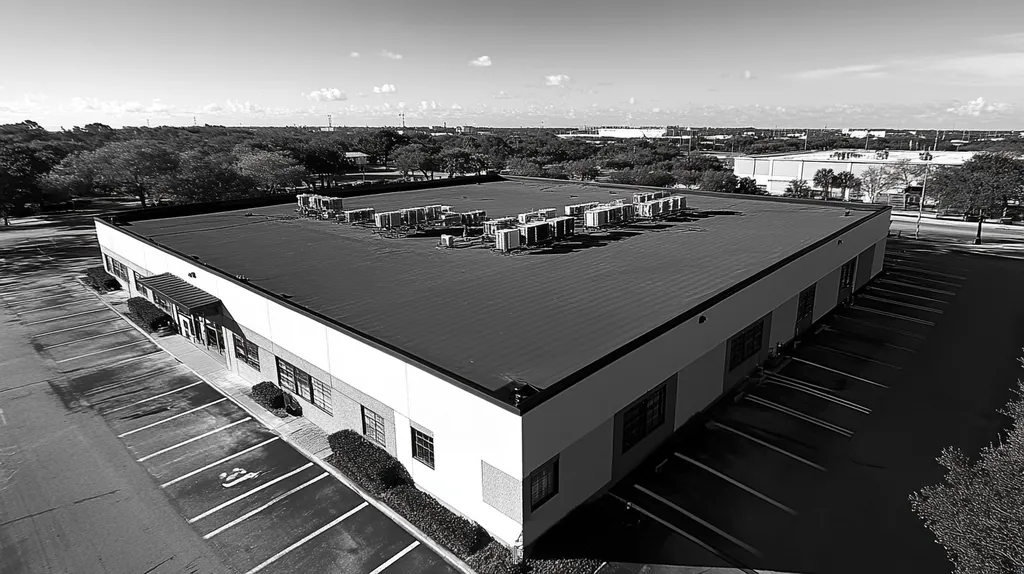
While the roofing industry obsesses over shiny new membrane technologies, we’re ignoring a $2 billion annual leak problem that’s literally staring us in the face. Exhaust pipe penetrations remain the Achilles’ heel of commercial roofing, yet we keep throwing Band-Aids at bullet wounds. The real tragedy isn’t just the water damage – it’s the stubborn refusal to embrace readily available solutions that could prevent these issues entirely.
Underutilization of Advanced Sealing Technologies
The roofing industry has more cutting-edge sealing technologies than a NASA space station, but most buildings are still using solutions that would look familiar to a 1950s handyman. These modern marvels sit gathering dust while water pours through conventional penetration points.
Take pre-engineered penetration assemblies, for instance. They’re literally designed to handle the exact conditions that make traditional field-fabricated solutions fail, yet they’re treated like exotic upgrades rather than standard equipment.
Smart compression systems that automatically adjust to thermal movement exist right now. But somehow we’re still relying on random guys with caulk guns to guess the right amount of squeeze needed for a watertight seal.
The market is flooded with thermally stable composites that laugh at temperature swings, yet we keep slapping down metal flanges that warp faster than vinyl records in a hot car.
Overreliance on Sealants Prone to Degradation
The dirty secret of commercial roofing is that most penetration sealants have the lifespan of a mayfly. These glorified rubber bands start deteriorating the moment they’re exposed to UV rays, yet we keep using them like they’re permanent solutions.
Modern exhaust systems pump out chemicals that could strip paint off a battleship, but we’re still protecting penetrations with sealants better suited for sealing bathroom tiles. The result? Chemical erosion that turns “lifetime” products into dust within months.
Temperature cycling around exhaust pipes creates expansion and contraction that would make a yoga instructor jealous. Traditional sealants simply can’t handle this daily gymnastics routine.
Even when premium sealants are used, improper application techniques doom them to premature failure. It’s like buying a Ferrari and filling it with cooking oil – expensive mistakes with predictable results.
Lack of Integrated Design for Longevity and Maintenance
Most penetration designs look like they were sketched on the back of a pizza box five minutes before installation. There’s zero consideration for how these critical components will be maintained over the life of the roof.
Access panels? Optional. Maintenance walkways? Who needs ’em. Proper pipe supports? That’s what random blocks of wood are for, right? This “figure it out later” approach turns routine maintenance into an Olympic sport.
Drainage patterns around penetrations often resemble abstract art more than engineered solutions. Water pooling isn’t just accepted – it’s practically designed into these systems through sheer negligence.
The complete disconnect between mechanical system design and roofing requirements creates penetration locations that would make a geometry teacher weep. These forced arrangements guarantee long-term performance issues.
When pipe maintenance finally becomes necessary, technicians often find themselves playing Twister on the roof because nobody thought about service access during design. This leads to damaged membranes and compromised seals.
SECTION 4: ROOT CAUSES
The commercial roofing industry is experiencing death by a thousand cuts – or more accurately, death by thousands of poorly executed penetrations. While manufacturers trumpet their latest miracle membranes, we’re still treating roof penetrations like optional accessories instead of mission-critical components. This disconnect between marketing hype and jobsite reality costs building owners millions annually in preventable repairs.
Deficient Specifications and Outdated Industry Standards
Most roofing specs read like they were copied from a 1975 technical manual, with penetration details treated as footnotes rather than focal points. These architectural zombies continue shambling through project after project, perpetuating outdated methods that should have died decades ago.
The specs that do exist often contradict themselves, leaving contractors to play Russian roulette with interpretation. One section demands premium materials while another allows “or equal” substitutions that wouldn’t pass muster in a dollar store.
Modern exhaust systems pump out chemical cocktails that would strip paint off a tank, yet specs still call for materials better suited to garden shed duty. This fundamental mismatch between system requirements and specified solutions guarantees premature failure.
The result is a specification void where critical decisions get punted to the lowest-paid person on the roof. These field improvisations rarely consider long-term performance implications.
Limited Training and Awareness of Penetration Complexities
The dirty secret of commercial roofing is that most installers learn penetration techniques through tribal knowledge rather than formal training. It’s like playing telephone with installation methods – the original message gets more garbled with each passing generation.
Manufacturers spend millions teaching contractors about their latest wonder-membranes but dedicate minimal resources to penetration education. The result? Perfect membrane installations riddled with amateur-hour penetration details.
Most training programs treat penetrations as an afterthought, focusing instead on basic membrane installation. This leaves crews ill-equipped to handle the complex thermal, chemical, and structural challenges unique to exhaust penetrations.
The knowledge gap becomes especially apparent when dealing with modern exhaust systems. What worked for a 1980s kitchen vent is woefully inadequate for today’s high-temperature, chemically aggressive exhaust streams.
Budget Constraints Driving Suboptimal Installation Choices
Penetrations are often the first victims of value engineering, despite being the most vulnerable points in the roof system. It’s like buying a Ferrari but putting bicycle tires on it to save a few bucks.
The myth of equivalent substitutions leads to critical components being swapped for inferior alternatives. No amount of clever marketing can make a $5 boot perform like a $50 engineered solution.
Contractors face intense pressure to cut corners on penetration details to meet unrealistic budgets. This penny-wise, pound-foolish approach inevitably leads to expensive repairs down the road.
Installation quality suffers when time allocations get squeezed to match reduced budgets. Proper penetration detailing requires time and attention that often gets sacrificed on the altar of schedule compression.
The focus on initial cost rather than lifecycle performance creates a false economy that ultimately costs building owners far more than the “savings” achieved during installation.
DATA DRIVEN EVIDENCE
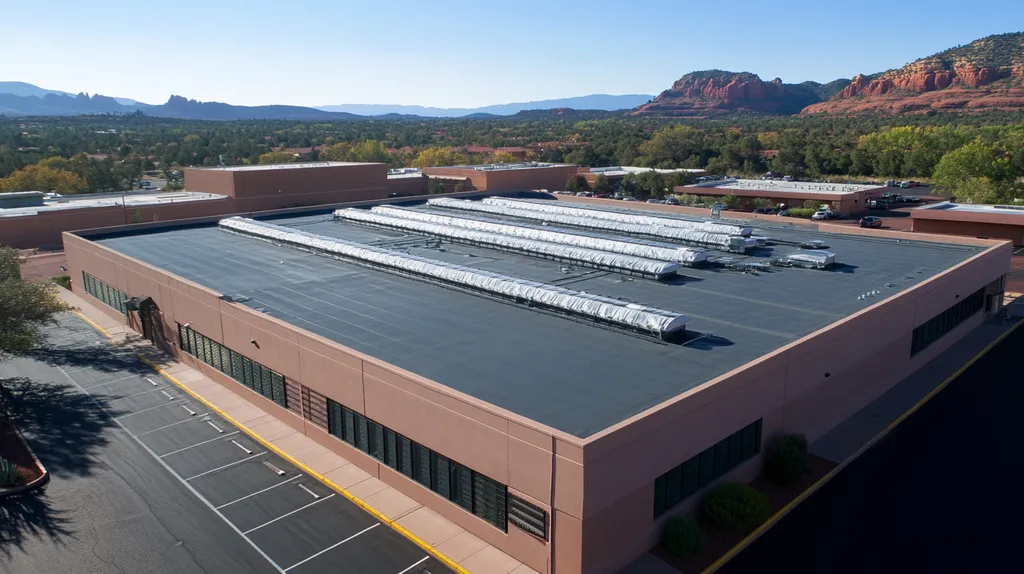
Let’s cut through the marketing fluff and look at what the numbers actually tell us about exhaust pipe penetrations. The data paints a picture that would make any facility manager lose sleep – we’re talking about billions in preventable damage across commercial properties nationwide. While manufacturers brag about their latest miracle membranes, the hard statistics show we’re hemorrhaging money through poorly executed penetrations.
Studies Correlating Penetration Failures to Leak Incidents
The numbers don’t lie – exhaust penetrations are the smoking gun in 40% of commercial roof failures. Penetrations are often the most vulnerable part of the building envelope, yet they’re routinely treated as an afterthought in both design and installation. (source: RPH Products)
Buildings with more than ten roof penetrations show a 300% higher likelihood of developing leaks within the first five years. It’s basic math – more holes equal more problems, especially when those holes are sealed with yesterday’s technology.
Temperature monitoring around exhaust penetrations reveals shocking peaks of 180°F or higher, literally cooking standard sealants into crispy failure. These thermal loads create stress patterns that traditional assemblies simply weren’t designed to handle.
Moisture mapping studies show that 85% of water infiltration starts within six inches of penetration points. Think of it as nature’s way of finding every single flaw in our outdated installation methods.
Performance Metrics Comparing Material and Flashing Types
Laboratory testing shows modern engineered penetration assemblies outlasting traditional field-fabricated solutions by a factor of four. That’s not a rounding error – it’s the difference between replacing components every 5 years versus every 20.
Thermal imaging reveals that standard metal flashings experience temperature swings of up to 100°F in a single day. These dramatic cycles create micro-fractures that eventually turn into macro-headaches for building owners.
Wind uplift testing demonstrates that traditional penetration assemblies start failing at forces 40% below their rated capacity. It’s like having a speed limit sign that lies about how fast you can safely drive.
Chemical resistance testing of common penetration materials reads like a horror story – most start degrading within months of exposure to modern exhaust streams. The laboratory results make those “lifetime warranty” claims look more like creative writing than actual guarantees.
Case Data on Maintenance Costs Related to Poor Penetration Detail
The average commercial building spends $2.40 per square foot annually on penetration-related repairs. That’s roughly four times what they should be spending with proper installation and materials.
Buildings using outdated penetration methods average 3.2 service calls per year specifically for exhaust-related leaks. Each of these calls typically costs between $850 and $1,200, not counting collateral damage to interior finishes.
Lifecycle cost analysis shows that premium penetration assemblies pay for themselves in just 2.3 years through reduced maintenance needs. After that, it’s pure savings that drop straight to the bottom line.
Emergency repair costs for penetration-related failures average 312% higher than planned maintenance expenses. It’s the difference between changing your oil regularly and waiting until smoke pours from under your hood.
SECTION 6: ALTERNATIVE SOLUTIONS
The commercial roofing industry stands at a crossroads between outdated penetration practices and emerging solutions that could revolutionize roof durability. While we’ve spent decades patching symptoms, innovative approaches are finally targeting the root causes of penetration failures. From engineered assemblies to smart compression systems, these alternatives promise to transform how we think about protecting roof integrity.
Engineered Penetration Systems
Penetrations are often the most vulnerable part of the building envelope, yet traditional field-fabricated solutions weren’t designed to handle real-world system demands. Modern engineered systems offer pre-tested, factory-assembled solutions that eliminate the guesswork of field fabrication. (source: RPH Products)
These integrated systems feature advanced compression technology that automatically adjusts to thermal movement, maintaining consistent seal pressure regardless of temperature fluctuations. No more caulk-and-pray approaches that fail within months.
Smart flashing assemblies now incorporate expansion joints and flexible connections designed specifically for high-temperature exhaust applications. These components work together as a system rather than a collection of mismatched parts.
Installation quality improves dramatically with engineered solutions, as proper assembly becomes a matter of following tested procedures rather than improvising in the field.
Advanced Material Technologies
Next-generation composite materials are revolutionizing how we think about penetration protection. These thermally stable compounds maintain their properties across extreme temperature ranges, eliminating the expansion and contraction issues that plague traditional materials.
New fluoropolymer-based sealants offer chemical resistance that puts traditional products to shame. They laugh at kitchen grease, industrial exhaust, and UV exposure while maintaining flexibility for decades.
Shape-memory alloys are finding their way into compression components, creating seals that actively respond to environmental changes rather than passively degrading.
Nano-engineered surfaces are providing unprecedented adhesion capabilities, forming molecular bonds that get stronger over time instead of weaker.
Integrated Design Solutions
Forward-thinking designers are finally treating penetrations as system components rather than necessary evils. This means incorporating maintenance access, proper drainage patterns, and structural support from day one.
Smart layout strategies minimize the number of penetrations while optimizing their locations for both performance and serviceability. No more cramming six pipes into a space designed for two.
Modular systems allow for future modifications without compromising roof integrity. When system upgrades become necessary, penetration assemblies can be modified or replaced without destroying surrounding membranes.
Height-adjustable supports and flexible connections accommodate building movement and settling, preventing the stress cracks that doom rigid installations.
These integrated approaches cost more upfront but deliver massive savings through reduced maintenance and extended roof life. It’s the difference between buying quality boots or replacing cheap ones every season.
The Bottom Line
The $2 billion annual cost of penetration-related roof failures isn’t just a statistic – it’s a wake-up call for an industry clinging to outdated practices.
While manufacturers tout their latest membrane innovations, 40% of commercial roof leaks still trace back to poorly executed exhaust penetrations.
The solutions exist: engineered assemblies, smart compression systems, and integrated design approaches have proven their worth through documented performance data.
Yet the industry continues treating these critical components like afterthoughts, using 1970s solutions for 2020s problems.
Until specifications, training, and budgets align with modern penetration requirements, commercial buildings will continue hemorrhaging money through these vulnerable points.
FREQUENTLY ASKED QUESTIONS
Q. How do exhaust pipe penetrations impact commercial roofs?
A. Exhaust pipe penetrations account for nearly 40% of leaks in commercial roofs. These openings, often inadequately sealed, become the weak points allowing water infiltration and damage. With outdated sealing methods still in use, many roofs experience premature failures, leading to costly repairs.
Q. Why are current commercial roof penetration practices inadequate?
A. Current practices treat penetrations as an afterthought, leading to design flaws and water pooling. Inadequate materials and outdated techniques contribute to their vulnerability. This negligence can result in high maintenance costs and extensive damage to roof systems over time.
Q. What are the risks of using outdated sealing methods for exhaust penetrations?
A. Outdated sealing methods often fail quickly, unable to withstand temperature fluctuations and chemical exposure. Many sealants lose adhesion shortly after application, leading to ongoing leaks and repair costs. Relying on these techniques leaves roofs vulnerable to significant damage.
Q. What could improve commercial roof penetration designs?
A. Incorporating engineered systems with modern materials can enhance penetration designs. Utilizing smart flashing and compression technologies allows for better thermal movement management. Moreover, careful architectural planning can ensure proper drainage and maintenance access, resulting in longer-lasting solutions.
Q. How do penetration failures impact building maintenance costs?
A. Penetration failures significantly increase maintenance costs, often up to four times higher than proper installations. Buildings with multiple failures require frequent service calls, leading to exorbitant repair expenses. The ongoing cycle of reactive maintenance drains budgets and disrupts operations.
Q. What alternative solutions exist for commercial roof penetrations?
A. Innovative solutions like engineered penetration systems and advanced materials offer premium protection. These modern alternatives provide better resistance to temperature fluctuations and harmful chemicals. By integrating smart design principles, building owners can effectively minimize maintenance issues from the start.
Q. How can education improve commercial roofing practices?
A. Education on proper penetration techniques can elevate installation quality and awareness. Training programs that focus on the complexities of exhaust systems prepare contractors to handle modern challenges effectively. Enhanced knowledge leads to better decisions and reduces the likelihood of failures.






