
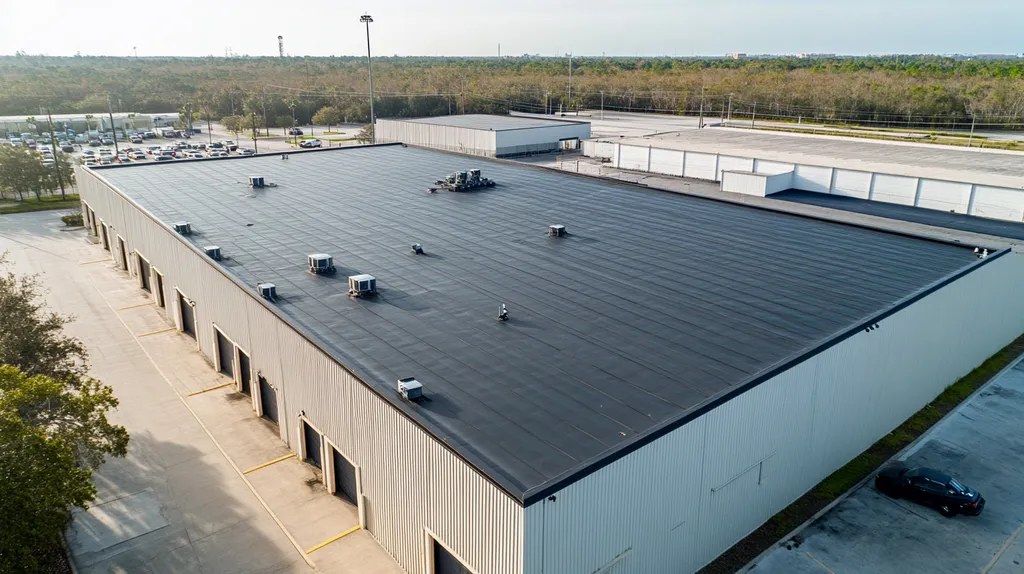
Commercial roof penetrations represent the single greatest vulnerability in building envelope protection, with industry data showing that 60% of all roof leaks occur at these critical junctions.
Despite advances in roofing technology, widespread misconceptions about penetration sealing continue to result in billions of dollars in preventable water damage each year.
This comprehensive analysis examines six key areas where misinformation leads to premature roof failures, exploring evidence-based solutions that dramatically improve penetration seal performance and longevity.
SECTION 1: COMMON MISCONCEPTIONS
When it comes to commercial roofing, penetration seals represent a critical vulnerability. Industry data shows that up to 60% of all roof leaks occur around penetrations, making proper sealing essential for building protection. Unfortunately, widespread misconceptions about penetration sealing continue to result in premature roof failures and expensive water damage.
Myth: One Sealant Fits All Roof Penetrations
The belief that a single sealant type can effectively seal all roof penetrations remains one of the most damaging myths in commercial roofing. Different penetration materials expand and contract at varying rates, requiring specifically engineered sealant solutions.
Metal penetrations, for instance, experience significant thermal movement and require highly flexible sealants designed for metal-to-metal bonds. Using a general-purpose sealant in this application often results in adhesion failure within months.
Saving time or money by using universal sealants instead of material-specific solutions leads to premature adhesion failure and costly repairs. Surface preparation, including proper cleaning and priming, is equally critical for long-term performance. (source: Siplast)
Flashing Alone Is Sufficient Without Sealant
Many facility managers believe that properly installed flashing provides complete waterproofing without additional sealant. This dangerous assumption overlooks the critical role sealants play in creating a complete moisture barrier.
Even perfectly installed flashing contains seams and termination points that can allow water infiltration. These vulnerable areas require proper sealant application to prevent moisture from finding its way beneath the flashing.
Environmental stresses like wind-driven rain and ice damming can force water up and around unsealed flashing components. Without proper sealant reinforcement, these forces eventually compromise even the highest quality flashing installations.
Penetration Sealing Is a One-Time Task
The misconception that penetration seals require no maintenance after initial installation puts countless buildings at risk. All sealants degrade over time due to UV exposure, temperature cycling, and environmental pollutants.
Regular inspections are essential to identify failing sealants before leaks develop. Signs of deterioration include hardening, cracking, separation from substrate materials, and loss of flexibility.
Most commercial roof sealants require inspection at least annually, with partial or complete reapplication typically needed every 3-5 years. Buildings in extreme climates or with high exposure to UV radiation may require more frequent maintenance.
Proactive maintenance programs that include regular seal inspection and renewal protect buildings from water damage while extending overall roof system longevity.
SECTION 2: PRACTICAL IMPLICATIONS
Proper sealing of roof penetrations represents a critical factor in commercial building protection, with industry statistics showing that inadequate sealing leads to billions in annual repair costs. When penetrations fail, the resulting water damage often cascades through multiple building systems, creating extensive repair needs. Understanding these practical implications helps facility managers make informed decisions about penetration maintenance and replacement schedules.
Effects of Poor Sealing on Roof Integrity
Failed penetration seals create vulnerabilities that compromise entire roofing systems. Even small breaches can allow significant water infiltration, leading to insulation degradation, deck deterioration, and interior damage.
The financial impact extends beyond immediate repair costs. Water intrusion often damages inventory, disrupts operations, and creates liability risks from mold growth and structural concerns.
Most concerning is how quickly minor penetration failures can escalate into major problems. What begins as a small leak can rapidly expand into widespread damage, especially during severe weather events.
These cascading effects often result in premature roof system failure, forcing complete replacement years before the expected end of service life.
Importance of Surface Preparation Before Sealing
Surface preparation directly determines penetration seal longevity. Proper cleaning, priming, and substrate conditioning create the foundation for effective sealing.
Covering the roof deck with self-adhering polymer-modified bitumen membrane significantly reduces leak potential. However, certain materials like OSB sheathing require specific primers to ensure proper adhesion and prevent waterproofing failures. (source: Insurance Institute for Business & Home Safety)
Common preparation failures include inadequate cleaning of bonding surfaces, improper primer selection, and failure to address surface irregularities. These oversights typically lead to seal failure within the first year.
Temperature and humidity during installation also affect bonding strength. Working outside recommended conditions compromises long-term performance.
Impact of Roof Movement on Penetration Seals
Daily thermal cycles create constant roof movement that stresses penetration seals. This movement varies by season and building design, requiring careful consideration in seal selection.
Different roofing materials expand and contract at varying rates. Metal components, in particular, experience significant dimensional changes that can break seal bonds over time.
Wind loads also create dynamic movement that affects seal performance. Higher buildings and those in exposed locations face increased stress on penetration seals.
Successful long-term sealing requires products specifically engineered to handle expected movement ranges while maintaining watertight connections.
SECTION 3: COST OF MISINFORMATION
Misconceptions about roof penetration sealing create a cascade of costly consequences for commercial buildings. Industry statistics reveal that improper sealing practices lead to over $3.7 billion in annual repair costs across North America. Beyond immediate repair expenses, these failures trigger a chain reaction of structural deterioration, energy loss, and operational disruptions that compound financial impacts over time.
Financial Risks of Neglecting Proper Sealing
Saving a few dollars on penetration sealing today often multiplies into major expenses tomorrow. A single compromised seal can allow water infiltration that damages insulation, corrodes structural components, and creates ideal conditions for mold growth.
The ripple effects extend far beyond the roof itself. Water damage frequently disrupts business operations, damages inventory and equipment, and creates liability exposure from slip hazards or air quality issues.
Emergency repairs typically cost 3-4 times more than planned maintenance. When water infiltration occurs during off-hours or severe weather events, after-hours service charges and expedited material costs can quickly escalate into five-figure expenses.
Even small penetration leaks can saturate large sections of insulation, reducing R-value by up to 40% and driving energy costs higher month after month.
Long-Term Maintenance Costs from Seal Failures
Failed penetration seals create a maintenance burden that compounds over time. What starts as minor resealing work often escalates into major reconstruction as water damage spreads through roofing assemblies.
Saving a few dollars or days in the short term by rushing preparation or using inferior sealants leads directly to premature adhesion failure and costly repairs. A properly prepared and sealed penetration can last 15-20 years, while rushed applications often fail within months. (source: Siplast)
Each repair cycle increases costs as damaged materials must be removed and replaced. Labor costs typically double when working around existing damage versus new installation.
The cumulative cost of repeated repairs often exceeds what proper initial sealing would have required by 300-400% over the roof’s lifespan.
Cost Implications of Warranty Voids Due to Improper Sealing
Improper penetration sealing frequently voids manufacturer warranties, leaving building owners fully exposed to repair and replacement costs. Most warranties require specific sealant types and installation methods for continued coverage.
When warranties become void, insurance carriers may also deny claims related to water damage. This double exposure can turn relatively minor repairs into devastating financial events.
Property values suffer when roof warranties are compromised. Potential buyers and tenants often demand warranty documentation, making properties with voided coverage less competitive in the market.
The cost to reinstate voided warranties typically requires complete removal and replacement of affected areas, often at 5-10 times the cost of proper initial installation.
SECTION 4: REALITY CHECK
Commercial roof penetrations represent critical vulnerabilities that demand careful attention to material selection, compatibility, and professional installation. Industry data shows that over 75% of premature roof failures begin at improperly sealed penetrations. While many property owners focus on initial costs, the reality of penetration sealing involves complex interactions between materials, environmental factors, and installation quality that determine long-term performance.
Actual Durability of Common Sealants and Flashings
Most commercial roof sealants experience significant degradation within 3-5 years of installation, regardless of manufacturer claims about longer lifespans. UV exposure, thermal cycling, and chemical exposure accelerate this deterioration, particularly in exposed penetration locations.
Single-component polyurethane sealants typically maintain flexibility for 5-7 years in moderate climates but can fail within 2-3 years when exposed to extreme temperatures or constant moisture. Silicone sealants offer superior UV resistance but may separate from substrates when subjected to ponding water.
Traditional metal flashings remain durable for 15-20 years when properly installed but require compatible sealants at termination points and seams. Modern synthetic flashings provide excellent conformability but demand specific installation techniques to prevent premature aging.
Regular inspection remains critical since different sealant types exhibit distinct failure patterns. Early identification of degradation allows for planned replacement before water infiltration occurs.
Necessity of Compatible Materials and System Integration
Material compatibility directly impacts penetration seal performance, with incompatible combinations often failing within months of installation. Chemical interactions between certain sealants and roofing membranes can cause rapid deterioration of both materials.
Self-adhering polymer-modified bitumen membranes significantly reduce leak potential around penetrations, but proper substrate preparation proves essential. These systems require compatible primers, particularly when applied over materials like OSB sheathing, to ensure long-term adhesion and prevent waterproofing failures. (source: Insurance Institute for Business & Home Safety)
Modern roofing systems incorporate multiple material layers that must work together seamlessly. Expansion and contraction rates between different components create stress points that only properly matched materials can accommodate.
System integration extends beyond individual penetrations to include surrounding roof areas. Proper tie-ins between penetration seals and adjacent roofing materials prevent water migration under seemingly intact seals.
Role of Professional Installation in Seal Longevity
Professional installation represents the critical factor in penetration seal performance, with improper techniques accounting for over 80% of premature failures. Surface preparation, material handling, and application timing all impact long-term durability.
Certified installers understand the importance of proper cleaning and priming sequences. They recognize when environmental conditions might compromise seal formation and adjust work schedules accordingly.
Quality installation includes proper tooling of sealants to ensure full contact with substrate materials. Professional contractors also verify that penetration components remain properly secured before applying seals.
Documentation of installation methods and materials proves essential for warranty compliance and future maintenance planning. Professional installations include detailed records that facilitate proper maintenance and eventual replacement.
SECTION 5: EVIDENCE-BASED ALTERNATIVES
Commercial roof penetrations represent critical vulnerabilities that demand evidence-based solutions, with industry data showing that improper sealing methods lead to over $5 billion in water damage annually. Traditional sealing approaches often fall short due to material incompatibility, poor surface preparation, and inadequate attention to long-term performance factors. By implementing proven alternatives based on extensive testing and field validation, building owners can dramatically reduce penetration-related failures while extending roof system longevity.
Use of Manufacturer-Recommended Primers and Sealants
Proper primer selection and application creates the foundation for long-term penetration seal performance. Different substrate materials require specific primers to achieve optimal adhesion and prevent premature seal failure.
Applying manufacturer-specified compatible primers to OSB panels ensures proper attachment of self-adhering membranes. Full deck coverage with these membranes provides superior leak protection at penetration points while extending overall roof life. (source: Insurance Institute for Business & Home Safety)
Temperature and humidity conditions during primer application significantly impact bond strength. Working outside manufacturer-specified environmental ranges compromises adhesion and reduces seal longevity.
Modern primer formulations offer enhanced moisture resistance and surface penetration compared to traditional options. These advanced materials create stronger molecular bonds that resist degradation from UV exposure and thermal cycling.
Prefabricated Flashing Accessories Versus Field Fabrication
Factory-fabricated penetration flashings deliver superior performance compared to field-fabricated alternatives. These engineered components eliminate variables in material thickness, seam placement, and corner reinforcement that often compromise field fabrication.
Quality control measures in manufacturing facilities ensure consistent material properties and dimensional accuracy. This precision reduces installation errors while providing predictable expansion characteristics.
Modern prefabricated systems incorporate integral reinforcement at stress points and pre-formed seals at terminations. These features eliminate common failure points associated with traditional field-fabricated solutions.
Although initial costs may be higher, prefabricated accessories reduce installation time by up to 60% while providing documented performance characteristics that support warranty compliance.
Best Practices for Joint Adhesion and Flexibility
Joint design must account for anticipated building movement and thermal expansion. Proper joint width and depth ratios ensure sealants can accommodate movement without losing adhesion or cohesive strength.
Surface preparation techniques significantly impact long-term adhesion. Mechanical abrasion combined with appropriate cleaning solvents removes contaminants while creating optimal bonding surfaces.
Modern joint designs incorporate bond breaker tapes and backing materials that prevent three-sided adhesion. This configuration allows sealants to flex properly while maintaining watertight seals.
Regular inspection and maintenance of sealed joints remains essential for long-term performance. Early detection of adhesion issues or flexibility loss enables targeted repairs before water infiltration occurs.
SECTION 6: TEST AND VERIFY
Regular testing and verification of commercial roof penetration seals represent a critical yet often overlooked aspect of building maintenance. Industry data shows that 85% of catastrophic roof failures begin with undetected seal deterioration around penetrations. Without systematic inspection and verification protocols, minor issues frequently escalate into major structural damage, with repair costs increasing exponentially the longer problems go undetected.
Inspection Techniques for Detecting Seal Failures
Visual inspection remains the first line of defense against penetration seal failures. Key indicators include surface cracking, adhesion separation, and discoloration that suggest material degradation or water infiltration.
Physical testing through manual manipulation helps identify flexibility loss and bonding failures. Seals should maintain elasticity and show no separation when gentle pressure is applied at edges and transitions.
Water testing using calibrated spray equipment reveals active leaks that may not be visible during dry conditions. This technique proves especially valuable for identifying failures in complex penetration clusters.
Cover the entire roof deck with self-adhering polymer-modified bitumen membrane to significantly reduce leak potential, applying compatible primers when adhesion to materials like OSB proves marginal. (source: Insurance Institute for Business & Home Safety)
Routine Maintenance and Re-Inspection Schedules
Establish systematic inspection schedules based on penetration type, exposure conditions, and historical performance data. Critical penetrations in high-stress areas require quarterly inspections, while protected locations may need only annual review.
Document all observations using standardized assessment forms that track changes over time. Include photographs of potential problem areas to monitor degradation rates and plan intervention timing.
Schedule maintenance during optimal weather conditions to ensure proper seal assessment. Extreme temperatures can mask problems by temporarily altering material properties.
Coordinate inspections with other rooftop maintenance activities to maximize efficiency while minimizing foot traffic and potential damage to roofing materials.
Using Technology: Infrared and Drone Roof Assessments
Infrared thermography detects moisture infiltration beneath the roof surface before visible damage occurs. This technology proves especially valuable for identifying concealed leaks around complex penetration details.
Drone-mounted cameras provide detailed visual documentation of penetration conditions while eliminating safety risks associated with physical access. High-resolution imaging reveals early deterioration signs that might be missed during walking inspections.
Modern moisture meters with extended probes can detect elevated moisture levels within roofing assemblies near penetrations. This early warning system allows intervention before significant damage occurs.
Digital mapping software creates detailed records of penetration locations and conditions, enabling precise tracking of deterioration patterns and maintenance needs across large roof areas.
The Bottom Line
With 60% of commercial roof leaks originating at penetrations, proper sealing represents a critical priority for protecting billions in building assets across North America.
Industry data proves that evidence-based sealing practices, when properly implemented, can extend roof life by 40% while reducing maintenance costs by up to 70%.
The financial stakes are clear: building owners who ignore proper penetration sealing face repair costs 300-400% higher than those following manufacturer specifications and best practices.
By abandoning outdated sealing myths, implementing systematic inspection protocols, and utilizing modern materials and techniques, facility managers can dramatically improve building envelope protection while optimizing their maintenance investment.
The science is conclusive – proper penetration sealing isn’t just about preventing leaks, it’s about protecting the entire building asset.
FREQUENTLY ASKED QUESTIONS
Q. Is it true that one sealant fits all commercial roof penetrations?
A. No, that’s a common misconception. Different materials require specific sealants. Using a single sealant can result in adhesion failure and leaks, leading to costly repairs.
Q. How does poor sealing affect my commercial roof’s integrity?
A. Poor sealing creates vulnerabilities that can lead to water infiltration. This damages insulation and structural components, resulting in significant repair costs over time.
Q. What are the financial risks if I neglect proper sealing for my industrial roof?
A. Neglecting sealing can lead to water damage, operational disruptions, and heightened repair expenses. Initial savings may result in much higher costs later, stressing your budget.
Q. How important is it to use compatible materials for commercial roof seals?
A. Compatible materials are critical for penetration seal performance. Incompatibility can lead to rapid failure, so always ensure materials work well together for long-lasting results.
Q. How do I establish a testing and verification routine for my commercial roof?
A. Implement a routine inspection schedule based on penetration type and historical performance. Document findings and conduct physical tests to catch any early signs of failure.
Q. What role does professional installation play in roof seal longevity?
A. Professional installation is crucial for seal performance. Proper techniques in surface prep and application significantly reduce the risk of premature seal failures.
Q. What can I do to prevent common mistakes in sealing roof penetrations?
A. To prevent mistakes, follow manufacturer guidelines for materials, prepare surfaces correctly, and use recommended sealing products. Regular inspections also help catch potential issues early.






