
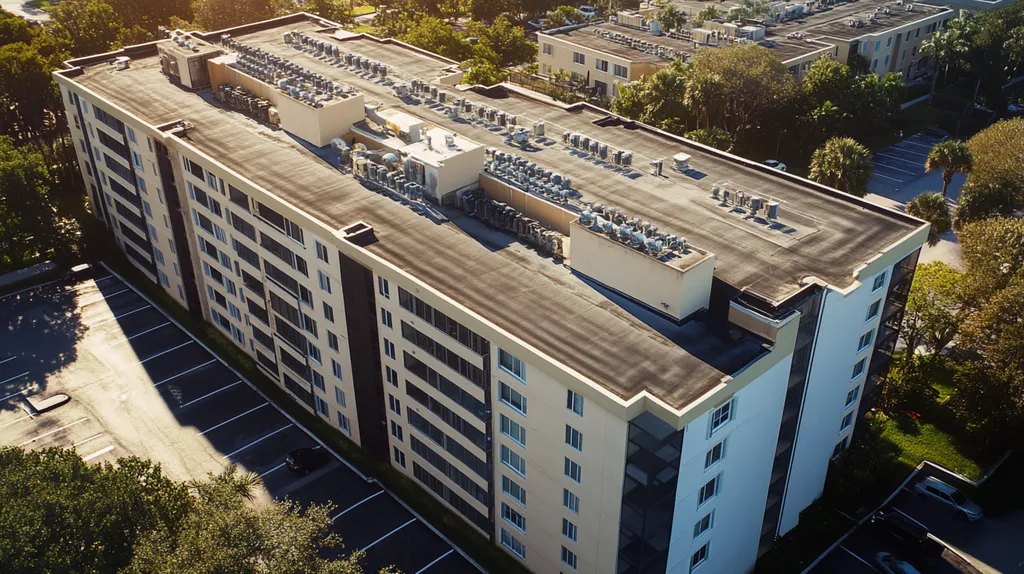
Commercial roofs face a hidden enemy that destroys more membrane systems than storms, age, or poor installation combined: improperly managed rooftop equipment.
Every HVAC unit, exhaust fan, and piece of mechanical equipment sitting on your roof either protects or actively destroys your building’s most critical barrier against the elements.
Equipment-related damage triggers up to 50% of premature commercial roof failures, turning 20-year investments into costly 10-year disasters that blindside property owners with emergency replacement bills.
This guide reveals how rooftop equipment impacts your roof’s lifespan, why most installations inadvertently accelerate failure, and proven strategies that double membrane durability while protecting your building investment.
SECTION 1: THE BASICS EXPLAINED
Think of your commercial roof like the foundation of your business operations—except it’s protecting everything from above while juggling heavy equipment loads. When HVAC units, exhaust fans, and other rooftop machinery aren’t properly managed, they can cut your roof’s lifespan in half.
The numbers tell a stark story: equipment-related issues trigger up to 50% of premature roof failures across commercial properties. Understanding how rooftop equipment impacts your building’s protective barrier isn’t just maintenance knowledge—it’s financial survival.
This section breaks down what really happens when heavy machinery meets your roof membrane, why ignoring these interactions costs property owners millions annually, and how smart equipment management can double your roof’s service life.
What It Is (In Plain Language)
Rooftop equipment impact is exactly what it sounds like—the physical and structural stress that HVAC units, solar panels, exhaust fans, and other machinery place on your building’s protective roof system. Picture your roof as a giant umbrella that suddenly needs to support several small cars while still keeping water out.
The average commercial HVAC unit weighs between 1,500 and 4,000 pounds, depending on tonnage, and that’s before factoring in vibrations, thermal expansion, and foot traffic from maintenance crews. These forces create stress points where the equipment meets your roof membrane.
Every mounting bracket, support pad, and penetration through your roof creates a potential weak spot. When technicians walk around equipment during maintenance, their footsteps can cause micro-tears in the membrane over time.
Water pooling around equipment bases becomes a ticking time bomb if seals aren’t perfect. Think of it like placing a heavy bookshelf on a waterproof tarp—eventually, something’s going to give way.
The key insight here is that your roof transforms from a simple weather barrier into an active structural platform the moment equipment gets installed.
Why It Matters (To Your Building)
When rooftop equipment damages your roof prematurely, you’re not just looking at repair bills—you’re facing potential business catastrophe. Water infiltration can shut down operations, destroy inventory, and create mold problems that take months to remediate.
Commercial roof replacement represents a massive capital expense, often running hundreds of thousands of dollars for larger facilities. When equipment-related damage forces early replacement, you lose years of expected service life from your original investment.
Insurance companies and warranty providers are getting tougher about equipment-related claims. If your roof fails due to improper equipment installation or maintenance, you might find yourself holding the entire repair bill with no coverage.
Facility managers who ignore equipment impact face a predictable cycle: emergency repairs, tenant complaints, and budget overruns that could have been prevented with proactive planning. Equipment-related punctures commonly appear within the first five years of a roof designed to last twenty.
Smart equipment management protects your building’s operational reliability while preserving property values. It’s the difference between controlled maintenance expenses and financial emergencies that derail your budget.
How It Works
Your commercial roof operates as an integrated system—multiple layers working together like a high-tech sandwich. The waterproof membrane sits on top, insulation provides thermal protection below, and structural decking supports everything.
When equipment gets installed, this carefully balanced system faces new challenges. Mounting systems must penetrate the membrane without compromising its waterproof integrity, requiring precise flashing and sealing work.
Equipment vibrations create ongoing stress cycles that can fatigue roofing materials over time (source: CPRankin Roofing). Think of repeatedly flexing a paperclip—eventually, the material fails from accumulated stress rather than a single dramatic event.
Thermal expansion compounds the problem as equipment heats and cools throughout daily cycles. Metal components expand and contract, potentially loosening seals or creating gaps where water can infiltrate.
The solution lies in understanding these mechanical interactions during the design phase. Proper equipment placement, adequate structural support, and regular maintenance at critical connection points can preserve your roof’s integrity for decades.
SECTION 2: PRACTICAL APPLICATIONS
Every day, facility managers make decisions about rooftop equipment that will either protect or destroy their roof investment. A poorly planned HVAC replacement can turn a healthy 10-year-old roof into a leaking liability within months.
The harsh reality is that most equipment-related roof damage happens during routine operations—not dramatic storms or accidents. Understanding when and where these interactions matter most gives property owners the power to prevent expensive surprises.
Common Uses & Examples
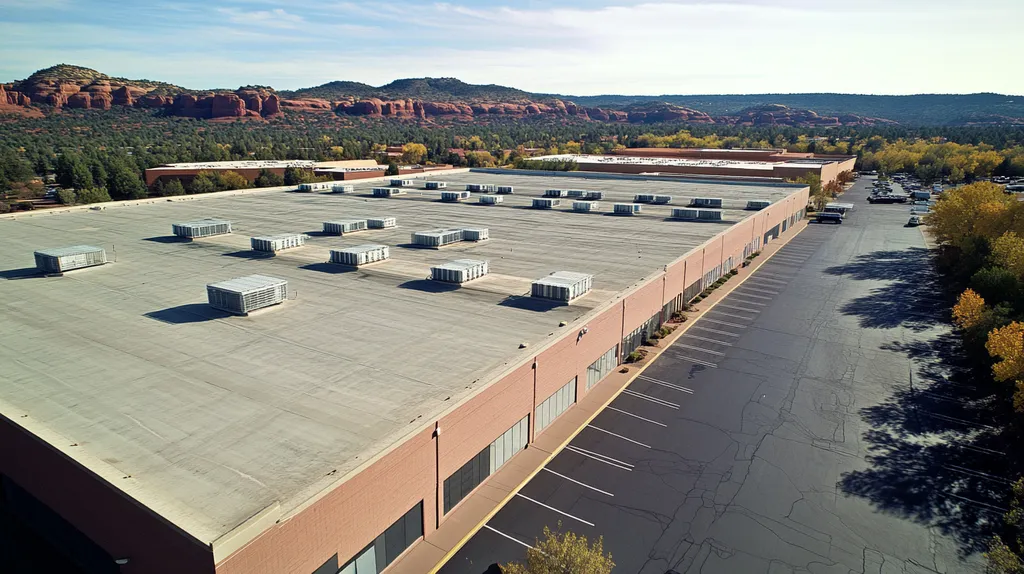
Commercial rooftops have become bustling industrial platforms supporting everything from massive HVAC units to communication towers. A typical office building might host multiple rooftop units weighing 2-4 tons each, plus exhaust fans, grease interceptors, and satellite dishes.
Think of a restaurant’s rooftop—you’ll find grease exhaust fans creating constant vibration, HVAC units cycling on and off throughout the day, and service technicians walking maintenance paths several times per week. Each element adds stress to your roof membrane.
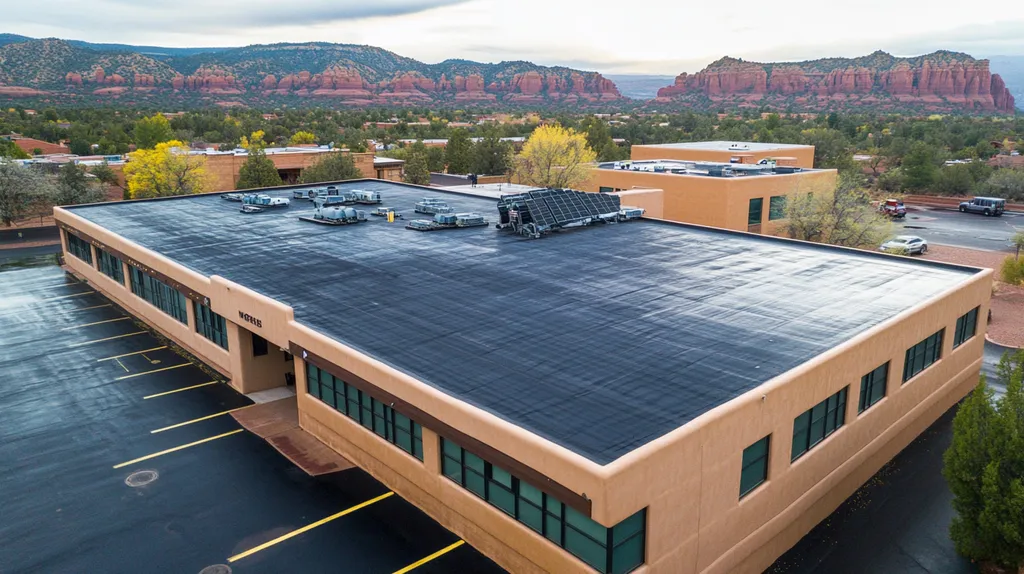
The most common damage patterns include membrane punctures around equipment feet, crushed insulation from concentrated loads, and water infiltration at penetration points. Solar panel installations create their own challenges, with mounting systems requiring hundreds of roof penetrations.
Exhaust fans present unique problems because they operate continuously, creating constant vibration that can loosen seals over time. Communication equipment adds wind load concerns, especially on taller buildings where equipment acts like sails during storms.
Even seemingly harmless rooftop additions like safety railings or access ladders create new penetration points where water can find its way through compromised seals.
When You Need It Most
The most critical moment for protecting your roof happens before equipment installation begins. This is when proper planning can prevent years of expensive problems, but it’s also when shortcuts cause the most long-term damage.
Equipment replacement projects present the highest risk because contractors often focus on mechanical performance while ignoring roofing implications. Installing a new HVAC unit on existing roof pads without checking their condition is like building a house on a cracked foundation.
Regular maintenance extends a commercial roof’s lifespan by up to 50%, but rooftop equipment interactions require special attention during inspections to address localized wear and seal integrity (source: GM Exteriors). Spring and fall inspections should always include equipment mounting points and drainage paths.
Post-storm assessments become crucial when equipment has shifted or loosened. Even minor equipment movement can compromise flashing details that took years to properly seal.
Budget planning seasons offer opportunities to coordinate roofing and equipment maintenance, maximizing efficiency while minimizing roof disruption from multiple contractor visits.
Interactions With Other Systems
Rooftop equipment doesn’t exist in isolation—it creates a complex web of interactions that can either support or sabotage your roof’s performance. Heavy HVAC units compress insulation layers, creating thermal bridges that increase energy costs and temperature fluctuations.
Drainage becomes the silent killer when equipment blocks natural water flow patterns. A single misplaced condensate drain can create ponding that accelerates membrane aging in ways that won’t show up until years later.
Equipment vibrations travel through structural connections, potentially affecting adjacent building systems like ductwork supports or even interior ceiling systems. This interconnectedness means equipment problems rarely stay isolated to just the roof.
Electrical and refrigeration lines running between equipment create additional penetration points and maintenance traffic patterns. Each connection point becomes a potential failure location requiring ongoing attention.
The most successful commercial buildings treat rooftop equipment as an integrated system where mechanical, structural, and roofing professionals coordinate from day one. This collaboration prevents the costly surprises that happen when systems work against each other instead of together.
SECTION 3: KEY TERMINOLOGY DECODED
When contractors start throwing around terms like “dead loads” and “thermal bridging,” property owners often nod along while secretly wondering what it all means. This confusion isn’t just embarrassing—it’s expensive.
Misunderstanding roofing terminology leads to poor decisions that can slash your roof’s lifespan by decades. When you can’t communicate effectively with contractors or recognize red flags in their proposals, you’re essentially flying blind with a multi-million-dollar asset.
Mastering these essential terms transforms you from a passive observer into an informed decision-maker who can protect their investment and avoid costly mistakes.
Essential Terms Explained
Think of your roof membrane as your building’s raincoat—it’s the waterproof layer that keeps everything dry. Common types include EPDM (rubber), TPO (plastic), and modified bitumen (asphalt-based), each with different compatibility requirements for equipment mounting.
Flashing works like weatherstripping around your car windows, sealing gaps where equipment meets the roof surface. Poor flashing installation around HVAC units causes more leaks than any other single factor in commercial roofing.
Penetrations are simply holes cut through your roof membrane for equipment installation, ductwork, or utilities. Each penetration creates a potential leak point that requires expert sealing and ongoing maintenance attention.
The term substrate refers to the structural layer beneath your membrane—think of it as the foundation that supports everything above. Understanding your substrate type helps determine what equipment loads your roof can safely handle.
Ballast describes heavy materials like gravel or pavers used to hold down certain membrane types. Ballasted roofs require special consideration for equipment mounting since you can’t just drill through the protective layer.
Industry Jargon Translated
Dead load means the permanent weight sitting on your roof—HVAC units, ductwork, and structural components that never move. Live load covers temporary weights like maintenance workers, snow accumulation, or equipment being serviced.
Load path describes how equipment weight travels through your building’s structure, like water flowing downhill. Poor load distribution can cause structural damage that extends far beyond just the roof surface.
Thermal bridging occurs when heat transfers directly through metal equipment supports, bypassing insulation like a highway for energy loss. This creates condensation problems and drives up utility costs while potentially damaging roof materials.
Placing ductwork, cable trays, plumbing, HVAC, and other equipment on rooftops can protect machinery and free indoor space, but dead weight and foot traffic cause damage to roofing membranes leading to leaks (source: PHPSD). Equipment platforms solve this problem by distributing loads and protecting the membrane from damage.
Ponding refers to water that remains on your roof 48 hours after rainfall stops. Equipment can create drainage problems by blocking water flow, leading to accelerated membrane deterioration and potential structural issues.
Measurement & Units Simplified
Pounds per square foot (psf) measures how much weight presses down on each square foot of roof surface. A typical rooftop HVAC unit might exert 15-25 psf, but this load gets concentrated at equipment feet without proper distribution.
R-value indicates insulation effectiveness—higher numbers mean better thermal resistance. When equipment compresses insulation, R-values drop dramatically, creating energy waste and potential moisture problems beneath the equipment.
Roof slope gets expressed as ratios like 1:12, meaning one inch of rise for every twelve inches of horizontal distance. Most commercial roofs use slopes between 1:48 and 1:4, with flatter roofs requiring more careful equipment placement to prevent drainage issues.
Square is roofing shorthand for 100 square feet of roof area. This unit helps calculate material quantities and estimate how equipment density affects your roof’s overall performance and maintenance requirements.
BTU (British Thermal Unit) measures heating and cooling capacity of rooftop equipment. Larger BTU ratings typically mean heavier units and more thermal cycling, both factors that increase stress on your roof system over time.
SECTION 4: DECISION FACTORS
Smart facility managers know that rooftop equipment decisions made today will either protect or destroy their building investment over the next two decades. A single poorly planned HVAC installation can transform a $500,000 roof into a leaking liability within five years.
The harsh reality is that most commercial property owners focus on equipment performance while ignoring the hidden costs of roof interaction. This tunnel vision leads to budget-crushing surprises when premature roof failures demand emergency replacements.
Understanding the true financial, performance, and durability implications of rooftop equipment helps property owners make decisions that protect both their building and their bottom line.
Cost Considerations
The sticker shock of proper rooftop equipment installation often tempts property owners toward cheaper shortcuts that cost exponentially more in the long run. Installing a $15,000 HVAC unit without adequate roof protection can trigger $200,000 in premature roof replacement costs.
Think of it like buying cheap tires for a delivery truck—the upfront savings disappear quickly when poor performance destroys more expensive components. Proper equipment pads, reinforced mounting systems, and professional flashing work might add 15-20% to installation costs but can double your roof’s lifespan.
Emergency repairs from equipment-related damage typically cost 3-5 times more than planned maintenance because they require immediate contractor response and often involve extensive water damage remediation. A $500 annual inspection focused on equipment mounting points can prevent $50,000 emergency repairs.
Insurance complications add another financial layer when equipment-related damage voids warranty coverage. Many commercial roof warranties specifically exclude damage from improper equipment installation, leaving property owners responsible for complete replacement costs.
Smart budgeting treats rooftop equipment and roof protection as a single integrated investment rather than separate line items. This approach reveals the true cost-effectiveness of quality installation work versus the hidden expenses of cutting corners.
Performance Trade-offs
Every piece of rooftop equipment changes how your roof performs, creating a delicate balancing act between functionality and protection. Heavy HVAC units provide climate control but can crush insulation layers, creating thermal bridges that spike energy costs by 15-25%.
Equipment placement becomes a strategic puzzle where the wrong move creates cascading problems. A rooftop unit positioned to block natural drainage patterns can cause water ponding that accelerates membrane aging in areas far from the equipment itself.
Wind uplift characteristics change dramatically when equipment creates turbulence patterns across your roof surface. What started as a simple HVAC installation can compromise your roof’s ability to handle storm conditions, especially on taller buildings where wind forces intensify.
Maintenance access represents another critical trade-off where equipment convenience battles roof protection. Easy access for service technicians often means more foot traffic across vulnerable membrane areas, creating wear patterns that develop into leak points over time.
The most successful installations prioritize equipment performance while designing protection systems that maintain roof integrity. This might mean slightly higher equipment operating costs in exchange for decades of reliable roof performance.
Lifespan & Durability Factors
Rooftop equipment typically outlasts the roof membrane by 5-10 years, creating a mismatch that forces expensive decisions about equipment relocation during roof replacement. Planning for this timeline difference can save hundreds of thousands in coordination costs.
Vibration damage accumulates slowly but relentlessly, like repeatedly bending a paperclip until metal fatigue causes failure. Equipment that operates continuously—exhaust fans, cooling towers, air handlers—creates ongoing stress cycles that can fatigue roofing materials decades before their expected replacement date.
Factors such as ventilation, foot traffic, and rooftop HVAC equipment impact commercial roof lifespan, with common material longevity ranging from 10 to 70 years depending on type and care (source: Grizzly Roofing). The key lies in matching equipment demands with roof system capabilities from day one.
Protective measures like vibration isolation pads, reinforced curbing, and weather-resistant flashing can extend both equipment and roof life simultaneously. These systems work together rather than fighting each other, maximizing the return on both investments.
Regular inspection schedules focused on equipment-roof interfaces catch small problems before they become system failures. A loose mounting bolt discovered during routine maintenance costs $50 to fix; the same bolt discovered after it causes membrane damage costs $5,000 in emergency repairs.
SECTION 5: COMMON CHALLENGES
Even the most experienced facility managers watch helplessly as their “bulletproof” commercial roofs develop leaks within months of new equipment installation. The culprit isn’t dramatic weather events or aging materials—it’s predictable equipment-related failures that catch property owners off guard every single day.
These challenges aren’t mysteries waiting to be solved. They follow recognizable patterns that smart building owners can anticipate and prevent.
Understanding the most frequent equipment problems, spotting early warning signs, and implementing proven prevention strategies transforms roof management from crisis response into strategic protection of your building investment.
Frequent Problems & Solutions
Membrane punctures around equipment feet rank as the number one destroyer of commercial roofs, happening when heavy HVAC units sit directly on roof surfaces without proper distribution pads. Think of it like a high-heeled shoe on a waterbed—concentrated weight creates tears that spread outward over time.
Flashing failures at penetration points create the second most common headache, especially when contractors use generic sealants instead of membrane-compatible materials. A $20 tube of wrong sealant can cause $20,000 in water damage when it fails after two years instead of lasting twenty.
Drainage blockages from poorly positioned equipment turn minor rainstorms into roof-destroying flood events. When an HVAC unit blocks natural water flow, ponding develops in areas never designed to hold standing water for extended periods.
Vibration damage accumulates silently as operating equipment loosens mounting hardware and fatigues membrane materials through constant micro-movements. Exhaust fans and cooling towers cause the worst problems because they never stop moving.
The solution toolkit includes manufacturer-approved equipment pads that distribute loads properly, membrane-compatible flashing systems designed for your specific roof type, and vibration isolation systems that protect both equipment and roof materials. Professional installation using roof-specific techniques prevents 90% of these common failures.
Warning Signs To Watch For
Membrane distress shows up first as subtle changes that most people miss during casual roof visits. Look for wrinkled or bubbled areas around equipment bases—these indicate trapped moisture or membrane movement that will become punctures within months.
Water stains or rust streaks on equipment curbs signal active leaks that may not have reached your building interior yet. These early warnings give you time to fix small problems before they become emergency situations requiring business interruption.
Loose or missing flashing components around penetrations create obvious leak pathways, but property owners often ignore them until water damage becomes visible inside the building. A loose flashing edge might seem minor, but it can channel thousands of gallons directly through your roof system.
Ponding water that persists more than 48 hours after rainfall indicates drainage problems that will accelerate membrane aging dramatically. Equipment-created ponding often develops gradually as units settle or debris accumulates in altered drainage patterns.
Cracked or separated sealant joints around equipment provide clear evidence that your roof’s protective barriers are failing. These visual cues typically appear 6-12 months before major leak events, giving alert property managers time to prevent costly water intrusion.
Preventative Approaches
Smart prevention starts during the design phase when equipment placement decisions can eliminate most future problems. Positioning heavy units over structural supports and maintaining clear drainage pathways prevents the majority of equipment-related roof failures before they begin.
Frequent problems caused by rooftop equipment include membrane punctures, leaks around flashing, and accumulated debris leading to drainage issues, with solutions involving regular inspection, professional installation of equipment, and use of protective curbs and pads (source: Roofing Contractor Magazine). These protective measures cost far less than emergency repairs and equipment relocations.
Scheduled maintenance programs focused on equipment-roof interfaces catch developing problems while repairs remain simple and inexpensive. Spring and fall inspections should specifically examine mounting hardware, flashing integrity, and drainage flow patterns around all rooftop equipment.
Training building maintenance staff to recognize equipment-related warning signs creates an early detection system that operates year-round. Teaching custodians and technicians what to look for during routine rooftop visits multiplies your inspection frequency without increasing costs.
Documentation systems that track equipment installation dates, maintenance activities, and observed changes help facility managers spot patterns before they become problems. This historical perspective reveals which equipment types or installation methods create the most roof stress in your specific building environment.
SECTION 6: NEXT STEPS & RESOURCES
Smart facility managers know that understanding rooftop equipment problems is only half the battle—taking effective action separates successful property owners from those facing emergency roof replacements. The difference between a 20-year roof and a 10-year disaster often comes down to asking the right questions and following proven industry guidelines.
Most commercial property owners stumble at this crucial implementation stage, either trusting the wrong contractors or ignoring established best practices that could save hundreds of thousands in premature replacement costs. Armed with the right questions and resources, property managers can transform their rooftop equipment from a liability into a well-managed asset.
Questions To Ask Providers
Before any contractor touches your roof, ask them to explain their specific experience with your roof membrane type and the equipment being installed. A contractor who specializes in EPDM systems might be completely wrong for your TPO roof, leading to compatibility disasters that void warranties.
Demand to see their equipment load distribution plan and how they’ll protect your membrane during installation. Generic mounting methods destroy roofs—you need contractors who understand that a 4,000-pound HVAC unit requires engineered load spreading, not standard concrete pads.
Question their flashing and sealing approach, specifically asking what materials they’ll use and how they match your membrane manufacturer’s requirements. The wrong sealant can fail within two years, turning a small penetration into a major leak pathway.
Ask about their post-installation inspection process and what warranty coverage applies to roof-equipment interfaces. Many contractors focus only on equipment performance while ignoring the roof damage their work might cause.
Finally, require them to explain their coordination process with your roofing contractor if they’re not the same company. Poor communication between trades destroys more commercial roofs than weather events.
Industry Standards & Guidelines
The National Roofing Contractors Association (NRCA) publishes comprehensive guidelines for rooftop equipment installation that every contractor should follow religiously. These standards cover everything from proper curb construction to acceptable flashing details for different membrane types.
Factory Mutual Global standards provide insurance-grade requirements for equipment mounting and roof protection that can affect your coverage. Following FM guidelines often reduces insurance premiums while preventing the claim denials that happen when installations don’t meet industry standards.
ANSI/SPRI standards address specific technical aspects like wind uplift resistance and thermal movement accommodation around rooftop equipment. These engineering-based requirements prevent the structural failures that occur when equipment and roof systems work against each other.
Each roofing material has its own lifespan, with metal roofing lasting 40 to 70 years, EPDM 20 to 50 years, and TPO 10 to 30 years, but factors influencing a commercial roof’s lifespan include ventilation, foot traffic, and HVAC equipment location on the roof (source: Grizzly Roofing). Understanding these material-specific requirements helps property managers make equipment decisions that support rather than undermine roof longevity.
Manufacturer specifications from your membrane supplier provide the most detailed compatibility information for equipment mounting systems. These technical bulletins often include approved contractor lists and installation procedures that prevent warranty violations.
Further Learning Simplified
Professional roofing associations offer webinars and short courses specifically designed for facility managers who need practical knowledge without overwhelming technical detail. These educational programs focus on decision-making skills rather than hands-on installation techniques.
Manufacturer training programs provide deep dives into specific membrane types and their equipment compatibility requirements. Many suppliers offer free sessions that can prevent expensive mistakes by teaching property managers what questions to ask and what red flags to watch for.
Industry trade publications regularly feature case studies showing both successful equipment installations and costly failures. These real-world examples help facility managers recognize potential problems before they develop on their own roofs.
Building relationships with qualified roofing consultants creates ongoing access to expert advice when equipment decisions arise. These professionals can review contractor proposals, inspect installations, and provide unbiased guidance that protects your roof investment.
Local contractor associations often maintain lists of certified professionals with proven track records in equipment-roof integration. Networking with other facility managers in your area reveals which contractors consistently deliver quality work versus those who create expensive problems.
The Bottom Line
Every day facility managers delay action on rooftop equipment protection, they gamble with millions in building assets while equipment-related damage claims another commercial roof.
The mathematics are unforgiving: 50% of premature roof failures stem from equipment problems that cost 10 times more to fix after water infiltration begins.
Smart property owners understand that rooftop equipment and roof protection aren’t separate decisions—they’re integrated investments that either work together for decades or destroy each other within years.
The contractors installing equipment next month will either extend your roof’s lifespan through proper techniques or cut it in half through ignorance of membrane compatibility.
Your building’s most expensive component sits exposed to equipment damage right now, making every installation decision a $200,000 bet on contractor competence.
The choice is simple: implement proven protection strategies today or budget for emergency roof replacement tomorrow.
FREQUENTLY ASKED QUESTIONS
Q. How does rooftop equipment affect the lifespan of a commercial roof?
A. Rooftop equipment places heavy, constant pressure on your roof, creating stress points that can wear down protective layers faster. This pressure, combined with vibrations and foot traffic, damages key areas and causes leaks or membrane failures. Managing these forces carefully effectively doubles your roof’s expected life.
Q. When is roof protection most critical during industrial roof equipment use?
A. Roof protection is crucial before and during equipment installation or replacement. Many damages happen during routine operations when technicians walk on the roof or new units are placed over worn pads. Regular inspections after storms and planned maintenance also guard against hidden wear and leaks.
Q. What key roofing terms should commercial roof owners know?
A. Understanding terms like membrane (the waterproof layer), flashing (seal around penetrations), and substrate (foundation beneath the membrane) is vital. These details help owners communicate better with contractors and spot potential risks early, preventing costly roof failures caused by misunderstandings.
Q. What financial risks come with poor rooftop equipment decisions?
A. Skimping on proper installation or roof protection drastically increases repair and replacement costs, often by hundreds of thousands. Emergency fixes cost 3-5 times more than planned maintenance, and insurance claims might get denied if damage links to incorrect equipment work. Investing upfront truly saves money long term.
Q. What are common rooftop equipment problems on commercial roofs?
A. Frequent issues include membrane punctures from concentrated weight, flashing leaks at penetrations, drainage blockages causing ponding, and vibration damage loosening hardware. Most of these can be prevented by using appropriate pads, compatible sealants, vibration isolators, and thorough inspections.
Q. What questions should I ask contractors about industrial roof equipment installation?
A. Ask about their experience with your roof type and equipment, load distribution plans, flashing and sealing methods, and warranty coverage. Also, check how they coordinate with roofing contractors to ensure a seamless, damage-free installation that protects your roof investment.
Q. How can rooftop equipment impact a commercial roof’s energy efficiency?
A. Heavy equipment can compress insulation underneath, reducing its effectiveness and creating heat transfer bridges. This increases energy use by causing your building to lose more heat in winter or gain more in summer. Proper load distribution and insulation protection keep energy costs down and roof materials healthy.






