

Welcome to today’s Battle Royale featuring two roofing heavyweights: “TPO” in the east corner versus “PVC” in the west!
Tonight’s showdown pits these contenders against each other across six punishing rounds designed to test every aspect of their performance for commercial roofs in rainy climates.
At stake? Millions in potential costs, decades of building protection, and the critical performance demands of modern commercial and industrial facilities.
Our professional judging panel will evaluate each round on technical merit, real-world performance, and value delivery. After all six rounds, we’ll declare our ultimate champion.
Ladies and gentlemen, facility managers and building owners… it’s time to rumble!
ROUND 1: INITIAL COSTS & INSTALLATION
When it comes to commercial roofing in rainy climates, the stakes couldn’t be higher. Water infiltration can devastate building contents, disrupt operations, and compromise structural integrity within hours. The initial investment decisions around roofing materials and installation methods determine decades of performance.
Material Expenses
In commercial roofing, material costs often represent 40-50% of the total project budget. TPO membrane typically costs $3-5 per square foot for materials alone, making it an attractive option for budget-conscious facility managers.
PVC membrane commands a premium price point of $6-9 per square foot. This higher cost reflects PVC’s superior chemical resistance and proven long-term performance in challenging environments.
While both materials are engineered for durability, TPO’s competitive pricing gives it a significant advantage for projects with tight budgets. The initial cost difference can amount to tens of thousands of dollars on large commercial installations.
Installation Complexity
Installation complexity directly impacts labor costs and the potential for workmanship errors. TPO’s lightweight nature and wider sheets reduce the number of seams needed, simplifying the installation process and minimizing potential failure points.
PVC installation requires specialized welding equipment and highly trained technicians. The more intricate welding process creates exceptionally strong seams but demands greater skill and time to execute properly.
While both materials require professional installation, TPO’s simpler application process results in lower labor costs and reduced potential for installation errors. This gives TPO a clear advantage in installation complexity.
Project Timeline
Commercial roof installations must balance quality with operational disruption. TPO installations typically progress 20-30% faster than comparable PVC projects due to simpler seaming requirements and faster cure times.
PVC installations demand meticulous attention to seam welding and additional quality control steps. While these measures enhance long-term performance, they extend project timelines and increase facility downtime.
The efficiency of TPO installation provides a significant advantage in project timeline management, allowing businesses to resume normal operations sooner. This timeline advantage, particularly crucial for retail and manufacturing facilities, gives TPO another clear win.
ROUND 1 WINNER: TPO
ROUND 2: DURABILITY & LIFESPAN
In regions with high annual rainfall, roofing systems face relentless challenges from moisture, UV exposure, and temperature cycling. These environmental stressors can reduce a roof’s effective lifespan by up to 30% compared to drier climates, making material selection crucial for long-term building protection.
Commercial property owners must balance immediate budget constraints against the substantial costs of premature roof failure. Understanding how TPO and PVC membranes perform under sustained moisture exposure is essential for making informed decisions.
Durability Against Weather Elements
In rainy environments, roofing materials must demonstrate exceptional resistance to water pooling, UV degradation, and thermal stress. These conditions test the limits of membrane flexibility and seam integrity daily.
TPO membranes offer good initial weather resistance and maintain flexibility in varying temperatures. However, prolonged exposure to standing water can accelerate aging and potentially compromise seam integrity after several years of service.
PVC membranes excel in wet conditions, with superior chemical resistance and hot-air welded seams that create permanent molecular bonds. Their enhanced UV resistance and proven track record in challenging environments provide reliable long-term protection.
Based on overall weather resistance capabilities, PVC demonstrates a clear “ADVANTAGE” in this category.
Projected Lifespan
A roofing system’s longevity directly impacts the total cost of ownership and facility maintenance planning. Understanding realistic service life expectations helps organizations budget effectively for eventual replacement.
TPO roofing systems typically deliver 15-20 years of service when properly maintained. This lifespan can be shorter in areas with heavy rainfall, particularly if water drainage is imperfect.
PVC systems consistently achieve 25-30 year lifespans, even in challenging climates. Their superior chemical resistance and stronger seam construction contribute to extended service life with minimal degradation.
The significant difference in expected service life gives PVC a clear “ADVANTAGE” in longevity.
Impact of Installation Quality
Installation expertise significantly influences how well any roofing system performs over time. Even minor deficiencies in workmanship can create vulnerabilities that compromise the entire system.
TPO installations require precise seam welding and careful attention to detail around penetrations and flashings. While the material is forgiving to work with, installation errors can be difficult to detect until problems develop.
PVC installations benefit from more robust welding procedures and better seam testing capabilities. The material’s properties allow for more reliable quality control during installation, reducing the risk of hidden defects.
Given the higher reliability of installation verification, PVC shows an “ADVANTAGE” in this category.
ROUND 2 WINNER: PVC
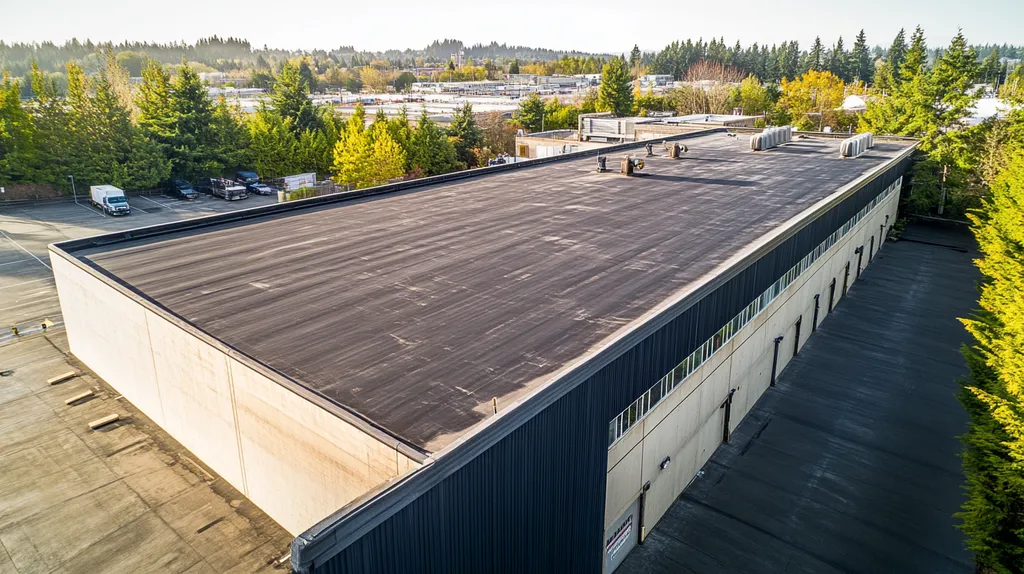
ROUND 3: PERFORMANCE FACTORS
In commercial roofing, performance factors can mean the difference between a reliable shield against the elements and a costly liability. Every year, water damage from failing roofs costs businesses millions in repairs, inventory losses, and operational disruptions. Understanding how different roofing substrates perform under challenging conditions is crucial for making informed decisions.
Substrate Stability
Substrate stability forms the foundation of any successful roofing system. A stable substrate prevents membrane deformation, reduces stress on seams, and maintains consistent drainage patterns.
TPO installations directly over insulation can experience substrate movement and compression over time. This movement may stress seams and create low spots where water can pool, potentially compromising the roof’s integrity.
PVC systems, particularly when installed with proper substrate boards, demonstrate superior dimensional stability. The enhanced structural integrity and improved bonding surface create a more reliable roofing system that maintains its performance characteristics longer.
Roof substrate boards significantly enhance structural integrity and provide a smooth, flat surface for better membrane bonding. (source: DensDeck)
Given these factors, PVC shows a clear ADVANTAGE in substrate stability.
Chemical Resistance
Commercial roofs must withstand not just rain, but also acid rain, industrial emissions, and various atmospheric pollutants. Chemical resistance becomes particularly crucial in urban and industrial areas.
TPO membranes offer good resistance to common chemicals but may show vulnerability to certain industrial pollutants. Extended exposure to harsh chemicals can potentially degrade the membrane’s protective properties.
PVC demonstrates exceptional chemical resistance across a broad spectrum of substances. Its molecular structure provides inherent protection against chemical breakdown, maintaining performance even in heavily industrialized areas.
The superior chemical resistance capabilities of PVC earn it another clear ADVANTAGE in this category.
Energy Efficiency
Energy efficiency impacts both operational costs and environmental footprint. In rainy climates, roofing systems must maintain their reflective properties despite frequent precipitation and potential algae growth.
TPO membranes start with excellent reflectivity and maintain good performance over time. However, their reflection values can decrease more rapidly in areas with frequent rainfall and organic buildup.
PVC maintains its reflective properties longer, even under challenging conditions. Its natural resistance to organic growth helps preserve energy-saving characteristics throughout its service life.
While both materials offer strong initial performance, PVC’s superior long-term maintenance of reflective properties gives it an ADVANTAGE.
ROUND 3 WINNER: PVC
ROUND 4: MAINTENANCE REQUIREMENTS
Maintenance requirements can make or break a commercial roofing investment in rainy climates. Even minor oversights in upkeep can spiral into catastrophic failures, potentially causing hundreds of thousands in damage to building contents and operations. Regular maintenance not only preserves roof performance but also protects the substantial capital investment these systems represent.
Routine Inspection Requirements
Regular professional inspections are crucial for identifying and addressing potential issues before they escalate. The frequency and depth of these inspections directly impact long-term performance and repair costs.
TPO roofing systems require quarterly inspections in rainy climates, with particular attention to seam integrity and membrane surface condition. These inspections must carefully evaluate for signs of water pooling, seam separation, and early indications of membrane degradation.
PVC systems typically need only bi-annual professional inspections due to their superior seam strength and resistance to water damage. The material’s inherent durability and chemical resistance result in fewer potential failure points requiring regular monitoring.
Given the reduced inspection frequency and lower risk profile, PVC shows a clear ADVANTAGE in this category.
Cleaning and Preventive Care
In wet climates, organic growth and debris accumulation can compromise roof performance and accelerate aging. Regular cleaning and preventive maintenance are essential for maintaining protective capabilities.
TPO membranes require more frequent cleaning to prevent algae growth and maintain reflectivity. Surface treatments may be needed every 2-3 years to restore protective properties and ensure optimal performance.
PVC’s natural resistance to biological growth and superior chemical composition reduces cleaning requirements. Its self-cleaning properties help maintain performance characteristics with minimal intervention.
The reduced cleaning requirements and natural resistance to contamination give PVC another clear ADVANTAGE.
Repair Frequency and Complexity
The frequency and complexity of repairs directly impact maintenance costs and facility disruption. Understanding typical repair requirements helps organizations budget effectively for long-term care.
TPO systems often require more frequent repairs as they age, particularly around seams and penetrations. While individual repairs may be straightforward, the cumulative maintenance burden increases significantly over time.
PVC membranes demonstrate exceptional durability and easier repairability when issues do occur. Their superior seam strength and material composition result in fewer repair incidents throughout the system’s life.
Based on lower repair frequency and simpler remediation processes, PVC earns another ADVANTAGE.
ROUND 4 WINNER: PVC
ROUND 5: SUSTAINABILITY CREDENTIALS
Environmental impact has become a critical factor in commercial roofing decisions, with sustainable solutions delivering both ecological and financial benefits. Modern roofing systems must balance immediate performance with long-term environmental responsibility, particularly in regions where increased rainfall strains building systems.
With sustainability regulations tightening and energy costs rising, choosing the right roofing substrate can significantly impact a building’s environmental footprint. The American Society of Civil Engineers emphasizes that proper substrate design is crucial for effective stormwater management and structural integrity in wet climates. (source: American Society of Civil Engineers)
Energy Efficiency and Insulation
Roofing systems play a crucial role in building energy performance, directly impacting heating and cooling costs. The right substrate can reduce energy consumption by up to 30% through improved insulation and reflective properties.
TPO membranes offer exceptional solar reflectance, maintaining cool roof performance even in challenging conditions. Their bright white surface reflects up to 87% of solar radiation, reducing cooling loads and urban heat island effects.
PVC systems provide good reflectivity but typically show more variation in performance over time. While they maintain adequate energy efficiency, their reflective properties may degrade faster than TPO in high-rainfall environments.
Based on superior long-term reflective performance, TPO demonstrates an ADVANTAGE in this category.
Material Longevity and Durability
Sustainable roofing must deliver extended service life to minimize material waste and replacement frequency. Environmental impact calculations must consider both manufacturing footprint and replacement cycles.
TPO membranes typically last 15-20 years in wet climates when properly maintained. While this represents good durability, exposure to constant moisture can accelerate aging and potentially reduce service life.
PVC roofing consistently achieves 25-30 year lifespans even in challenging environments. Their superior chemical resistance and molecular stability result in slower degradation and longer useful life.
The significant difference in service life gives PVC a clear ADVANTAGE in this category.
Environmental Impact and Recyclability
End-of-life considerations significantly influence a roofing system’s total environmental impact. The ability to recycle or repurpose materials reduces landfill waste and supports circular economy initiatives.
TPO membranes can be recycled, but processing facilities are limited. Material composition variations between manufacturers can complicate recycling efforts and reduce recovery rates.
PVC roofing benefits from well-established recycling infrastructure and standardized processing methods. The material can be fully reprocessed into new roofing products, significantly reducing environmental impact.
Given superior recycling capabilities and established recovery processes, PVC shows an ADVANTAGE in this category.
ROUND 5 WINNER: PVC
ROUND 6: SPECIALIZED APPLICATIONS
In commercial roofing, specialized applications for rainy climates demand extraordinary performance from roofing materials. Water infiltration can destroy millions in equipment and inventory within hours, while persistent moisture exposure stresses every component of the roofing system. The stakes are particularly high for facilities with sensitive operations, clean rooms, or critical infrastructure where even minor leaks can trigger catastrophic cascading failures.
High-Performance Requirements
Specialized commercial applications like data centers, pharmaceutical manufacturing, and food processing facilities require roofing systems that deliver exceptional reliability. These environments cannot tolerate even minor water infiltration without risking expensive equipment damage or production contamination.
TPO systems provide adequate protection for basic commercial applications but may struggle with the demands of mission-critical facilities. Their seam vulnerability and potential for premature aging in constantly wet conditions create unacceptable risks for sensitive operations.
PVC roofing delivers superior protection for high-performance applications through molecular-bonded seams and exceptional chemical resistance. Its proven track record in challenging environments makes it ideal for facilities where failure is not an option.
For high-performance requirements, PVC demonstrates a clear ADVANTAGE.
Complex Geometries
Modern commercial buildings often feature complex roof designs with multiple penetrations, irregular shapes, and demanding detail work. These architectural challenges test the limits of roofing materials and installation techniques, especially in wet climates.
TPO installations can struggle with complex geometries due to material stiffness and seaming limitations. While the membrane performs well on simple layouts, intricate details and numerous penetrations increase the risk of installation defects and future leaks.
PVC’s superior flexibility and welding characteristics allow for precise detail work around complex features. The material’s adaptability enables reliable waterproofing even in the most challenging architectural situations.
In managing complex geometries, PVC shows another clear ADVANTAGE.
Extreme Weather Resilience
Beyond regular rainfall, commercial roofs must withstand extreme weather events that combine heavy precipitation with high winds, hail, or rapid temperature changes. These conditions create intense stresses that can compromise roofing system integrity.
TPO membranes offer good baseline weather resistance but may show accelerated degradation under repeated extreme exposures. Their performance can become unpredictable as the material ages, particularly around seams and stress points.
PVC systems maintain their protective capabilities even under severe weather conditions. Their superior material strength and chemical stability ensure consistent performance throughout decades of service in challenging environments.
For extreme weather resilience, PVC earns another clear ADVANTAGE.
ROUND 6 WINNER: PVC
AND THE WINNER IS…
After six grueling rounds of technical analysis, this heavyweight bout delivers a decisive victory. With five rounds claimed by superior performance, your new champion in rainy climate commercial roofing is… PVC!
PVC dominated the competition through outstanding durability, minimal maintenance requirements, and unmatched performance in specialized applications. Its molecular-bonded seams and superior chemical resistance proved devastating in rounds focused on long-term performance and protection.
But don’t count TPO out entirely! This scrappy contender still packs a powerful punch in projects where budget constraints are the primary concern, claiming a decisive victory in Round 1’s cost and installation battle.
Of course, every building tells its own story. Local climate conditions, structural characteristics, and specific facility requirements can shift the balance in unexpected ways. While PVC stands tall as our champion, property owners and facility managers should always consult qualified roofing professionals who can evaluate their unique situation before making this crucial decision.
Ladies and gentlemen, in the high-stakes world of commercial roofing, there’s no substitute for matching your specific requirements with the right contender’s strengths. When billions in property protection hang in the balance, choose your champion wisely!
FREQUENTLY ASKED QUESTIONS
Q. What are the initial costs for a commercial roof?
A. Initial costs greatly depend on materials and installation complexity. TPO generally costs less due to its lower material expenses and simpler installation process. PVC, while more expensive, offers superior long-term benefits, which can be crucial for decision-making.
Q. How do TPO and PVC compare in durability for industrial roofs?
A. PVC offers superior durability and lifespan compared to TPO, especially under moisture exposure. TPO may age faster in wet climates, whereas PVC consistently withstands harsh conditions, making it a more reliable choice for long-term performance.
Q. Which roofing substrate performs better in inclement weather?
A. PVC membranes excel in wet conditions with better seam integrity and chemical resistance. This makes them ideal for commercial roofs in rainy climates where water penetration can lead to significant damage.
Q. How often should I inspect my commercial roof in rainy climates?
A. For TPO roofs, quarterly inspections are recommended to monitor seam integrity. PVC roofs typically require inspections every six months, owing to their robust construction and lower wear and tear, making maintenance easier.
Q. What are the eco-friendliness options for commercial roofs?
A. Eco-friendliness varies by material. TPO offers good initial efficiency but may degrade quicker in moisture. PVC boasts established recycling options, making it a more sustainable choice, especially in regions with stricter environmental regulations.
Q. Are there any special applications for industrial roofs in rainy climates?
A. Yes, specialized applications, especially in facilities like data centers or clean rooms, require exceptional performance. PVC membranes are preferred for these high-stakes environments due to their superior seam strength and overall reliability.
Q. Do TPO and PVC offer effective energy efficiency?
A. Both materials provide energy-efficient options, but TPO generally has better reflectivity and cooling capabilities. PVC can maintain performance longer but may show more variation over time, particularly in wet climates, affecting overall efficiency.






